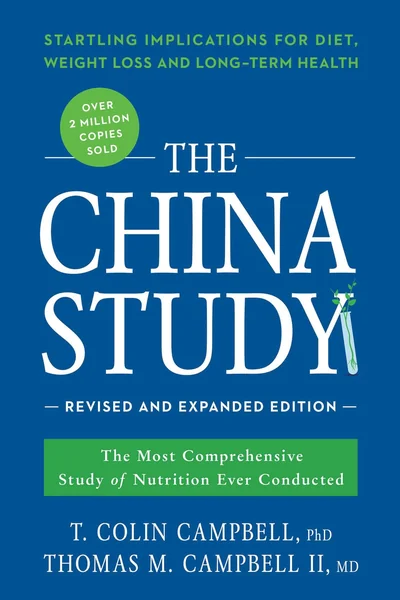
The China Study: The Most Comprehensive Study of Nutrition Ever Conducted and the Startling Implications for Diet, Weight Loss, and Long-Term Health
by T. Colin Campbell and Thomas M. Campbell
At a glance
About the Author
T. Colin Campbell and Thomas M. Campbell1 book reviewed
The China Study
The Most Comprehensive Study of Nutrition Ever Conducted and the Startling Implications for Diet, Weight Loss, and Long-Term Health
by T. Colin Campbell and Thomas M. Campbell
LuvemBooks Verdict
Best for: Readers already curious about or committed to whole-food, plant-based eating who want a thorough, epidemiologically grounded argument — complete with mechanistic reasoning and a critique of reductionist nutrition science — for eliminating animal products from their diet.
Worth it? Skip it? Read the full verdict →Ask LuvemBooks
Was this helpful?
- Is it worth reading?
- For readers curious about plant-based eating or population-level nutritional evidence, The China Study offers a thorough and strongly argued resource backed by a genuinely substantial dataset. Its intellectually distinctive critique of reductionism in nutritional science — arguing for the study of whole dietary patterns rather than isolated nutrients — distinguishes it from simpler diet titles. The key caveat is tone: the Campbells present their conclusions with a high degree of certainty that readers with a background in epidemiology or research methodology may find outpaces the correlational evidence. It is best approached as an impassioned, data-informed argument rather than a cautiously qualified academic report.
- Similar books
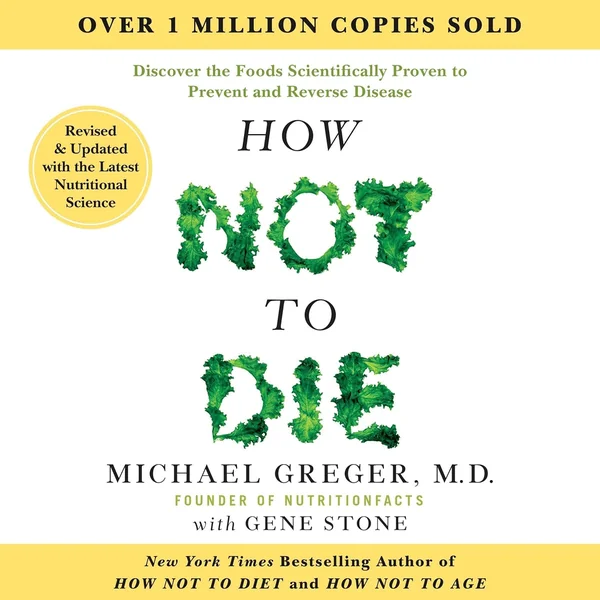
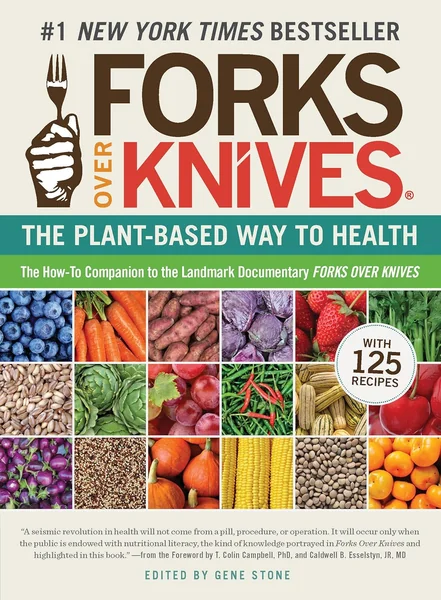
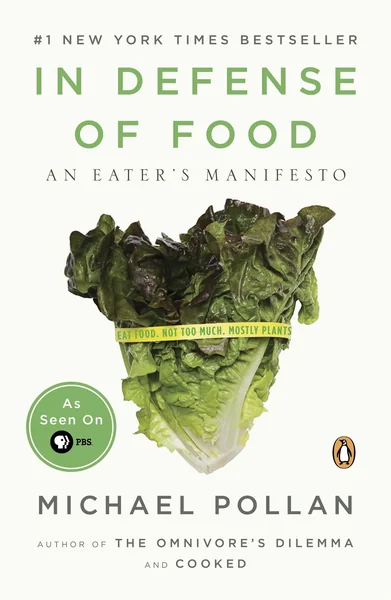
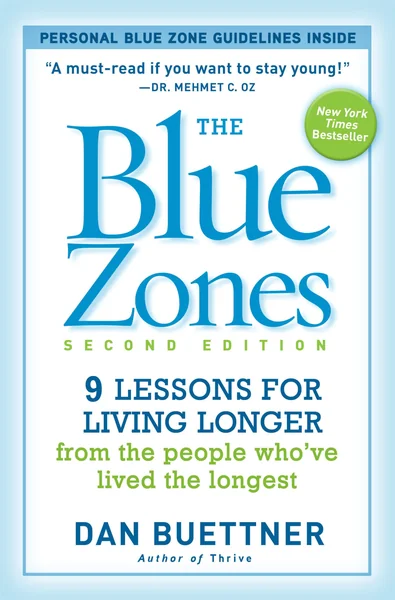
- Readers who respond to The China Study's whole-food, plant-based argument will find natural companions in several related titles. Gene Stone's Forks Over Knives shares the plant-based framework and grew out of the same cultural moment. Michael Greger's How Not to Diet approaches plant-based eating through a similarly data-heavy lens. Dan Buettner's The Blue Zones examines the dietary and lifestyle patterns of the world's longest-lived populations, offering a population-level complement to the Campbells' epidemiological case. For a broader critique of the modern food system, Michael Pollan's In Defense of Food and Michael Moss's Salt Sugar Fat both challenge industrial food culture, though from different angles.
- Who should read this?
- The China Study is best suited to general adult readers who are curious about the health implications of plant-based eating and want an epidemiological and mechanistic rationale, not just a recipe guide. It is particularly valuable for readers newly exploring whole-food, plant-based diets, as well as those motivated by chronic disease prevention — covering coronary heart disease, diabetes, breast and prostate cancer, and bowel cancer. Readers with a professional background in nutritional epidemiology or research methodology should approach it with the understanding that its causal conclusions extend well beyond what the correlational China–Cornell–Oxford data alone can support. Those who want a dispassionate academic survey of the field will likely find the advocacy-driven tone a poor fit.
- How contested is the science?
- The science behind The China Study has generated sustained debate since the book's 2005 publication. The central tension is that the book's sweeping causal conclusions are built primarily on correlational epidemiological data from the China–Cornell–Oxford Project — and the book itself is described as only 'loosely based' on that study, meaning its arguments extend well beyond what that single dataset directly supports. Nutrition researchers have questioned the leap from population-level correlation to individual causal claims, and critics point to the authors' degree of certainty as exceeding what the evidence warrants. That said, the book's methodological argument — that whole dietary patterns should be studied rather than isolated nutrients — has found genuine resonance in parts of the nutrition science community.
- How has the book performed over time?
- By October 2013, The China Study had sold over one million copies, making it one of America's best-selling books about nutrition at the time. It has since been translated into more than a dozen languages, including German, Polish, Czech, Slovenian, Italian, Chinese, Japanese, Korean, Romanian, Swedish, and Urdu — a global footprint reflecting the universality of the dietary questions it raises. A 2016 revised and expanded edition published by BenBella Books updated the original 2005 text, and the book's hold on the popular nutrition conversation across two decades of publication is itself a meaningful indicator of its lasting influence.
- What does the book actually recommend eating?
- The China Study recommends a predominantly whole-food, vegan diet while also reducing processed foods and refined carbohydrates. It takes an uncompromising position on animal products — the authors write that 'eating foods that contain any cholesterol above 0 mg is unhealthy' — covering beef, pork, poultry, fish, eggs, cheese, and milk. The book explicitly rejects low-carb frameworks like the Atkins diet. It does carve out two supplementation recommendations: sunshine exposure or vitamin D supplements, and vitamin B12 supplementation for those eliminating animal products entirely.
Summarize this book
Follow up
Synthesized from verified book data & published reviews · How we review
Press Enter to ask. Answers come from our editorial Q&A — start typing to see related questions.
Age & Reading Level
Recommended age
Adult
Reading level
Adult
who it suits
Skip if you want a cautiously hedged, academically balanced survey of nutritional epidemiology rather than a confident, advocacy-driven argument for plant-based eating.
Editorial Review
First published in 2005 and expanded in a 2016 revised edition from BenBella Books, The China Study by T. Colin Campbell and Thomas M.…
Read the Full ReviewBooks like The China Study
Curated picks for readers who enjoyed The China Study, with our reasoning for each match.
If you liked The China Study