

8 min read
Share This Review
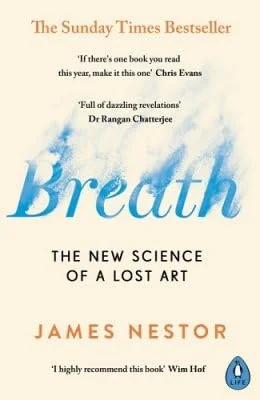
Breath: The New Science of a Lost Art by James Nestor Review: A Landmark Popular Science Bestseller
James Nestor's Breath: The New Science of a Lost Art is a popular science book that blends history, science, and personal investigation to make the case that modern humans have forgotten how to breathe — and are paying a steep physiological price. First published by Riverhead Books on May 26, 2020, the book became an international phenomenon, debuting at number seven on the New York Times nonfiction bestseller list and spending 18 weeks on that list in its first year. It has since sold over two million copies worldwide and been translated into more than 35 languages. Kirkus Reviews named it "a welcome, invigorating user's manual for the respiratory system," and it won Best General Nonfiction Book of 2020 from the American Society of Journalists and Authors.
LuvemBooks Verdict
Best for
Curious general readers who want to understand how breathing affects their health and are open to a journey through ancient wisdom, modern pulmonology, and one journalist's self-experimentation — without needing clinical-grade evidence at every turn.
Worth it if
You're drawn to wide-ranging popular science that blends history, physiology, and practical technique, and you appreciate a journalist's knack for making complex biology both urgent and readable.
Skip if
You're a clinician or evidence-based-medicine reader who will bristle when a journalist's confidence in ancient breathing practices outruns the peer-reviewed support beneath it.
What readers & critics say
Kirkus Reviews awarded it a starred "Get It" verdict, calling it "a welcome, invigorating user's manual for the respiratory system" and praising its "readable treatise" on a subject half the population is getting wrong. According to the Wikipedia reception summary, the book became an international bestseller — over two million copies sold, 35-plus languages — while some reviewers, including science writer Sam Kean, raised skepticism about whether the evidence fully supports Nestor's broader claims around ancient breathing exercises.
“A welcome, invigorating user's manual for the respiratory system — a readable treatise on improving the way we breathe.”
— Kirkus ReviewsAge & Reading Level
Recommended age
Adult
Reading level
Adult
who it suits
Skip if you require strictly peer-reviewed, clinician-authored conclusions and won't tolerate journalistic confidence outpacing the evidentiary record.
Breath: The New Science of a Lost Art by James Nestor is Trending
Readers Keep Coming Back to This Bestseller on the Simple Act of Breathing
Six years after its release, Breath by James Nestor is still showing up in readers' must-read lists and wellness conversations. People are recommending it as a practical guide for anxiety, sleep, and everyday health — and it's not hard to see why it keeps finding new fans.
Breath came out in 2020 and became a massive hit, but it never really went away. Just this week, readers are citing it as one of the books that genuinely changed their lives, pointing to its accessible breakdown of how breathing affects everything from anxiety and sleep to posture and dental health. It's the kind of book that gets passed along by word of mouth, and that cycle seems to be going strong right now.
Part of what keeps Breath relevant is how broadly applicable it is. Whether someone is dealing with stress, trying to sleep better, or just curious about why they feel off — this book offers a surprisingly concrete explanation and some real takeaways. Writers and wellness communities are recommending it alongside mindfulness and breathing exercises as a way to slow down and reset, which fits a mood a lot of people seem to be in.
If you haven't read it yet, this is a good moment to pick it up. Nestor isn't preachy about it — he's a journalist who dug into the research and tested things on himself, so the book reads more like an investigation than a self-help manual. Over two million copies sold and 35+ languages later, the word is still spreading for good reason.
In This Review
- What Works & What Doesn't
- What the Book Is and What It Argues
- Scope and Research Ambition
- Reception and Cultural Reach
- Genuine Strengths: Accessibility and Synthesis
- Limitations and Who May Push Back
What Works & What Doesn't
What Works
- International bestseller with over two million copies sold worldwide and translations into more than 35 languages, demonstrating exceptional breadth of appeal
- Won Best General Nonfiction Book of 2020 from the American Society of Journalists and Authors and was a finalist for the Royal Society Science Book Prize 2021
- Praised by Kirkus Reviews as 'a welcome, invigorating user's manual for the respiratory system' and by Publishers Weekly as a 'fascinating treatise'
- Draws on ten years of research spanning ancient medical texts, cutting-edge pulmonology, and Nestor's own self-experimentation for rare depth and range
- Presents actionable, concrete guidance — including the specific 'perfect breath' technique — alongside its historical and scientific narrative
What Doesn't
- Some science-focused reviewers, including Sam Kean, expressed skepticism about claims regarding ancient breathing practices, suggesting the evidentiary case is not airtight for all findings
- Written from a journalist's perspective rather than a clinician's, which readers seeking strictly peer-reviewed conclusions may find limiting
What the Book Is and What It Argues
Scope and Research Ambition
Reception and Cultural Reach
Genuine Strengths: Accessibility and Synthesis
Limitations and Who May Push Back
Frequently Asked Questions
Sources & Further Reading
The key facts and claims in this review are grounded in the retrieved, verified sources listed below.
- Cited in this review
- 1
- 2
lindentreebooks.com
- Further reading
- 3
James Nestor, Wikipedia
- 4
en.wikipedia.org
- 5
kirkusreviews.com
- 6
- 7
eyalshifroni.com
- 8
bookshelfdiscovery.com
- 9
- 10
- 11
- 12
newbookrecommendation.com
Related Reviews
Reviews of books we picked for readers who enjoyed Breath.

Reader Comments
No comments yet
Be the first to share your thoughts!