

In This Article
- What Nestor said — and what prompted it
- The book and the people behind it
- Why the subject is drawing renewed attention
- What to watch
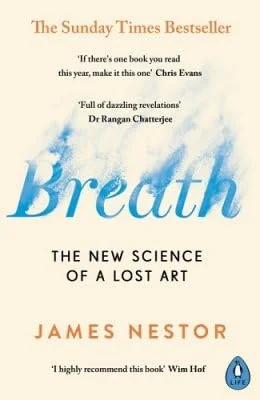
Science journalist James Nestor, author of Breath: The New Science of a Lost Art, described improper breathing as a "widely spread malady" affecting the human species in a recent interview published this week on Life Examined. The remarks come as Nestor continues to advocate for what he frames as an overlooked public-health issue, and as his 2020 book reaches new milestones in readership and translation.
What Nestor said — and what prompted it
In the Life Examined interview, Nestor argued that dysfunctional breathing patterns have become increasingly common and are contributing to a range of health problems in modern humans. His position draws on research he gathered over more than a decade, including collaboration with scientists at Stanford University whose work, according to the book's Wikipedia entry, suggests that returning to nasal breathing can improve individual health outcomes. Nestor has also spoken publicly about his own history of recurrent respiratory problems before he began investigating the subject, as reported by The Guardian in January 2026.
The book and the people behind it
Breath, published by Riverhead Books on 26 May 2020, synthesises historical, scientific, and cultural research on breathing, with a particular focus on the contrast between nasal and mouth breathing, per Wikipedia. Nestor — a journalist whose bylines include The New York Times, Scientific American, The Atlantic, and NPR, according to his Wikipedia biography — spent ten years researching the subject before publication. The book explores the argument that a species-wide shift toward chronic mouth breathing, driven in part by the rise of processed food consumption, has contributed to increased rates of snoring, sleep apnea, asthma, autoimmune disease, and allergies.
The book debuted at number seven on The New York Times nonfiction bestseller list and spent 18 weeks on that list in its first year, according to Wikipedia. It has since sold over three million copies and been translated into 44 languages, per Nestor's official website. It won the American Society of Journalists and Authors award for Best General Nonfiction Book of 2020 and was a finalist for the Royal Society Science Book Prize of 2021. For LuvemBooks' verdict on the book itself, see our review.
Why the subject is drawing renewed attention
The Guardian's January 2026 profile noted that Nestor has since updated Breath with a revised preface and new material, including findings from his own air-quality tests conducted in hotel rooms and on planes — some of which, by his readings, showed high CO2 levels. Nestor told The Guardian that he used to think of breathing in binary terms — "you're doing it, you're alive; you're not doing it, that's bad news" — but that years of additional reader correspondence and expert input have deepened his understanding of the issue's complexity.
Research cited in and around the book points to measurable physiological consequences of mouth versus nasal breathing. Maclean's noted that nasal breathing triggers the release of nitric oxide from the sinuses, a molecule that plays a role in oxygen delivery, with nasal breathers absorbing more oxygen than mouth breathers. Nestor's own site cites modern research in pulmonology, psychology, biochemistry, and physiology suggesting that small adjustments to inhalation and exhalation patterns may affect conditions ranging from snoring and allergies to asthma and some autoimmune diseases.
What to watch
The Guardian reported that Nestor, now based in Portugal, is nearly finished with a new book, though he has not disclosed its subject. His continued public commentary — including the Life Examined interview this week — indicates he remains an active voice on respiratory health as the broader wellness conversation around breathwork continues to develop. Whether that cultural interest translates into clinical or policy uptake remains, by Nestor's own account, an open question: as he told The Guardian, breathwork has grown as a wellness trend but "hasn't yet become mainstream."
Frequently Asked Questions
Is Breath: The New Science of a Lost Art worth buying in 2024?
Yes, if you're interested in natural health approaches and have breathing-related issues like snoring, anxiety, or poor sleep. The book offers practical techniques backed by research, though some claims are overstated.
What is the main message of Breath: The New Science of a Lost Art?
Nestor argues that modern humans have lost proper breathing techniques, leading to widespread health problems. He advocates for nasal breathing, slower breathing rates, and ancient breathing practices to improve health and performance.
Who should read Breath: The New Science of a Lost Art?
The book is ideal for people with breathing-related health issues, athletes seeking performance improvements, and anyone interested in natural wellness approaches. It's also valuable for parents concerned about children's breathing development.
Should I read Breath: The New Science of a Lost Art or try breathing apps instead?
Reading the book provides essential context and scientific backing that apps often lack. While apps can guide practice, Nestor's book helps you understand why specific techniques work and how to adapt them to your needs.
Does Breath: The New Science of a Lost Art really work for health problems?
The book's techniques can help with issues like mild anxiety, poor sleep, and breathing dysfunction, but results vary by individual. The scientific evidence supports some benefits, though Nestor occasionally overstates breathing's transformative power.
What breathing techniques does James Nestor recommend in Breath?
Key techniques include nasal breathing, the 4-7-8 breathing pattern, breath holds, and slower breathing rates (around 5.5 breaths per minute). He also explores practices like the Wim Hof method and ancient pranayama techniques.



Reader Discussion
No comments yet
Be the first to share your thoughts!