

8 min read
4.6
· 35,569 Amazon ratingsShare This Review
All the Broken Places: A Novel by John Boyne Review: A Haunting Sequel About Guilt and Atonement
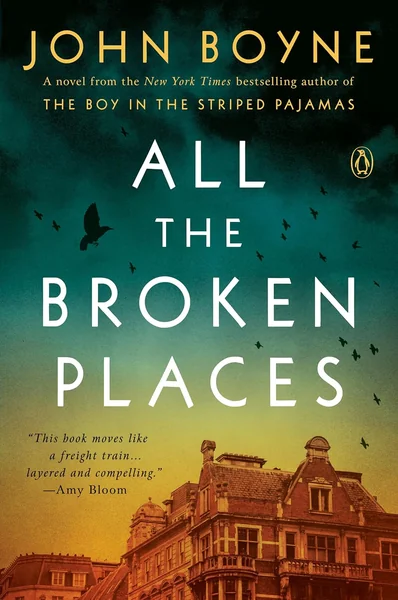
All the Broken Places is a historical fiction novel by New York Times bestselling author John Boyne — a sequel to his book The Boy in the Striped Pyjamas — that follows Gretel Fernsby, now 91 years old and living quietly in a London mansion block, as the arrival of a new family forces her to confront decades of buried guilt over her father's role as commandant of a Nazi extermination camp, her own complicity, and her part in her brother Bruno's death.
LuvemBooks Verdict
Best for
Readers of serious Holocaust fiction who are drawn to perpetrator-adjacent moral perspectives, particularly those already familiar with The Boy in the Striped Pyjamas and interested in exploring questions of complicity, generational guilt, and late-in-life reckoning across a dual-timeline narrative.
Worth it if
You're willing to sit with a weightier, more expansive canvas than its predecessor and want a richly interior character study in which the architecture of guilt — Gretel's silence, her father's crimes, and her failure to act — is pressed against a present-day moral crisis.
Skip if
You're expecting the taut, fable-like compression of The Boy in the Striped Pyjamas — or if ongoing critical debate about that novel's historical framing of the Holocaust gives you pause about engaging with its sequel.
What readers & critics say
The Guardian called the novel "gripping, well honed and very much aimed at adults," praising Gretel's voice as "smart, engaging and uncompromising" and the construction as "consummately constructed, humming with tension until past and present collide," as retrieved from theguardian.com. Kirkus Reviews offered a more measured verdict, describing it as "a complex, thoughtful character study that avoids easy answers" while noting that the alternating narratives contribute to "some avoidable repetitiousness in the writing and an occasional sense of aimlessness in the plot," as retrieved from kirkusreviews.com.
“It is gripping, well honed and very much aimed at adults — Gretel's smart, engaging and uncompromising voice draws the reader in deftly.”
— The Guardian“A complex, thoughtful character study that avoids easy answers — an old woman seen at key moments in a lifelong struggle with guilt-laden secrets.”
— Kirkus ReviewsAge & Reading Level
Recommended age
Adult
Reading level
Adult
4 content notes · who it suits
Content to know about
Best for: Adults — the novel is explicitly written for an adult audience, engaging with perpetrator-adjacent Holocaust guilt, domestic violence, and moral complicity across a lifetime
Skip if you're looking for a fast-paced, tightly compressed read in the fable-register of The Boy in the Striped Pyjamas
In This Review
- What Works & What Doesn't
- What the Novel Is and What It Does
- The Central Conflict: Then and Now
- Craft, Characterization, and Reception
- Where the Novel Strains
- Who This Book Is For
What Works & What Doesn't
What Works
- Gripping dual-timeline structure, moving between present-day London and Gretel's postwar years in Paris and Rouen, designed to build suspense as the full picture of her guilt emerges
- Praised by The Guardian as 'consummately constructed, humming with tension' — a strong critical endorsement of the novel's craft
- Gretel is a richly drawn, morally complex narrator whose layered sense of guilt — about her father, her silence, and her brother Bruno's death — anchors the novel's emotional weight
- Draws a deliberate and structurally purposeful parallel between Gretel's wartime passivity and her present-day moral crossroads, giving the themes of complicity and atonement concrete narrative stakes
- Written explicitly for an adult audience, expanding the scope and moral seriousness well beyond the fable-register of The Boy in the Striped Pyjamas
What Doesn't
- Critics noted that the alternating narratives, while effective at generating suspense, contribute to 'some avoidable repetitiousness in the writing and an occasional sense of aimlessness in the plot'
- Readers familiar with the taut economy of The Boy in the Striped Pyjamas may find this novel's considerably broader canvas and expanded cast slower to cohere
- The Boy in the Striped Pyjamas — and by extension this sequel — has attracted ongoing debate in some critical quarters about its historical framing of the Holocaust, which prospective readers may wish to research before engaging
What the Novel Is and What It Does
The Central Conflict: Then and Now
Craft, Characterization, and Reception
Where the Novel Strains
Who This Book Is For
Frequently Asked Questions
Sources & Further Reading
The key facts and claims in this review are grounded in the retrieved, verified sources listed below.
- Cited in this review
- 1
en.wikipedia.org
- 2
- 3
- 4
- Further reading
- 5
John Boyne, Wikipedia
- 6
kirkusreviews.com
- 7
johnboyne.com
- 8
bookmarks.reviews
- 9
bossybookworm.com
- 10
- 11
penguinrandomhouse.com
Related Reviews
Reviews of books we picked for readers who enjoyed All the Broken Places.
Reader Comments
No comments yet
Be the first to share your thoughts!