
8 min read
4.4
· 9,406 Amazon ratingsFeatured In
Share This Review
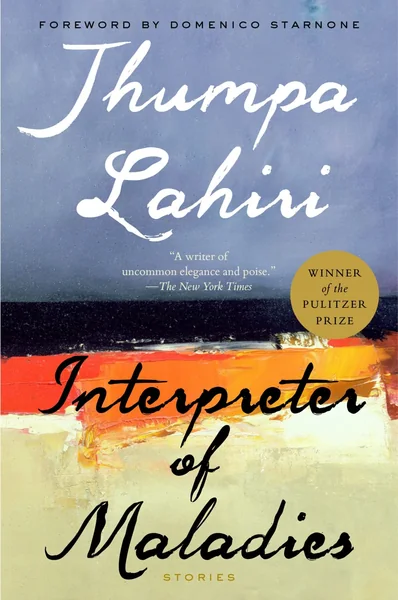
Interpreter of Maladies by Jhumpa Lahiri Review: A Pulitzer-Winning Short Story Masterwork
Jhumpa Lahiri's debut short story collection, first published in 1999, won the Pulitzer Prize for Fiction and the Hemingway Foundation/PEN Award in 2000, sold over 15 million copies worldwide, and remains one of the most celebrated works of Indian American literature — a collection that renders the interior lives of immigrants and their families with precision and emotional depth.
LuvemBooks Verdict
Best for
Readers drawn to psychologically precise literary short fiction who want to understand the inner life of displacement — particularly the experience of Indian and Indian American immigrants navigating cultural identity, grief, and belonging.
Worth it if
You value short fiction that works through understatement and accumulation, trusting small, intimate moments — a dinner, a power outage, a car trip — to carry large emotional weight across questions of identity, loss, and marital distance.
Skip if
Readers expecting celebratory or aspirational portrayals of South Asian life may find the collection's consistent emotional register — melancholic, restrained, and focused on estrangement and quiet failure — tonally narrow or dispiriting.
What readers & critics say
Kirkus Reviews called the collection's writing "crystalline" and praised its "sensitive explorations" of immigrant lives for touching on universal themes that make the stories "at once specific and broad in their appeal." Audible's editorial summary notes the book was "an immediate critical and commercial success" and that Lahiri's nuanced depiction of the Indian diaspora "continues to feel timely and relevant over two decades after its initial publication," cementing its place as a modern classic of multicultural American literature.
“The crystalline writing in the nine stories of this Pulitzer Prize-winning debut collection dazzles.”
— Kirkus ReviewsAsk LuvemBooks
Was this helpful?
- Is it worth reading?
- For readers drawn to literary short fiction that works through understatement and accumulation rather than dramatic plot, Interpreter of Maladies is as formidable as its reputation suggests. The collection's themes — immigration, assimilation, marital distance, grief, and cultural memory — have only grown more widely recognized in the decades since its 1999 publication. The breadth of institutional recognition is rare for a debut short story collection: the Pulitzer Prize, the Hemingway Foundation/PEN Award, Michiko Kakutani calling Lahiri "a writer of uncommon elegance and poise," and over 15 million copies sold worldwide all align. The key caveat is tonal: readers who prefer mood variety across a collection may find its consistently melancholic, restrained register narrow.
- Similar books
- Readers who respond to Interpreter of Maladies often find similar rewards in other landmark short story collections. James Joyce's Dubliners offers the same principle of using small, contained situations to map the interior life of a community — in Joyce's case, early twentieth-century Dublin. Raymond Carver's Cathedral deploys the same minimalist, psychologically precise register to examine working-class American relationships under pressure. J. D. Salinger's Nine Stories is another touchstone of the literary short story tradition, prized for its restraint and emotional compression. For readers drawn specifically to the immigrant identity and diaspora themes, Charles Yu's Interior Chinatown explores Asian American identity through a formally inventive, genre-bending lens. Lahiri's own novel The Namesake extends many of the same characters and cultural preoccupations of the collection into long-form fiction, though it is not currently in the LuvemBooks catalogue.
- Who should read this?
- Interpreter of Maladies is best suited to readers who appreciate literary short fiction in the tradition of careful, psychologically precise storytelling — those who find meaning in understatement, accumulation, and the emotional weight of small details. It is particularly resonant for readers interested in the immigrant experience, diaspora identity, and the cultural tensions of assimilation. Academics and students of postcolonial or American literature will find it a canonical text. Readers who prefer celebratory or aspirational portrayals of South Asian life, or who want tonal variety across a collection, may find its prevailing register of grief, isolation, and restraint at odds with those expectations.
- What are the main themes?
- The collection's central thematic concerns are immigration, assimilation, marital distance, grief, and the persistence of cultural memory. Scholar Ketu H. Katrak's concept of "multiple anchorages" — the broken identities produced by the trauma of self-transformation through immigration — runs throughout. Individual stories foreground different facets: "A Temporary Matter" focuses on grief and marital estrangement following a stillbirth; "When Mr. Pirzada Came to Dine" meditates on cultural displacement and the weight of distant homeland events; "The Third and Final Continent" examines the quiet accommodation required to build a new life in a foreign country. Lahiri structures these themes around intimate, contained moments rather than broad social canvases, trusting small details — a confession, a torn photograph, a dinner ritual — to carry large emotional weight.
- Is this a good book club pick?
- Interpreter of Maladies is a strong book club choice for several reasons: its nine self-contained stories allow groups to select individual entries for focused discussion, while the collection's recurring themes — immigration, cultural identity, grief, marital estrangement — generate rich comparative conversation across stories. The real-world debate the collection sparked about diaspora representation (some Indian critics felt Lahiri had not painted Indians in a sufficiently positive light) is itself a compelling and substantive discussion topic. Time's observation that the collection illuminates "the full meaning of brief relationships" gives groups a useful entry point into Lahiri's structural method.
- About Jhumpa Lahiri
- Nilanjana Sudeshna "Jhumpa" Lahiri is a British-American author known for her short stories, novels, and essays in English and, more recently, in Italian.
Summarize this book
Follow up
Synthesized from verified book data & published reviews · How we review
Press Enter to ask. Answers come from our editorial Q&A — start typing to see related questions.
Age & Reading Level
Recommended age
Adult
Reading level
Adult
3 content notes · who it suits
Content to know about
Skip if you're looking for celebratory, aspirational, or tonally varied portrayals of South Asian life.
Our Review
What the Collection Is and What It Contains
Awards, Reception, and Cultural Standing
Lahiri's Craft and Structural Strengths
A Genuine Limitation: The Representational Debate
Who This Collection Is For and Why It Endures
Sources & Further Reading
The key facts and claims in this review are grounded in the retrieved, verified sources listed below.
- Cited in this review
- 1
foliosociety.com
- 2
- 3
en.wikipedia.org
- 4
- Further reading
- 5
Jhumpa Lahiri, Wikipedia
- 6
stuckinabook.com
- 7
- 8
lovelifeandbeyond.in
- 9
tidepoolbookshop.com
- 10
bookthoughtsfrombed.com
Books like Interpreter of Maladies
Curated picks for readers who enjoyed Interpreter of Maladies, with our reasoning for each match.
If you liked Interpreter of Maladies