

9 min read
Share This Review
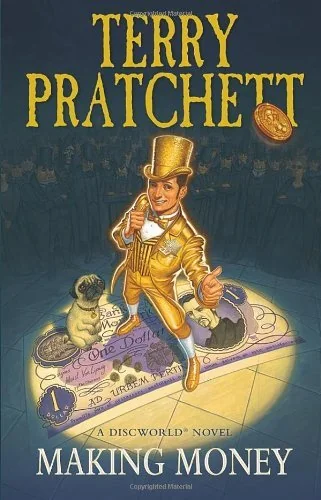
Making Money by Terry Pratchett Review: Satirical Discworld Fantasy That Skewers Banking
Making Money is a Discworld fantasy novel in which reformed con artist Moist von Lipwig is coerced into running the Royal Bank of Ankh-Morpork, using the premise to deliver sharp satire about the nature of money, public trust, and financial institutions. First published in 2007, it won the Locus Award for Best Fantasy Novel in 2008 and was nominated for the Nebula Award the same year. Critical opinion is genuinely divided — praised for its wit and humanity, and critiqued for lacking the forward momentum of its predecessor, Going Postal — making it essential for committed Discworld readers while occasionally frustrating those who rank Going Postal among the series' best.
LuvemBooks Verdict
Best for
Committed Discworld readers — particularly those who have already met Moist von Lipwig in Going Postal — and anyone drawn to comic fantasy that treats economic systems and the philosophy of money as genuine satirical and narrative material.
Worth it if
Worth it if you enjoy farce with intellectual scaffolding: the escalating absurdity of a dog as bank chairman, an assassination contract as employment incentive, and a civilisation-scale golem revelation are all built on a serious argument about why money has value at all.
Skip if
Skip it — or at least temper expectations — if you're coming straight from Going Postal hoping for the same compressed forward momentum; multiple critics note it doesn't quite match that novel's propulsive drive or cutting satirical edge.
What readers & critics say
Kirkus Reviews called it a "fast-moving novel" that "mixes satire and fantasy with increasingly frantic farce," praising its comedic acceleration toward a finale involving golems and necromancers. Wikipedia's reception summary records that critics praised the book's humanity and its sharp questions about trust and the nature of money, while also noting it is not quite as successful as Going Postal due to a lack of that novel's forward drive; The Guardian's review similarly engaged with its satirical ambition, and Fantasy Literature found it disappointing compared to its predecessor, with readers laughing less often than expected.
“Fast-moving novel mixes satire and fantasy with increasingly frantic farce as he races to a conclusion involving golems, necromancers, and a royal hearing.”
— Kirkus ReviewsAge & Reading Level
Recommended age
Adult
Reading level
Adult
who it suits
Skip if you're looking for propulsive, tightly plotted fantasy and rank Going Postal among the series' very best — the slightly looser momentum and occasionally blunted satirical edge may disappoint.
In This Review
- What Works & What Doesn't
- What the Novel Actually Does
- Pratchett's Satirical Argument About Money
- Awards Recognition and Critical Reception
- What the Novel Does Well
- Who This Book Is For, and Where It Falls Short
What Works & What Doesn't
What Works
- Won the Locus Award for Best Fantasy Novel in 2008 and received a Nebula Award nomination the same year
- Builds satirical argument about the nature of money and public trust into the plot mechanics, not just the backdrop
- Fast-moving structure mixing farce, satire, and fantasy, praised by Kirkus Reviews for its frantic comedic acceleration toward a golems-and-necromancers finale
- Strong ensemble cast — including the memorable Mr. Bent reveal and a substantive parallel storyline for Adora Belle Dearheart — praised by critics for rewarding returning readers
What Doesn't
- Critics noted it is not quite as successful as Going Postal, citing a lack of that novel's forward drive — readers coming directly from the predecessor may feel the difference in momentum
- The Observer's Rowland Manthrope argued that Pratchett has wit in the novel but has lost his normal cutting edge, suggesting the satire does not always bite as sharply as his best work
What the Novel Actually Does
Pratchett's Satirical Argument About Money
Awards Recognition and Critical Reception
What the Novel Does Well
Who This Book Is For, and Where It Falls Short
Frequently Asked Questions
Sources & Further Reading
The key facts and claims in this review are grounded in the retrieved, verified sources listed below.
- Cited in this review
- 1
en.wikipedia.org
- 2
zealotscript.co.uk
- Further reading
- 3
Terry Pratchett, Wikipedia
- 4
kirkusreviews.com
- 5
terrypratchettbooks.com
- 6
- 7
bookbrowse.com
- 8
patricktreardon.com
- 9
compulsivereader.com
- 10
fantasybookreview.co.uk
- 11
- 12
wiki.lspace.org
- 13
Related Reviews
Reviews of books we picked for readers who enjoyed Making Money.

Reader Comments
No comments yet
Be the first to share your thoughts!