
At a glance
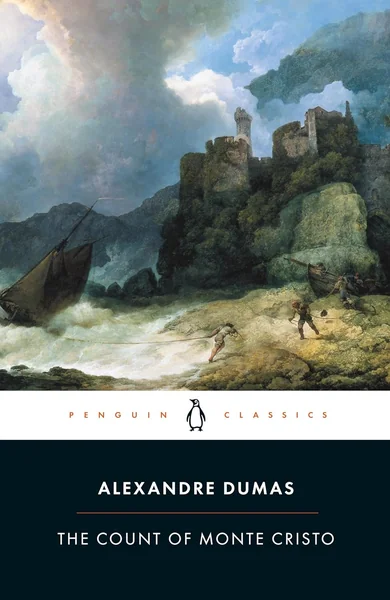
The Count of Monte Cristo
LuvemBooks Verdict
Best for: Readers with an appetite for grand-scale adventure fiction who want the complete, unabridged experience of Dumas's intricate revenge plot — particularly those drawn to morally complex protagonists, nineteenth-century French history, and long-form narratives that reward patience.
Worth it? Skip it? Read the full verdict →Ask LuvemBooks
Was this helpful?
- Is it worth reading?
- For readers with an appetite for grand-scale adventure and morally complex storytelling, The Count of Monte Cristo is richly rewarding. Britannica describes the plot as 'ingenious,' built on layered schemes — concealment and revelation, disguise and poison, long-game manipulation of Parisian society — that pay off across hundreds of pages. The novel's exploration of hope, justice, vengeance, mercy, and forgiveness gives its adventure plot sustained moral depth that lifts it well above a simple revenge fantasy. The main caveat is scale: the episodic Parisian society sequences can feel slower than the propulsive early prison narrative, and readers who prefer tightly paced contemporary fiction may need to adjust to the deliberate rhythms of a nineteenth-century serial.
- Similar books
- Readers drawn to The Count of Monte Cristo's combination of sweeping historical setting and morally complex plotting will find kindred works among the curated recommendations below. Alexandre Dumas's own The Three Musketeers shares the same swashbuckling adventure energy and Dumas's gift for intricate ensemble plotting. Victor Hugo's Les Misérables offers a similarly vast canvas of post-Napoleonic French society, using Restoration-era politics and social injustice as the engine of its drama. Umberto Eco's The Name of the Rose delivers comparable labyrinthine plotting and historical texture, though in a medieval Italian monastery rather than Parisian salons. For readers who enjoy sprawling, emotionally dense literary novels with a morally compromised protagonist, Donna Tartt's The Goldfinch — available in the LuvemBooks catalogue — charts a comparable arc of loss, reinvention, and moral reckoning across a very different contemporary landscape. Walter Scott's Ivanhoe and Anthony Doerr's All the Light We Cannot See round out the selection for readers who love richly researched historical fiction with high narrative stakes.
- Who should read this?
- The Count of Monte Cristo suits readers with a genuine appetite for adventure fiction on a grand scale — those who can commit to 1,300-plus pages of intricate, episodic plotting will be well rewarded. It is an ideal choice for fans of historical fiction interested in the political world of post-Napoleonic France (spanning 1815 to 1839, across the Bourbon Restoration through the reign of Louis Philippe I), as well as readers drawn to morally complex protagonists and long-form plots built on layered concealment and revelation. Anyone who asks whether justice achieved through calculated vengeance can be distinguished from the original crime will find that question explored with unusual seriousness. Readers who prefer tightly paced contemporary thrillers or who find nineteenth-century serialized pacing frustrating should approach with that expectation calibrated.
- About Alexandre Dumas
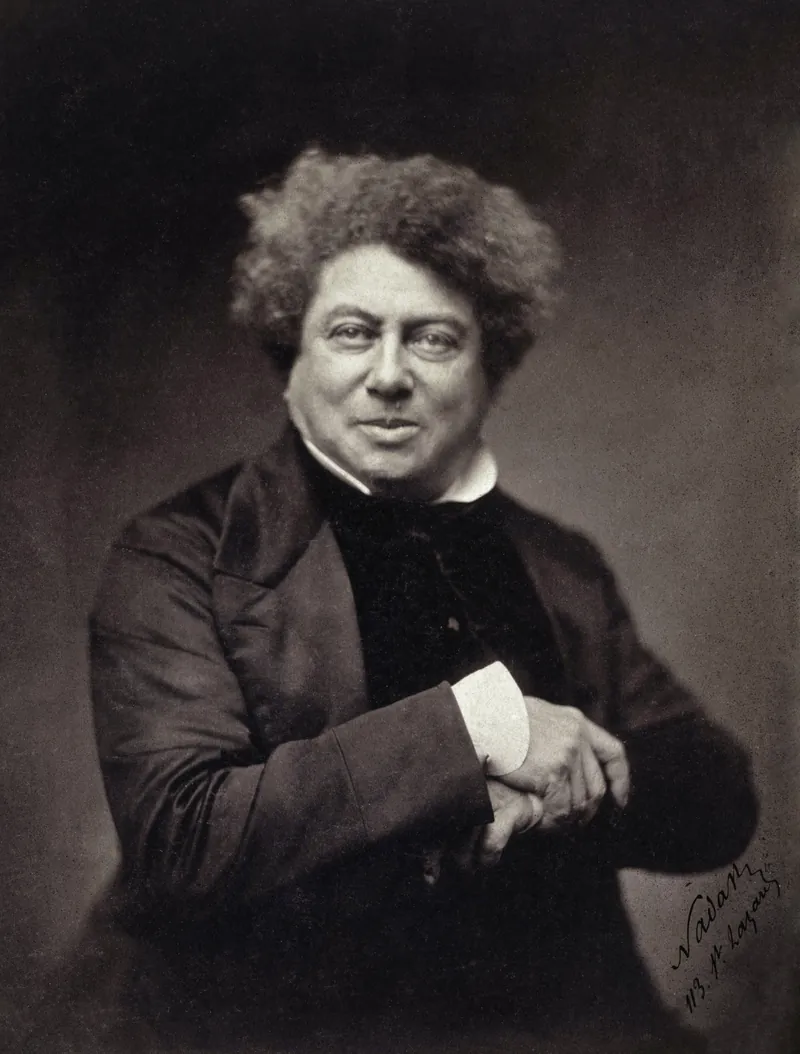
- Alexandre Dumas, also known as Alexandre Dumas père, was a French novelist and playwright.
- What are the main themes?
- The novel's central moral question — whether justice achieved through calculated vengeance can be distinguished from the original crime it answers — drives its entire architecture. Dumas explores hope during Dantès's years of imprisonment; justice and its corruption in Villefort's decision to imprison an innocent man to protect his own career; vengeance as both motivation and moral hazard; and ultimately mercy and forgiveness in the novel's final movements, where Dantès steps back from complete destruction of his enemies. Britannica notes the novel's engagement with the corrupt financial, political, and judicial world of Bourbon Restoration France, giving these personal themes a broader social dimension. The presence of convicts, outsiders, and the disenfranchised at the margins of the story further extends its moral canvas beyond the central revenge plot.
- Tell me about adaptations
- The Count of Monte Cristo has been adapted for film, television, and stage numerous times across more than a century, reflecting its enduring popularity as a source narrative. The 2002 Hollywood film starring Jim Caviezel as Edmond Dantès and Guy Pearce as Fernand is among the most widely seen modern adaptations, though like most film versions it significantly condenses the novel's sprawling 1,300-page plot. A 2024 French-language film adaptation starring Pierre Niney has also received considerable attention. For readers who have encountered the story only through adaptations, the Penguin Classics edition — complete and unabridged — restores the full complexity of Dumas's design, including the intricate Parisian society sequences and the novel's morally searching conclusion.
Summarize this book
Follow up
Synthesized from verified book data & published reviews · How we review
Press Enter to ask. Answers come from our editorial Q&A — start typing to see related questions.
Age & Reading Level
Recommended age
Adult
Reading level
Adult
3 content notes · who it suits
Content to know about
Skip if you prefer tightly paced contemporary fiction and have little patience for the deliberate, episodic rhythms of nineteenth-century serialized novels.
Editorial Review
Originally serialized from 1844 to 1846 and regarded by Wikipedia as a classic of both French and world literature, Alexandre Dumas's The Count of Monte Cristo remains one of the most enduring adventure novels ever written — and Robin Buss's Penguin Classics translation brings it to modern English readers in a complete, scholarly edition. The novel follows Edmond Dantès from false imprisonment in the Château d'If through his transformation into the wealthy, enigmatic Count of Monte Cristo and his calculated campaign of revenge against the three men who destroyed his life.…
Read the Full ReviewBooks like The Count of Monte Cristo
Curated picks for readers who enjoyed The Count of Monte Cristo, with our reasoning for each match.
Why It’s Trending
A New TV Series Starring Sam Claflin Is Bringing Readers Back to The Count of Monte Cristo
A 2024 TV series adaptation of The Count of Monte Cristo, starring Sam Claflin and directed with Bille August's creative vision, has renewed reader interest in Dumas's classic novel. If you've been meaning to read the book, now's a great time to pick it up before (or after) watching the series.