
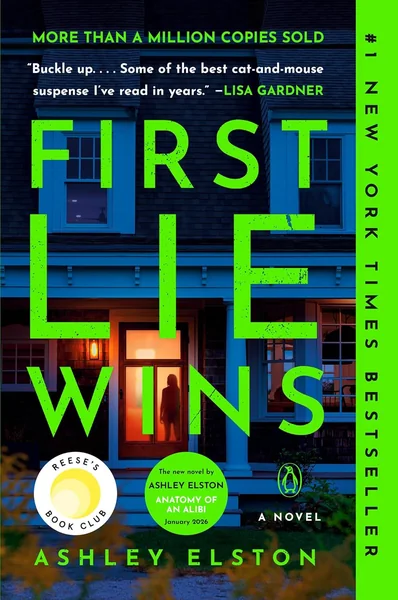
At a glance
LuvemBooks Verdict
Best for: Thriller readers who relish con-artist and identity-swap narratives, tolerate — even enjoy — non-linear timelines and sustained disorientation, and treat an unexpected twist as the reward rather than the problem.
Worth it? Skip it? Read the full verdict →Ask LuvemBooks
Was this helpful?
- Is it worth reading?
- For readers who want their suspense fiction to be genuinely difficult to anticipate, First Lie Wins is a compelling choice — it earned a New York Times bestseller designation, a Reese's Book Club selection, and substantive praise from the Sunday Times (London), New York Post, Atlanta Journal-Constitution, and Reader's Digest, all clustering around its plotting complexity and momentum. The Sunday Times observed that Elston 'handles a highly complicated plot with the assurance of someone who has been writing psychological suspense all her life' — a striking endorsement given this was her adult debut. The honest caveat is that the novel's multi-layered architecture demands sustained attention; readers who prefer psychological suspense driven by character interiority over plot mechanics may find the experience more tiring than thrilling.
- Similar books
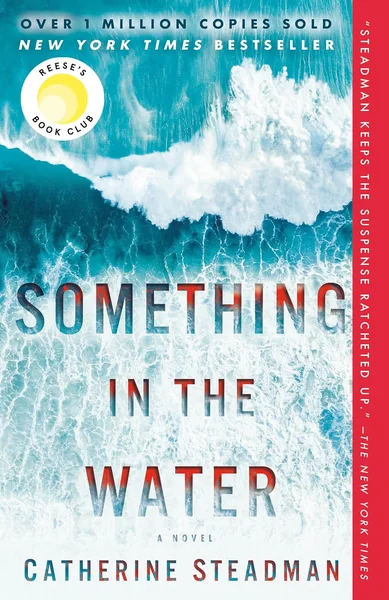
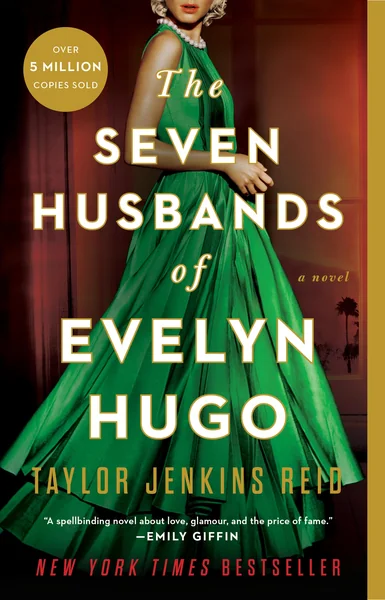
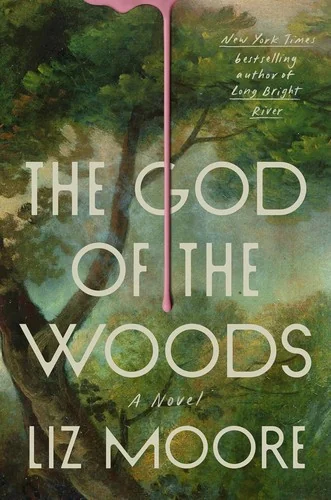
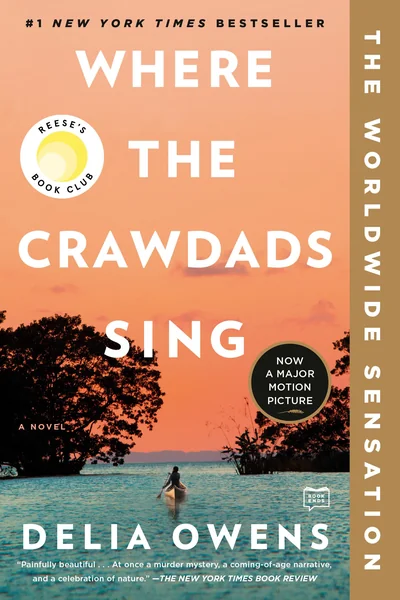
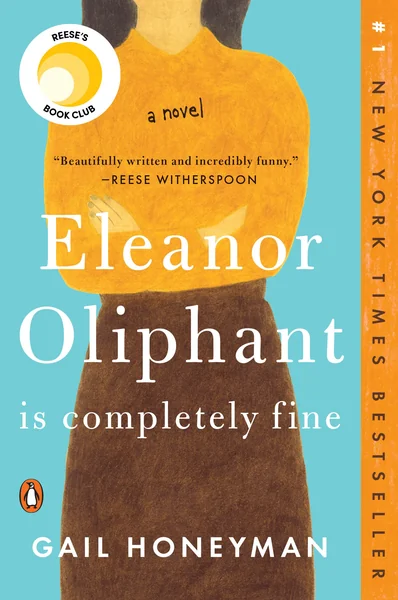
- Readers drawn to First Lie Wins will likely find strong matches among the curated selections below. Catherine Steadman's Something in the Water shares the morally compromised protagonist and slow-burn identity stakes, while Taylor Jenkins Reid's The Seven Husbands of Evelyn Hugo offers another layered narrative built around a woman whose constructed persona is central to the story. Liz Moore's The God of the Woods delivers similarly intricate plotting with non-linear structure, and Delia Owens' Where the Crawdads Sing — another Reese's Book Club pick with a fiercely self-reliant female lead — appeals to the same broad literary-thriller readership. For readers drawn to the identity and interiority angle, Gail Honeyman's Eleanor Oliphant Is Completely Fine explores a woman whose carefully maintained surface conceals a more complicated truth.
- Who should read this?
- First Lie Wins is precisely calibrated for fans of con-artist narratives, identity-swap thrillers, and stories where the protagonist is the most dangerous unknown quantity in the room. The review is explicit: this is a thriller that rewards engagement and punishes skimming — readers who treat an unexpected twist as the point, rather than a frustration, will find it delivers. The Reese's Book Club designation signals broad accessibility as entertainment, but the Sunday Times's observation about Elston's 'highly complicated plot' is the more useful signal for reader-matching. Readers who prefer psychological suspense driven primarily by character interiority, or who want clear moral allegiances to root for, will likely find the experience less satisfying.
- About Ashley Elston
- Ashley Elston holds a liberal arts degree from Louisiana State University in Shreveport and worked for many years as a wedding photographer before turning to writing. She lives in Louisiana with her husband and three sons. The author of six young adult novels, her adult debut, First Lie Wins, is a Reese's Book Club pick and a New York Times bestseller.
- What are the main themes?
- The central theme of First Lie Wins is identity — specifically, what a name and a fabricated history mean to selfhood. The publisher's reading guide frames this explicitly: the question is not merely atmospheric but genuinely embedded in Evie's choices and their consequences, including her decision to let the alias Lucca Marino take the fall for crimes she did not commit. Moral ambiguity runs throughout, with both Evie and Ryan written as characters who resist easy judgment. A.J. Finn's blurb characterizes the structural approach as a 'now-you-see-me-now-you-don't thriller' — a phrase that captures the novel's thematic interest in performance, concealment, and the instability of surface identity.
- Is the plot hard to follow?
- The plot complexity is First Lie Wins' defining characteristic — and its primary friction point. The novel is built on shifting timelines, multiple aliases for Evie, and carefully withheld information, all of which demand sustained attention and a tolerance for disorientation. The review is direct: this is a thriller that rewards engagement and punishes skimming. Readers who prefer psychological suspense driven primarily by character interiority rather than plot mechanics may find the novel's architecture more tiring than thrilling, while readers who treat an unexpected twist as the point will find the structure is precisely the appeal.
Summarize this book
Follow up
Synthesized from verified book data & published reviews · How we review
Press Enter to ask. Answers come from our editorial Q&A — start typing to see related questions.
Age & Reading Level
Recommended age
Adult
Reading level
Adult
2 content notes · who it suits
Content to know about
Skip if you prefer psychological suspense driven by emotional character interiority and want clear moral allegiances to root for.
Editorial Review
Ashley Elston's adult debut novel First Lie Wins is a tightly constructed psychological thriller built around Evie Porter — a woman whose entire existence is a fabrication — and the high-stakes game of identity, deception, and morally gray choices that defines her life. A New York Times bestseller and Reese's Book Club pick, the novel earned praise from major outlets for its intricate plotting and relentless pace, making it a strong recommendation for readers who prize unpredictability in their suspense fiction.
Read the Full ReviewBooks like First Lie Wins
Curated picks for readers who enjoyed First Lie Wins, with our reasoning for each match.
If you liked First Lie Wins
Why It’s Trending
Reese Witherspoon's Book Club Pick Keeps First Lie Wins in the Conversation
First Lie Wins was Reese Witherspoon's first Book Club pick of 2024, and the Reese's Book Club stamp continues to drive steady reader interest. Reese herself called it a 'fast-paced' thriller with 'everything' you want from the genre — and that kind of endorsement has a long shelf life.