David Graeber
1
Books ReviewedAsk LuvemBooks about David Graeber
- Where should I start?
- The Dawn of Everything is the natural starting point from what LuvemBooks has reviewed, and it also happens to be an excellent introduction to how Graeber thinks. It pairs his anthropological expertise with archaeologist David Wengrow's deep knowledge of early societies, resulting in a book that is both wide-ranging and grounded in evidence. Readers willing to engage with its ambitious scope will get a clear sense of Graeber's core preoccupation: questioning the stories we tell ourselves about how human civilization had to develop.
- What's their writing style?
- Graeber wrote with an argumentative directness unusual in academic work — he states his positions plainly and is willing to be polemical, but backs his claims with substantial evidence drawn from anthropology, archaeology, and history. His prose is accessible without being dumbed down, and he frequently uses rhetorical questions to expose assumptions he thinks readers have absorbed without realizing it. Co-authored with David Wengrow, The Dawn of Everything maintains this voice while adding an extra layer of archaeological specificity.
- Books we've reviewed
- LuvemBooks has reviewed one book by David Graeber: The Dawn of Everything: A New History of Humanity (co-authored with David Wengrow), a revisionist history of human prehistory that argues ancient societies were far more politically inventive than standard accounts suggest — it holds a reader rating of 4.5/5 from over 7,500 Amazon ratings.
- What genre do they write?
- Graeber's work sits primarily in narrative history and anthropology, though it consistently crosses into political theory and economics. The Dawn of Everything is shelved as history but functions as an argument about human possibility — using the deep past to challenge assumptions about how societies must be organized. Readers drawn to big-picture history and social science will feel most at home with his books.
- What should I read after The Dawn of Everything?
- If The Dawn of Everything sparked your interest in Graeber's broader argument about debt and economic history, his earlier book Debt: The First 5,000 Years is the obvious next step — it traces how debt has structured human relationships across cultures and millennia, with a similarly revisionist approach. For the political theory thread in his work, Bullshit Jobs applies his anthropological lens to contemporary labor, asking why so many people feel their work is meaningless. Both are widely available and show different dimensions of his thinking.
Who is David Graeber?
Follow up
Synthesized from verified book data & published reviews · How we review
Press Enter to ask. Answers come from our editorial Q&A — start typing to see related questions.

Authors Like David Graeber
James Madison
James Madison, the pen name of Charles Aronstein (August 27, 1870 – March 27, 1943), was an American theatre manager, writer, and publisher, best known for writing and publishing the periodical *Madison's Budget*.
1 book reviewed

Carl Sagan
Carl Edward Sagan (November 9, 1934 – December 20, 1996) was an American astronomer, planetary scientist, and science communicator born in Brooklyn, New York. Initially an assistant professor at Harvard, he later moved to Cornell, where he held the David Duncan Professor of Astronomy position. He authored works including *The Demon-Haunted World* (1995), aiming to explain the scientific method to general audiences.
1 book reviewed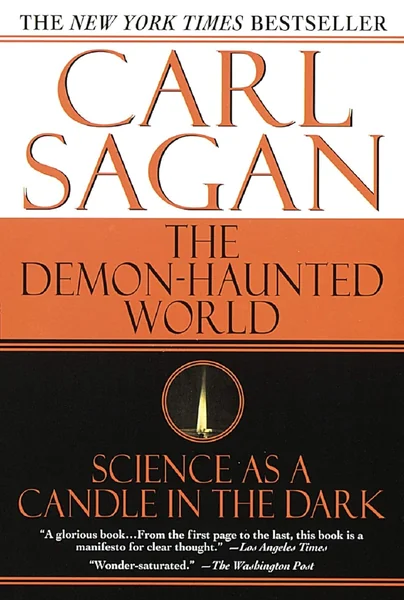

Jared Diamond
Jared Mason Diamond is an American scientist, historian, and author.
1 book reviewed
Alexander Hamilton
Alexander Hamilton was one of the Founding Fathers of the United States, an instrumental promoter of the U.S. Constitution, and founder of the nation's financial system. He co-wrote the 85 Federalist Papers essays (under the pseudonym "Publius") with James Madison and John Jay between October 1787 and May 1788, and published early political writings including *A Full Vindication of the Measures of Congress* and *The Farmer Refuted*.
1 book reviewedJohn Jay
John Jay (1745–1829) was a co-author of *The Federalist Papers* alongside Alexander Hamilton and James Madison, contributing five of the collection's eighty-five essays written under the pseudonym "Publius" to promote ratification of the U.S. Constitution. A proponent of strong, centralized government, he worked to ratify the Constitution in New York in 1788 and was recognized for his courage, zeal, and abilities as a writer.
1 book reviewedaa