Paul Kleinman
2
Books ReviewedAsk LuvemBooks about Paul Kleinman
- Where should I start?
- Psych 101 is the most accessible entry point into Kleinman's work, earning a 4.6/5 reader rating from over 2,400 Amazon reviews — the highest review count of his books we've covered. It introduces psychological concepts, tests, and statistics in a format that doesn't assume prior knowledge, making it a practical first read. If philosophy is your primary interest, Philosophy 101 covers the history of thought from Plato onward and works equally well as a standalone starting point.
- What's their writing style?
- Kleinman writes in a structured, reference-friendly style built for readers approaching a subject for the first time. His books tend to be organised around discrete topics or concepts rather than a single flowing narrative, which makes them useful as both cover-to-cover reads and dip-in references. The consistent "101" framing across his series signals a deliberate focus on breadth and clarity over academic depth.
- Books we've reviewed
- We've reviewed two of Paul Kleinman's books on LuvemBooks. Psych 101 covers psychological facts, statistics, and tests in a structured primer format, earning a 4.6/5 reader rating from over 2,400 Amazon reviews. Philosophy 101 traces the history of thought from Plato through ethics and metaphysics, with a 4.5/5 reader rating from 1,544 Amazon reviews.
- How do his books compare?
- Both Psych 101 and Philosophy 101 follow the same "101" primer structure, but they differ in content approach. Psych 101 leans heavily on facts, statistics, and psychological testing frameworks, giving it a more data-adjacent feel. Philosophy 101 is more historically organised, walking readers through major thinkers and schools of thought from ancient Greece to modern ethics. Psych 101 has a slightly higher reader rating (4.6 vs 4.5) and nearly 900 more Amazon reviews, though both are well-regarded.
- What genre does Paul Kleinman write?
- Kleinman writes introductory nonfiction, with his reviewed books spanning psychology and philosophy. His "101" series is designed to make academic disciplines accessible to general readers without requiring prior expertise. Both reviewed titles sit at the practical, survey-style end of nonfiction rather than in narrative or argumentative territory.
- What should I read after Psych 101?
- If Psych 101 sparked your interest in psychology, Kleinman's own Philosophy 101 is a natural next read if you want to stay within his accessible primer format and branch into a related discipline. For readers who want to go deeper into psychology specifically, books like Daniel Kahneman's Thinking, Fast and Slow offer a more narrative-driven exploration of cognitive psychology with significant research behind it.
Who is Paul Kleinman?
Follow up
Synthesized from verified book data & published reviews · How we review
Press Enter to ask. Answers come from our editorial Q&A — start typing to see related questions.
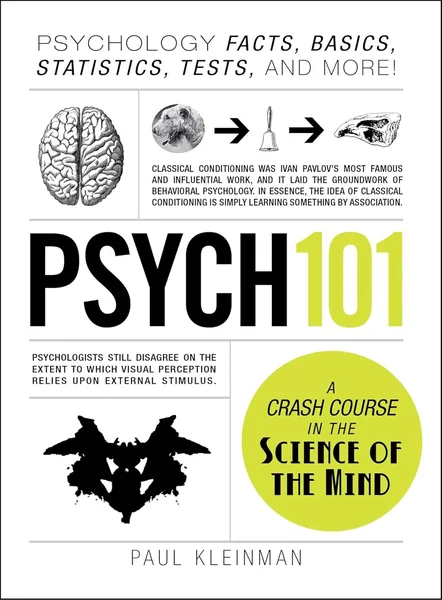
Psych 101: Psychology Facts, Basics, Statistics, Tests, by Paul Kleinman
4.6/5
Psych 101: Psychology Facts, Basics, Statistics, Tests, and More by Paul Kleinman is a compact, accessible introduction to psychology published by Adams Media in 2012, designed to strip away academic tedium and deliver the discipline's core theories, figures, and experiments in an engaging, quiz-driven format suited to curious general readers.
Reviewed Apr 1, 2026

Philosophy 101: From Plato by Paul Kleinman
4.5/5
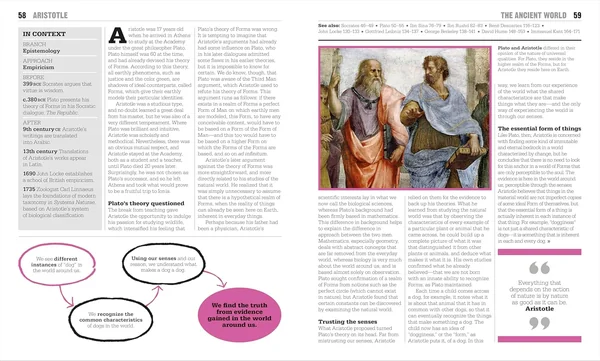
Paul Kleinman's Philosophy 101: From Plato and Socrates to Ethics and Metaphysics, an Essential Primer on the History of Thought, published by Adams Media in October 2013, is a wide-ranging introductory reference that walks general readers through the major figures, schools, and thought experiments of Western philosophy — from the Pre-Socratics through thinkers such as Kant, Hegel, and Voltaire — in a compact, entry-by-entry format designed for curious newcomers rather than academic specialists.
Reviewed Mar 18, 2026
Authors Like Paul Kleinman

Jonathan Haidt
Jonathan David Haidt is an American social psychologist and author.
3 books reviewed



Aldous Huxley
Aldous Leonard Huxley was an English writer and philosopher.
3 books reviewed

Charles Duhigg
Charles Duhigg is an American journalist and non-fiction author.
1 book reviewed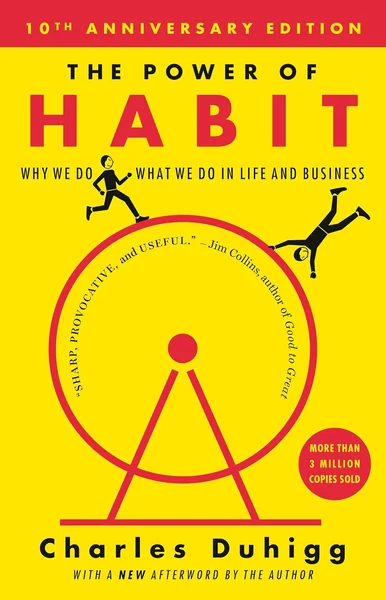
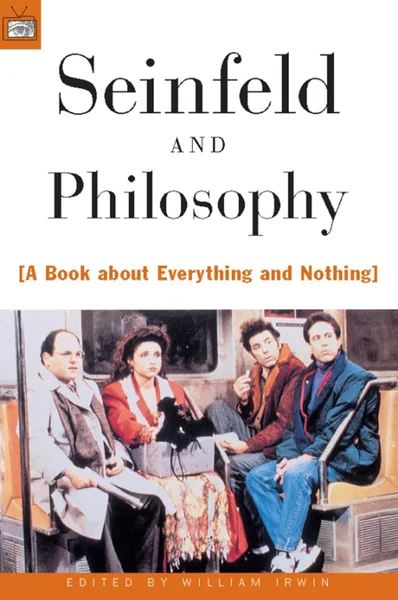
William Irwin
William Irwin is Professor of Philosophy at King's College in Wilkes-Barre, Pennsylvania and is best known for originating the "philosophy and popular culture" book genre with Seinfeld and Philosophy: A Book about Everything and Nothing in 1999 and The Simpsons and Philosophy: The D'oh! of Homer in 2001..
3 books reviewed

DK
James Madison
James Madison, the pen name of Charles Aronstein (August 27, 1870 – March 27, 1943), was an American theatre manager, writer, and publisher, best known for writing and publishing the periodical *Madison's Budget*.
1 book reviewed