Skip to content
Francis Fukuyama, author portrait
Photo:John Mathew Smith & www.celebrity-photos.com·CC BY-SA 4.0·
Commons

Francis Fukuyama

American
Born 1952
Francis Yoshihiro Fukuyama is an American political scientist, political economist, and international relations scholar. He is best known for The End of History and the Last Man (1992), which controversially argued that the worldwide spread of liberal democracies and Western free-market capitalism might represent the final step in humanity’s sociocultural evolution and the final form of human government.
The other books named are The Origins of Political Order, Political Order and Political Decay, and In the Realm of the Last Man. Their titles keep political order at the center—origins in one case, decay in another—while the last title echoes the “last man” wording of the 1992 book. That earlier argument concerned the direction of political struggle rather than an absence of events: it asked whether liberal democracy and market capitalism had become the endpoint of ideological development.
On LuvemBooks, we've reviewed 3 of Francis Fukuyama's books, including The Origins of Political Order, Political Order and Political Decay, and In the Realm of the Last Man.
3
Books Reviewed

In Francis Fukuyama's own words

Francis Fukuyama outlines the foundational arguments and three pillars of political institutions from his book The Origins of Political Order at the Carnegie Council.

Uploaded by GBH Forum Network, 2014 · Watch on YouTube ·
Cover of The Origins of Political Order: From Prehuman Times to the French Revolution By by aa
The Origins of Political Order: From Prehuman Times to the French Revolution By by aa

4.6/5

reader rating · 1,337 ratings

Francis Fukuyama's work of political science traces the development of human political institutions from primate social behavior through to the eve of the French Revolution, arguing that stable political order requires a strong modern state, the rule of law, and political accountability — a three-part framework built from wide-ranging comparative historical case studies across China, India, the Middle East, and Europe.

Reviewed Mar 6, 2026
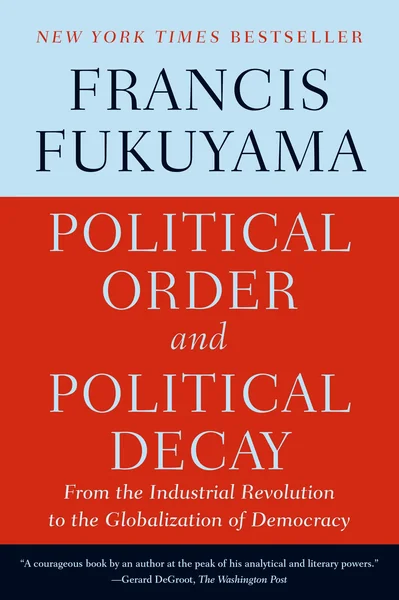
Cover of Political Order and Political Decay: From the Industrial Revolution to the Globalization of Democracy
Political Order and Political Decay: From the Industrial Revolution to the Globalization of Democracy

4.6/5

reader rating · 1,337 ratings

Francis Fukuyama's work Political Order and Political Decay is the second volume in his landmark series on the history of the modern state, picking up where The Origins of Political Order left off and tracing how state institutions developed — and began to erode — from the French Revolution to the present. Ambitious in geographical scope and deeply grounded in comparative political history, it is essential reading for anyone seeking to understand why liberal democracy succeeds in some settings and stagnates in others.

Reviewed Feb 14, 2026

Cover of In the Realm of the Last Man
In the Realm of the Last Man

4.5/5

reader rating · 39 ratings

In the Realm of the Last Man is Francis Fukuyama's intellectual memoir, charting his political evolution across five decades — from Allan Bloom's circle at Cornell to the halls of Washington power and a dramatic break with neoconservatism over Iraq. Critics find it more persuasive as political history than as personal memoir, making it essential reading for those already invested in Fukuyama's ideas.

Reviewed Oct 11, 2026

Ask LuvemBooks

​

Press Enter to ask. Answers come from our editorial Q&A — start typing to see related questions.

Authors Like Francis Fukuyama

Daron Acemoglu
Daron Acemoglu

Politics & Society
History
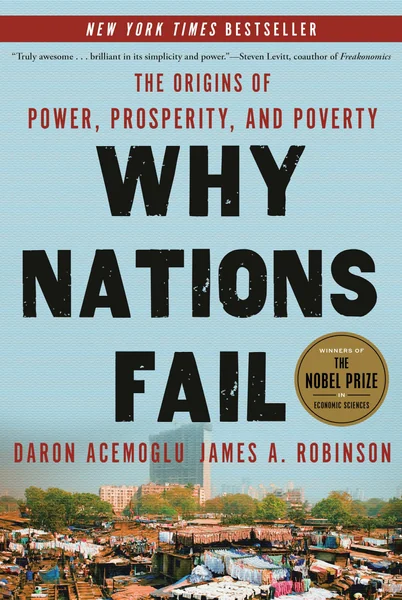
Daron Acemoglu's Why Nations Fail shares Fukuyama's big-history ambition and comparative method, applying economic frameworks and global case studies to examine why institutions endure or collapse into extraction.
1 book reviewed
Why Nations Fail: The Origins of Power, Prosperity, and Poverty
James A. Robinson

James A. Robinson

Politics & Society
History
James A. Robinson's Why Nations Fail shares Fukuyama's comparative big-history approach, using economic frameworks to examine why institutions succeed or collapse into extraction.
1 book reviewed
Why Nations Fail: The Origins of Power, Prosperity, and Poverty
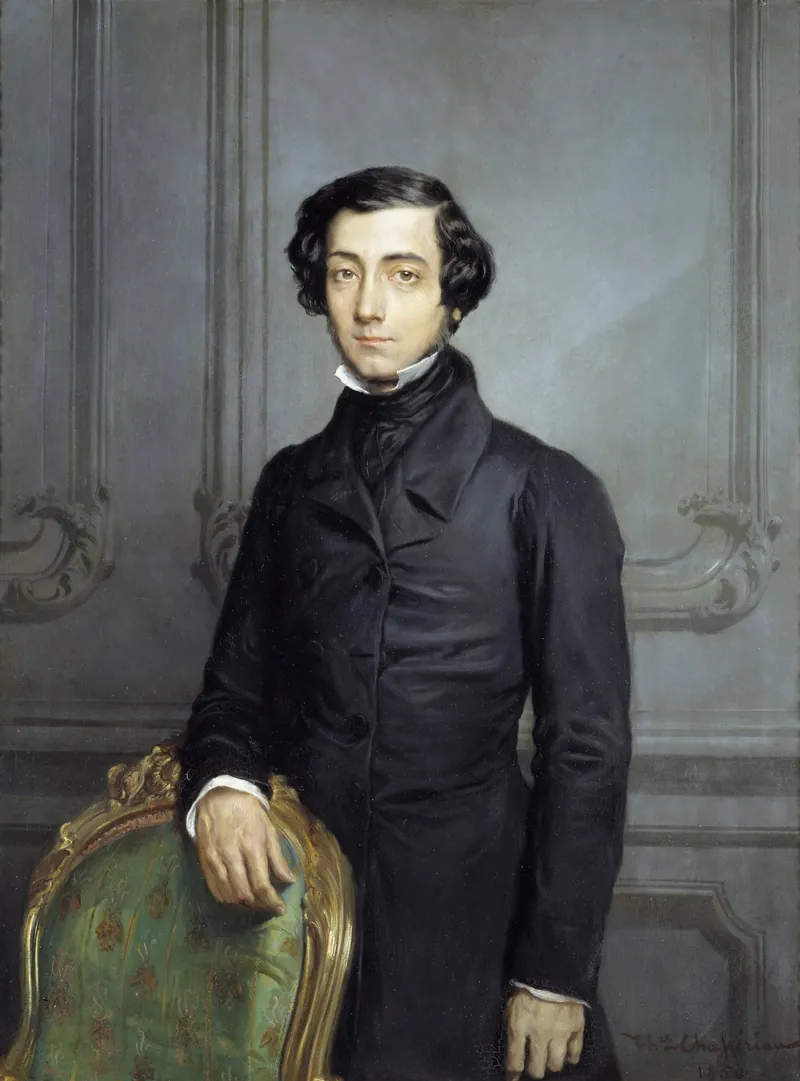
Alexis de Tocqueville

Alexis de Tocqueville

Politics & Society
History
Alexis de Tocqueville's Democracy in America examines democratic institutions, accountability, and civic decline, investigating the questions of political order that Fukuyama traces across history.
1 book reviewed
Democracy in America
Jared Diamond

Jared Diamond

Science & Nature
Politics & Society
History
Jared Diamond’s Guns, Germs, and Steel provides a grand-synthesis counterpoint to Fukuyama, explaining civilizational divergence through geography and biology rather than institutions.
1 book reviewed
Guns, Germs, and Steel: The Fates of Human Societies
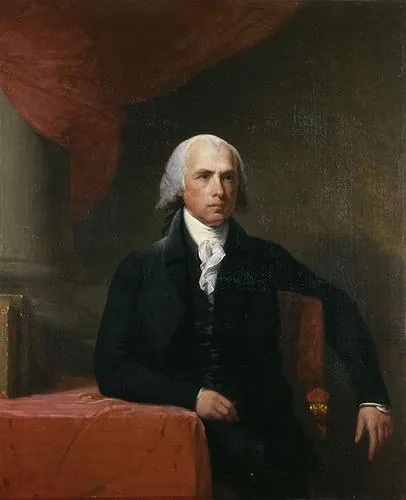
James Madison

James Madison

Science & Nature
Politics & Society
History
The Federalist Papers presents primary-source arguments on institutional design, exploring concerns about faction, corruption, and state weakness that Fukuyama analyzes in his studies of political order.
1 book reviewed
The Federalist Papers
A

Alexander Hamilton

Science & Nature
Politics & Society
History
Alexander Hamilton's The Federalist Papers provides the primary-source arguments for institutional design, detailing the early fears of faction, corruption, and state weakness that Fukuyama analyzes.
1 book reviewed
The Federalist Papers