9 min read
4.5
· 39 Amazon ratingsShare This Review
Our review
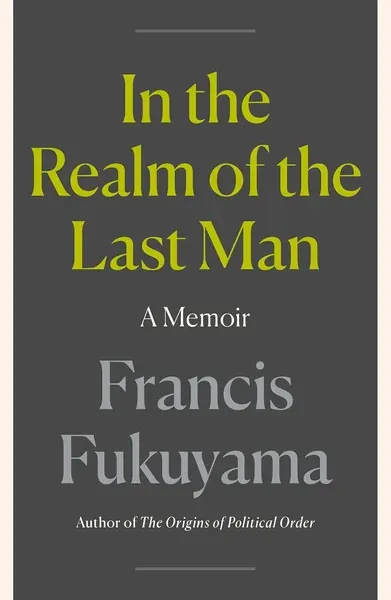
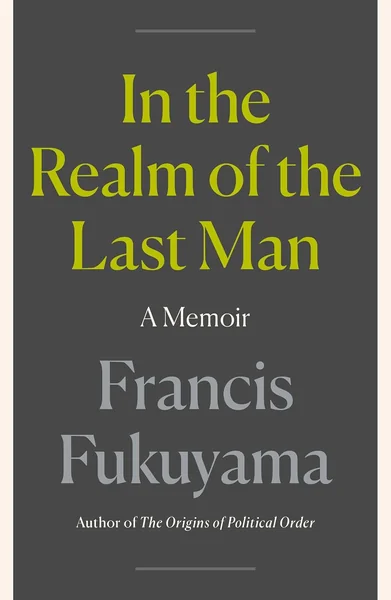
In the Realm of the Last Man
In the Realm of the Last Man by Francis Fukuyama Review: An Intellectual Memoir Reckoning With Democracy's Crisis
In the Realm of the Last Man is Francis Fukuyama's intellectual memoir, charting his political evolution across five decades — from Allan Bloom's circle at Cornell to the halls of Washington power and a dramatic break with neoconservatism over Iraq. Critics find it more persuasive as political history than as personal memoir, making it essential reading for those already invested in Fukuyama's ideas.
LuvemBooks Verdict
Best for
Readers already familiar with Fukuyama's body of work — The End of History, his writings on thymos and recognition — who want an unusually intimate account of how those frameworks were forged, tested, and revised across five decades of policy, power, and personal history.
Worth it if
Worth reading if you want to understand how one of liberal democracy's most influential architects built, believed in, and partially stepped back from the liberal-democratic consensus, told through firsthand encounters with institutions and world leaders that no purely scholarly work could replicate.
Skip if
Skip it if you're hoping for emotional depth and candid self-disclosure in the tradition of personal memoir, or if you have little prior familiarity with Fukuyama's theoretical vocabulary — thymos, the Last Man, the arguments of The End of History — since the book develops rather than introduces those ideas.
What readers & critics say
The Atlantic finds the book genuinely revealing about the evolution of Fukuyama's thought but notes that his defensiveness prevents him from fully reckoning with how far he has had to retreat from earlier positions, and judges the work disappointing as personal memoir. Bookmarks.reviews characterises it as less a personal memoir than "an inner monologue of post-cold war liberalism," while Quillette frames it as a substantive intellectual reckoning with why citizens of prosperous liberal democracies turn against the system.
“Purely as a memoir, this one is disappointing… his defensiveness keeps him from fully acknowledging how far he's had to step back from his own previously boosterish views.”
— The AtlanticAsk LuvemBooks
Was this helpful?
- Is it worth reading?
- For readers already familiar with Fukuyama's work, In the Realm of the Last Man is a compelling and largely unavailable-elsewhere account of how a generation's liberal-democratic consensus was built, believed in, tested, and partially abandoned. The memoir's greatest asset is the sheer range of its vantage points — few political thinkers of Fukuyama's generation have had direct access to Ivy League philosophy seminars, Cold War policy shops, and heads of state alike. Critics do flag a meaningful caveat: purely as a memoir, the book disappoints those seeking emotional or psychological depth, as Fukuyama's defensiveness limits how fully he reckons with the distance between his earlier optimism and his current, considerably gloomier view of liberal democracy. Readers new to his theoretical vocabulary will also find the experience less accessible, since the book develops rather than introduces concepts like thymos and the Last Man.
- Similar books
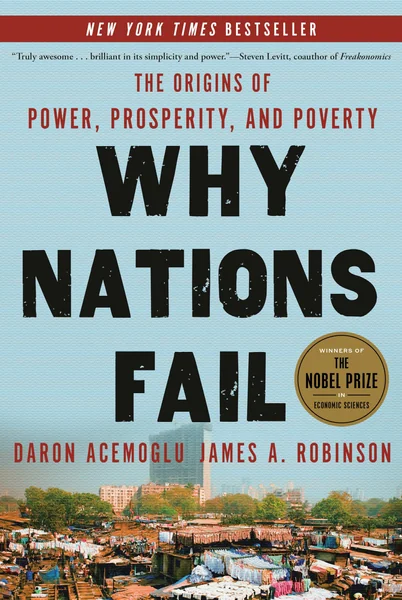
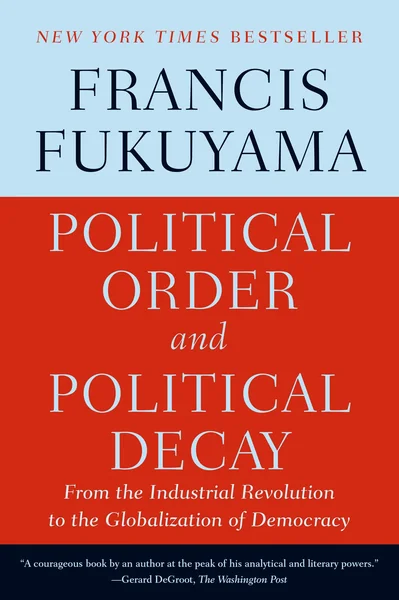
- Readers drawn to In the Realm of the Last Man will find natural companions in Fukuyama's own Political Order and Political Decay, which develops his institutional arguments across the sweep from the Industrial Revolution to contemporary globalization. Why Nations Fail by Daron Acemoglu and James A. Robinson offers a similarly ambitious account of political and economic institutions and why they succeed or collapse. For a personal-political memoir from inside the Washington foreign-policy world, Ben Rhodes' The World as It Is covers the Obama years with comparable insider access. Max Boot's The Corrosion of Conservatism traces a parallel intellectual journey — a prominent conservative's rupture with the Republican Party — making it a useful companion to Fukuyama's account of his own break with neoconservatism. Fear and Loathing on the Campaign Trail '72 by Hunter S. Thompson rounds out the related titles for readers interested in the intersection of political witness and literary memoir.
- Who should read this?
- In the Realm of the Last Man is essential reading for those already invested in Fukuyama's ideas — readers who have engaged with The End of History and the Last Man and want an unusually intimate account of how its theoretical frameworks were forged and revised under the pressure of real events. Political scientists, policy professionals, and engaged general readers who followed the neoconservative movement and its fracturing over Iraq will find the insider account compelling. Those seeking primarily a confessional or emotionally disclosive memoir are likely to be disappointed, as critics note the book's balance tilts firmly toward political philosophy and intellectual history. Readers unfamiliar with Fukuyama's core vocabulary — thymos, the Last Man, recognition — are advised to build that foundation before approaching this memoir.
- About Francis Fukuyama
- Francis Yoshihiro Fukuyama is an American political scientist, political economist, and international relations scholar.
- How does this compare to his other books?
- Unlike Political Order and Political Decay or The Origins of Political Order — which are expansive, historically grounded works of political science — In the Realm of the Last Man is Fukuyama's first sustained attempt at intellectual autobiography, using personal experience as the vehicle for revisiting his theoretical ideas. The result is a book with an unusual biographical texture: the scholarly concepts of recognition, thymos, and the Last Man are here grounded in firsthand encounters with institutions and world leaders rather than historical analysis. Critics note, however, that it functions more compellingly as political history than as personal memoir, which distinguishes it from the more straightforwardly analytical ambitions of his earlier major works.
- What are the key themes?
- The memoir's central preoccupations include the fragility of liberal democracy, the thymotic drive — the human desire for dignity, status, and struggle — that persists even within prosperous, stable societies, and the limits of recognition as a political foundation. Questions of identity, state power, and institutional trust run throughout, grounded in episodes from Fukuyama's own experience: the Japanese American internment, Cold War policy-making, and the failures of the Iraq War. The book also grapples with the tension between Fukuyama's earlier theoretical optimism and his current considerably gloomier assessment of democracy's trajectory — a tension that The Atlantic identifies as the memoir's core.
Summarize this book
Follow up
Synthesized from verified book data & published reviews · How we review
Press Enter to ask. Answers come from our editorial Q&A — start typing to see related questions.
Our Review
What the Book Actually Is
The Conceptual Architecture: Personal History as Political Philosophy
A Thinker Defending and Revising His Legacy
Strengths: Scope, Access, and the Weight of Witness
Limitations: The Memoir's Personal Register
Sources & Further Reading
The key facts and claims in this review are grounded in the retrieved, verified sources listed below.
- 1
Francis Fukuyama, Wikipedia
- 2
fukuyama.people.stanford.edu
- 3
theatlantic.com
- 4
fsi.stanford.edu
- 5
profilebooks.com
- 6
quillette.com
- 7
- 8
baconsrebellion.com
- 9
haveyounotread.substack.com
- 10
us.macmillan.com
Age & Reading Level
Recommended age
Adult
Reading level
Adult
who it suits
Skip if you are looking for emotionally revealing personal memoir rather than political philosophy refracted through autobiography
Reader reviews
Be one of the first readers to answer.
Read it? Was it right for you?
Books like In the Realm of the Last Man
Curated picks for readers who enjoyed In the Realm of the Last Man, with our reasoning for each match.
More by Francis Fukuyama

If you liked In the Realm of the Last Man