8 min read
Share This Review
The Origins of Political Order by Francis Fukuyama Review: A Sweeping Comparative History of Governance
Francis Fukuyama's work of political science traces the development of human political institutions from primate social behavior through to the eve of the French Revolution, arguing that stable political order requires a strong modern state, the rule of law, and political accountability — a three-part framework built from wide-ranging comparative historical case studies across China, India, the Middle East, and Europe.
LuvemBooks Verdict
Best for
Readers with a serious interest in political science, comparative history, or the theory of state formation who want a rigorous, panoramic account of how modern governance institutions emerged — and why replicating them in fragile states is so difficult.
Worth it if
Worth engaging with if you are prepared to treat it as the first half of a larger two-volume project, reading it alongside its sequel Political Order and Political Decay for the full arc from prehuman times to the present day.
Skip if
Skip it if you are looking for deep, sustained analysis of a single civilization or region — the universalist sweep inevitably compresses the internal complexity of ancient China, Mughal India, and the Ottoman Empire into a frame that some critical readers have found too broad to sustain rigorously across every territory it covers.
What readers & critics say
Kirkus Reviews called the work "endlessly interesting" and praised it as a sweeping, provocative big-picture study, comparing it favorably to Huntington while noting Fukuyama defies easy ideological categorization. Foreign Affairs described it as a "landmark study," and Stanford's CDDRL characterized it as a "brilliant, provocative work" offering fresh insights on the origins of democratic societies — though aggregated critical reception, as reflected in the Wikipedia entry, also notes that some reviewers felt the geographic and historical scope exceeded what a single volume could rigorously sustain across all the civilizations covered.
“Endlessly interesting — reminiscent in turns of Oswald Spengler, Stanislaw Andreski and Samuel Huntington, though less pessimistic and much better written.”
— Kirkus ReviewsAsk LuvemBooks
Was this helpful?
- Is it worth reading?
- For readers with a genuine interest in political science, comparative history, or the theory of state formation, LuvemBooks regards The Origins of Political Order as a landmark work that justifies its considerable length and ambition. Fukuyama advances a clear, testable thesis grounded in evidence drawn from civilizations as distant as ancient China and feudal Europe, and he anchors abstract institutional theory in pointed contemporary stakes — from the collapse of the Iraqi state after the 2003 U.S. invasion to the intractability of governance in Somalia and Haiti. The primary caveat is that the breadth of coverage compresses the treatment of individual civilizations, so readers expecting equivalent depth on every region surveyed may find certain sections thinner than others. Those drawn to grand synthesis in the tradition of Huntington's Political Order in Changing Societies or Jared Diamond's Guns, Germs, and Steel will find it genuinely illuminating.
- Similar books
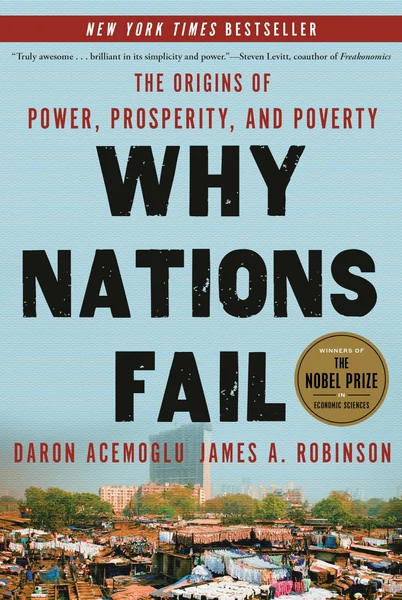
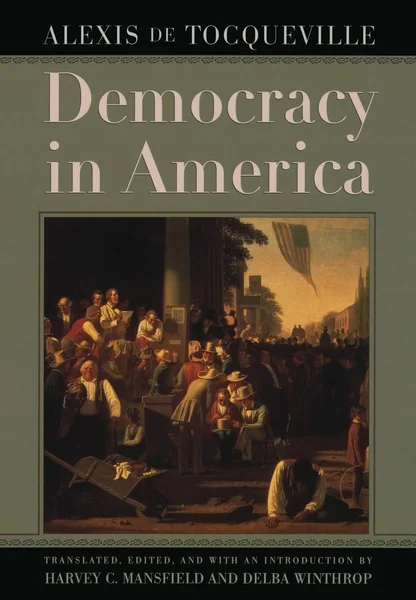
- Readers who engage with The Origins of Political Order are well placed to explore several closely related works. Fukuyama's own sequel, Political Order and Political Decay: From the Industrial Revolution to the Globalization of Democracy, completes the two-volume project and is the natural next step. Daron Acemoglu and James A. Robinson's Why Nations Fail: The Origins of Power, Prosperity, and Poverty offers a complementary institutional account of why some societies prosper and others collapse. Jared Diamond's Guns, Germs, and Steel: The Fates of Human Societies — explicitly cited by Fukuyama as a comparable work in scope — examines the environmental and geographical roots of civilizational divergence. Alexis de Tocqueville's Democracy in America provides a foundational perspective on political accountability and democratic institutions that speaks directly to Fukuyama's framework. Francis Fukuyama's earlier The End of History and the Last Man and Will Durant and Ariel Durant's The Lessons of History round out the intellectual tradition, though those titles are not currently in the LuvemBooks catalogue.
- Who should read this?
- The Origins of Political Order is designed for readers with a serious interest in political science, comparative history, or the theory of state formation. It will resonate particularly with those drawn to the grand-synthesis tradition — readers who responded to Huntington's Political Order in Changing Societies or Diamond's Guns, Germs, and Steel — as well as policy-minded readers seeking a deep historical context for understanding why state-building efforts in places like Iraq, Afghanistan, and Somalia have proven so intractable. Those seeking a narrowly focused regional or period study should be aware that the panoramic structure is demanding and inevitably compresses some civilizations. Readers who engage with it as the first volume of a two-part project will get the most out of Fukuyama's framework.
- What are the main themes?
- The book's central theme is the emergence and fragility of political order — specifically, why some societies successfully develop a strong state, rule of law, and political accountability while others do not. Fukuyama threads a comparative analysis of political development across ancient China (which he identifies as the site of the first modern state), India, the Middle East, and feudal Europe, showing how each civilization arrived at different institutional configurations. A recurring concern is the contingency of political order: Fukuyama notes that at the time of writing, ninety contemporary societies characterized as 'primitive' had been engaged in war, underscoring that stability is never automatic. The problem of 'getting to Denmark' — how societies achieve conditions of stability, prosperity, and honest governance — serves as the book's unifying intellectual framework.
- How does it compare to Fukuyama's other works?
- The Origins of Political Order is the first volume of Fukuyama's two-part institutional history; its direct sequel, Political Order and Political Decay: From the Industrial Revolution to the Globalization of Democracy (2014), extends the framework into the modern era and is reviewed in the LuvemBooks catalogue. Compared to Fukuyama's earlier and more famous The End of History and the Last Man, this work is more empirically grounded and historically detailed, trading the sweeping philosophical provocation of the earlier book for a rigorous comparative methodology. Together, the two institutional volumes represent the fullest expression of Fukuyama's thinking about how modern governance came to be.
- What intellectual tradition does it belong to?
- Fukuyama explicitly positions The Origins of Political Order as an extension of Samuel P. Huntington's Political Order in Changing Societies, placing it within a tradition of grand comparative political theory concerned with how institutions develop and why they fail. Wikipedia's reception entry notes that the book is also comparable in scope to Jared Diamond's Guns, Germs, and Steel, signaling its ambition to synthesize evidence across civilizations and millennia rather than offer a narrowly focused regional study. Fukuyama also engages directly with Amartya Sen's democratic theory, making the book a genuine contribution to an ongoing debate rather than a purely historical exercise.
Summarize this book
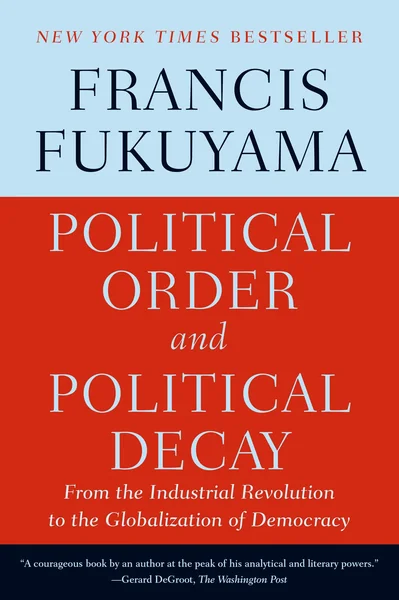
Political Order and Political Decay: From the Industrial Revolution to the Globalization of Democracy by Francis Fukuyama
Francis Fukuyama's work Political Order and Political Decay is the second volume in his landmark series on the history of the modern state, picking up where The Origins of Political Order left off and tracing how state institutions developed — and began to erode — from the French Revolution to the present. Ambitious in geographical scope and deeply grounded in comparative political history, it is essential reading for anyone seeking to understand why liberal democracy succeeds in some settings and stagnates in others.
View on LuvemBooks →
The Origins of Political Order: From Prehuman Times to the French Revolution By by aa
Francis Fukuyama's work of political science traces the development of human political institutions from primate social behavior through to the eve of the French Revolution, arguing that stable political order requires a strong modern state, the rule of law, and political accountability — a three-part framework built from wide-ranging comparative historical case studies across China, India, the Middle East, and Europe.
View on LuvemBooks →
Follow up
Synthesized from verified book data & published reviews · How we review
Press Enter to ask. Answers come from our editorial Q&A — start typing to see related questions.
Age & Reading Level
Recommended age
Adult
Reading level
Adult
who it suits
Skip if you're looking for a focused, in-depth study of a single civilization or historical period rather than a sweeping cross-civilizational synthesis.
Our Review
What the Book Actually Is and Argues
The Animating Question: "Getting to Denmark"
Scope, Intellectual Lineage, and Significance
Where the Ambition Creates Friction
Who This Book Is For
Sources & Further Reading
The key facts and claims in this review are grounded in the retrieved, verified sources listed below.
- Cited in this review
- 1
- 2
washingtonindependentreviewofbooks.com
- Further reading
- 3
fukuyama.people.stanford.edu
- 4
en.wikipedia.org
- 5
- 6
- 7
- 8
Books like The Origins of Political Order
Curated picks for readers who enjoyed The Origins of Political Order, with our reasoning for each match.
If you liked The Origins of Political Order