BOOKS
Published

Read Time

3 min read

Curated & edited by

LuvemBooks Editorial

How we create our reviews →
Share This Review

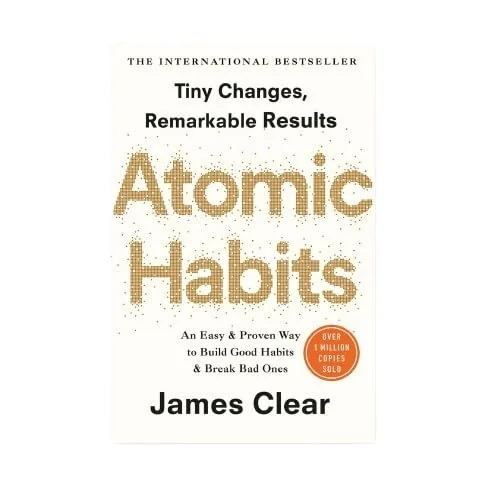
The Atomic Habits Workbook by James Clear Review: A Practical Interactive Companion for Habit-Builders

Published by Avery in December 2025, The Atomic Habits Workbook is the official interactive companion to James Clear's New York Times bestseller Atomic Habits, designed to move readers from understanding Clear's habit-formation framework to actively applying it through guided exercises, journaling prompts, tracking templates, and new material on the role of fun in habit formation.

LuvemBooks Verdict

Best for

Committed readers of Atomic Habits who have absorbed Clear's Four Laws framework and now want a structured, write-in practice — habit-tracking templates, habit-stacking guides, journaling prompts, and plateau-busting strategies — to move from theory into personal application.

Worth it if

You've already read Atomic Habits (or plan to read it alongside this workbook) and are ready to invest sustained effort in the exercises, because the value here is directly proportional to the work you put in.

Skip if

You haven't read Atomic Habits and are looking for a self-contained introduction to Clear's system, or you prefer a straightforward read over an active, write-in self-reflection format.

What readers & critics say

Retrieved sources cover the original Atomic Habits rather than this workbook specifically. Wikipedia notes that The Guardian's Steven Phillips-Horst criticised the original book as pseudoscientific, alleging unsound methodology and circular logic, while reader reviewers across multiple blogs describe it as a motivating, practically useful read. No published critical reception for The Atomic Habits Workbook itself was retrieved.

Steven Phillips-Horst called Atomic Habits pseudoscientific, alleging unsound methodology and circular logic.

The Guardian (via Wikipedia)

A game-changer… he simplifies behavior change into small, actionable steps that are easy to apply in daily life.

Luke Harkness

I saw a lot of my own routines and habits mirrored in what James Clear writes about.

Heidi Dischler

Wow! I am so motivated and have so many ideas I want to try after reading Atomic Habits.

Forward Fitness STL
Sources: Wikipedia – Atomic Habits, Luke Harkness, Heidi Dischler, Forward Fitness STL
4.7from 645 Amazon ratings— reader ratings, not a LuvemBooks score

Look inside the book

Preview the actual pages, via Google Books
In This Review
  • What Works & What Doesn't
  • What This Workbook Is and What It Contains
  • Its Place in the Atomic Habits Ecosystem
  • What the Design Is Built to Do
  • Genuine Limitations to Consider
  • Who This Book Is Genuinely For

What Works & What Doesn't

What Works
  • Official companion to a 25-million-copy #1 New York Times bestseller, extending a proven framework into interactive, applied practice
  • Includes new material from James Clear on the role of fun in habit formation, offering content beyond the original book
  • Structured progression of tools — habit-tracking templates, habit-stacking guides, journaling prompts, and plateau-busting strategies — covers multiple stages of the habit-building journey
  • Addresses the social and physical environment as forces shaping habits, reflecting the depth of Clear's original system rather than just surface-level tips
What Doesn't
  • Designed as a companion to Atomic Habits, not a standalone text — readers unfamiliar with Clear's framework will lack the conceptual grounding the workbook presupposes
  • The active, write-in format demands sustained reader participation; those seeking a passive reading experience will find the workbook a poor fit
This review covers the content and design of The Atomic Habits Workbook based on publisher materials and available published sources, not hands-on use.

What This Workbook Is and What It Contains

The Atomic Habits Workbook (Avery, December 2025) is the official companion to Atomic Habits, the book Penguin Random House describes as a 25-million-copy, #1 New York Times bestseller. Where the original book introduced James Clear's Four Laws of Behavior Change framework — a structured system for building good habits and dismantling unwanted ones — this workbook is designed to translate those theories into direct, personal application. According to the publisher, it includes guided templates for habit tracking and habit stacking, journaling prompts for assessing physical and social environments, strategies for pushing through the habit plateau, and plans for adapting habits to life's changing circumstances. The workbook also introduces new ideas from Clear himself, specifically on the role of fun in habit formation — material that goes beyond what the original book covered.

Its Place in the Atomic Habits Ecosystem

Clear's reach in the self-development space is substantial: beyond the original book, his "3-2-1" newsletter reaches more than three million subscribers weekly, according to Penguin Random House. The workbook arrives as what the publisher calls "the next step in your habits toolkit," positioning it not as a repackaging of existing content but as an extension of the system. Barnes & Noble describes it as an interactive handbook that "expands on the themes of improvement and productivity first introduced in his bestselling phenomenon," and characterizes it as a must-have for anyone looking to transform habits in a self-reflective way. For the large and established Atomic Habits readership, this workbook functions as the applied, writeable counterpart to the conceptual foundation already laid.

What the Design Is Built to Do

The workbook's structure is explicitly step-by-step, per the publisher's description — moving the reader along a progression from understanding habits to living them. The journaling prompts are designed to surface not just what habits a reader wants to build, but the environmental and social forces shaping those habits, which reflects Clear's broader argument that behavior change depends on systems, not willpower alone. Habit-stacking templates give users a concrete method for pairing new behaviors with existing routines, and the plateau-breaking strategies address one of the most common friction points in long-term habit maintenance. This suite of tools is calibrated to readers who have already encountered Clear's framework and are ready to move from passive reading to structured self-examination.

Genuine Limitations to Consider

Because this is a companion workbook rather than a standalone text, readers who have not read Atomic Habits will be working with Clear's system at one remove — the workbook is built on a conceptual foundation that lives in the original book. The publisher's own framing reinforces this: it is described as the official companion and the "next step," language that presupposes prior engagement. Additionally, the workbook format is inherently personal and active; readers seeking a straightforward read rather than a structured, write-in self-reflection practice will find this format a poor match for their habits. The value here is proportional to the effort a reader puts into the exercises themselves.

Who This Book Is Genuinely For

The Atomic Habits Workbook is most directly suited to two audiences: committed fans of the original book who want a structured method for putting Clear's system to work, and self-improvement readers who favor reflective, exercise-driven formats over purely theoretical texts. The inclusion of new ideas on fun and habit formation gives even those deeply familiar with Atomic Habits a reason to engage with fresh material. Readers newer to Clear's framework would benefit most from pairing this workbook with the original text. For the self-development category broadly, it represents a publisher and author meeting documented reader demand for actionable, personalized follow-through tools — a companion that is designed, as the publisher states, to make small changes that deliver remarkable results.

Sources & Further Reading

The key facts and claims in this review are grounded in the retrieved, verified sources listed below.

  1. Cited in this review
  2. 1
  3. 2
  4. 3
  5. Further reading
  6. 4
    James Clear — author profileHigh-authority source

    James Clear, Wikipedia

  7. 5
  8. 6
  9. 7
  10. 8
  11. 9
  12. 10
  13. 11
  14. 12
  15. 13
  16. 14
  17. 15