BOOKS
Published

Read Time

3 min read

Curated & edited by

LuvemBooks Editorial

How we create our reviews →
Share This Review

The Artist's Way: 30th Anniversary Edition by Julia Cameron Review: A Landmark Creative-Recovery Program

Three decades after its original publication, Julia Cameron's The Artist's Way remains one of the most enduring self-help programs for creative recovery, now reissued in a 30th Anniversary Edition by Tarcher. Built around two foundational practices — Morning Pages and the Artist Date — the twelve-week program has sold over four million copies and earned praise from The New York Times and Vogue, cementing its place as a touchstone for blocked or aspiring artists of every kind.

LuvemBooks Verdict

Best for

Anyone who feels their creative life is stalled, buried, or entirely dormant — whether a working artist experiencing block or someone who has never thought of themselves as an artist but senses an unmet creative hunger — and who is prepared to commit to a structured, spiritually inflected twelve-week program of daily practice.

Worth it if

Worth it if you are ready to follow a week-by-week framework with daily Morning Pages and weekly Artist Dates, and are open to Cameron's framing of creativity as something close to a spiritual practice rather than a purely psychological or analytical exercise.

Skip if

Skip it if you prefer secular, evidence-based approaches to creative development, want modular tips you can dip in and out of, or find motivational affirmations and repetitive spiritual language more alienating than energising.

What readers & critics say

The New York Times line — quoted across multiple bookseller pages including Tertulia and Barnes & Noble — pinpoints the book's democratising premise: through "its gentle affirmations, inspirational quotes, fill-in-the-blank lists and tasks… The Artist's Way proposes an egalitarian view of creativity: Everyone's got it." Vogue, as cited on Tertulia and Vroman's Bookstore, credits Morning Pages with becoming "a household name, a shorthand for unlocking your creative potential," while the reviewer at The Blue Garret notes that the book shows its age in some of its cultural references, even as its core Morning Pages practice proved immediately generative for their own creative work.

Sources: Tertulia, Vroman's Bookstore, The Blue Garret, Bookshop.org
4.7from 14,189 Amazon ratings— reader ratings, not a LuvemBooks score

Look inside the book

Preview the actual pages, via Google Books
In This Review
  • What Works & What Doesn't
  • What the Book Is and What It Contains
  • Significance and Cultural Reach
  • Core Strengths: Accessibility and Egalitarian Philosophy
  • Genuine Limitations and Who It May Frustrate
  • Who This Edition Is For

What Works & What Doesn't

What Works
  • Over four million copies sold, with a 4.9/5.0 rating across more than 21,000 reviews at Bookshop.org — one of the most broadly embraced creative self-help programs ever published
  • The twelve-week structure with Morning Pages and the Artist Date gives readers a concrete, week-by-week framework rather than abstract advice
  • Critical coverage has noted its egalitarian premise — that creativity is accessible to everyone — making it relevant far beyond professional artists
  • Vogue credits Morning Pages with becoming a household phrase for unlocking creative potential, reflecting the book's lasting cultural impact
  • Publisher materials and bookseller descriptions confirm the program addresses both identifying creative blocks and providing practical techniques to move through them
What Doesn't
  • The program's consistent spiritual framing — creativity understood through the lens of a higher creative force — will not resonate with readers who prefer secular or evidence-based approaches
  • The twelve-week daily commitment, centered on Morning Pages, requires sustained discipline that may not suit readers seeking quick or modular creative techniques
  • The motivational, affirmation-heavy tone can feel repetitive for readers who prefer analytical or rigorously structured instruction
A cornerstone of creative self-help literature, The Artist's Way by Julia Cameron has sold over four million copies and continues to find new readers more than three decades after it first appeared.

What the Book Is and What It Contains

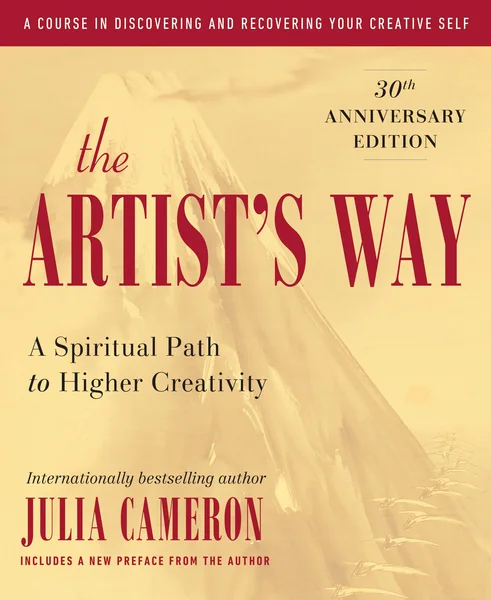
The Artist's Way: 30th Anniversary Edition by Julia Cameron front cover
The Artist's Way is a twelve-week self-help program designed to guide readers through what Cameron frames as creative recovery. Each week is structured around readings, reflective exercises, fill-in-the-blank lists, and tasks — examples drawn from the publisher's materials include writing oneself a thank-you letter and imagining oneself at age eighty. The program is built on two central practices: Morning Pages, a daily ritual of longhand stream-of-consciousness writing, and the Artist Date, a weekly solo outing intended to replenish creative reserves. Cameron also offers guidance on forming a "Creative Cluster" — a small group of fellow artists who provide mutual support throughout the process. The book's stated aim is to help readers identify the internal pressure points and blocked areas that restrict creative flow, and to provide concrete techniques for moving through them.

Significance and Cultural Reach

Few books in the self-help genre have achieved the sustained cultural footprint of The Artist's Way. Vogue has noted that "Morning Pages have become a household name, a shorthand for unlocking your creative potential," a testament to how thoroughly Cameron's vocabulary has entered mainstream creative culture. The book is credited, in publisher materials, with inspiring figures such as Elizabeth Gilbert, and its readership spans writers, visual artists, musicians, and professionals across fields who do not identify as artists at all. With over four million copies sold — a figure confirmed across multiple retail and publishing sources — the book's longevity is not merely nostalgic; the 30th Anniversary Edition from Tarcher attests to continued commercial and cultural relevance. At Bookshop.org, the title carries a 4.9 out of 5.0 rating across more than 21,000 reviews, a remarkably high consensus for a book of this age and reach.

Core Strengths: Accessibility and Egalitarian Philosophy

The New York Times, in a line that has been widely circulated, described the book's proposition plainly: through "its gentle affirmations, inspirational quotes, fill-in-the-blank lists and tasks… The Artist's Way proposes an egalitarian view of creativity: Everyone's got it." That democratizing premise — that creativity is not the province of the gifted few but a recoverable capacity in anyone — is central to the book's design and a primary source of its broad appeal. Cameron's approach, as characterized by Strand Books and the publisher, is to treat creative block as a diagnostic and solvable problem rather than a fixed personal failing. The program's structure, advancing week by week with exercises that build on one another, gives readers a clear framework to follow rather than an open-ended collection of advice.

Genuine Limitations and Who It May Frustrate

The Artist's Way's framework carries a strong spiritual dimension — Cameron draws explicitly on concepts of a higher creative force and frames the recovery process in terms that some readers find meaningful and others find alienating. The book does not shy away from this language, and readers who prefer secular or strictly psychological approaches to creativity may find the spiritual framing a persistent friction rather than a resource. Additionally, the twelve-week commitment, with its daily Morning Pages requirement, demands a significant and consistent investment of time. Readers looking for quick techniques or a dip-in reference will find the program's all-or-nothing structure a poor fit; it is designed as a sustained course of practice, not a collection of standalone tips. Some readers, as noted in aggregated reviews, have also observed that the book's self-referential tone and repetitive affirmations can feel more motivational than analytical for those who prefer rigorously evidence-based approaches to creative development.

Who This Edition Is For

The 30th Anniversary Edition is the version currently in wide circulation from Tarcher, and it brings Cameron's complete twelve-week program to a new generation of readers. One passage from the book captures its tone and its aspirations: "Making our art, we make artful lives. Making our art, we meet firsthand the hand of our Creator." That language signals both the book's ambitions and its register — it speaks to readers prepared to treat creative work as something close to a spiritual practice. For anyone who has long felt that their creative life is stalled, buried, or entirely dormant, The Artist's Way offers a structured, widely tested path toward reclaiming it. It is equally relevant for working artists experiencing block as for people who have never thought of themselves as artists at all but feel an unmet creative hunger. Those who have tried and abandoned the program before may find the anniversary edition a useful re-entry point; Cameron's core methodology has not changed, and the record of four million readers suggests it continues to meet its audience where they are.

Sources & Further Reading

The key facts and claims in this review are grounded in the retrieved, verified sources listed below.

  1. Cited in this review
  2. 1
  3. 2
  4. Further reading
  5. 3

    Julia Cameron, Wikipedia

  6. 4
  7. 5
  8. 6
  9. 7
  10. 8
  11. 9