
3 min read
4.7
· 54,420 Amazon ratingsShare This Review
The Power of Now by Eckhart Tolle Review: A Global Spiritual Phenomenon Worth Examining
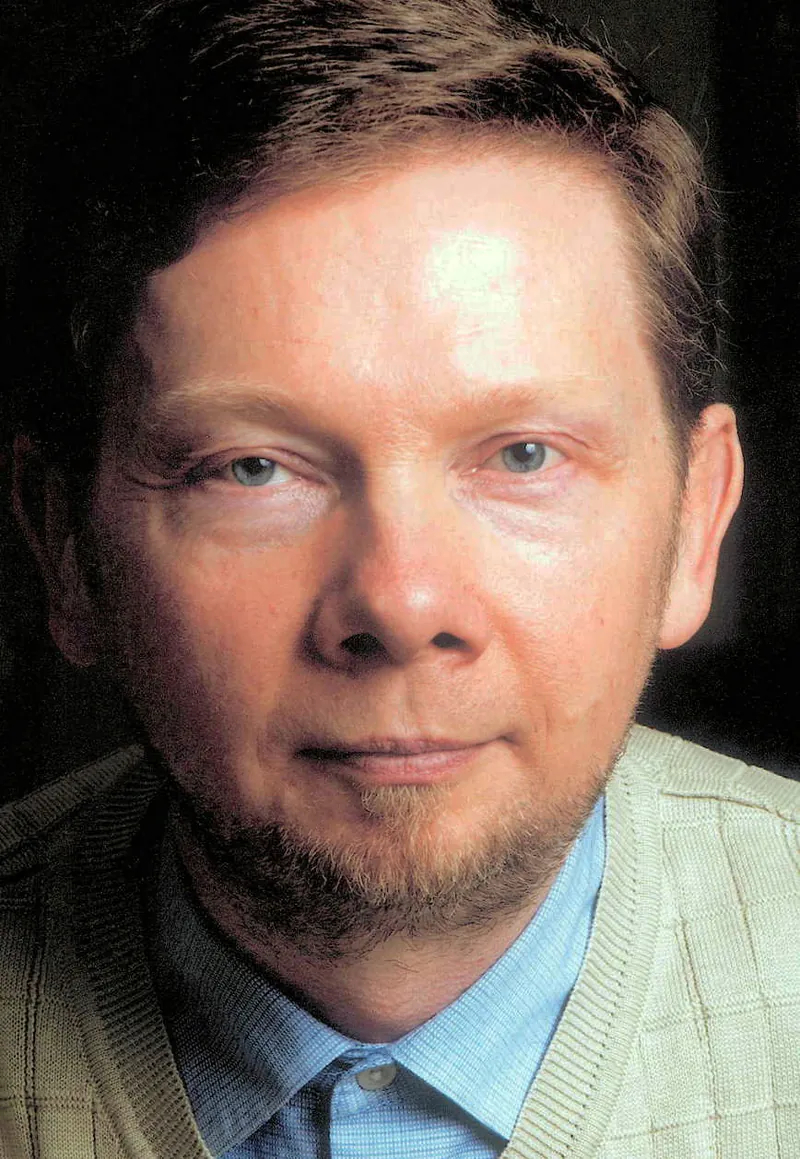
A self-help and spiritual guide first published in 1997, The Power of Now by Eckhart Tolle has sold 16 million copies worldwide and been translated into 33 languages, building its reputation on one central argument: that human suffering stems from identification with the thinking mind, and that relief lies in anchoring oneself to the present moment. This review covers the book's content, structure, cultural reach, and genuine limitations as documented in published sources — not from hands-on application.
LuvemBooks Verdict
Best for
Readers already open to contemplative or spiritual frameworks — Buddhist, mystical, or broadly non-denominational — who want an accessible, widely discussed entry point into present-moment awareness and the idea that habitual suffering stems from over-identification with thought.
Worth it if
Worth engaging with if you're willing to meet the book on its own experiential, reflective terms rather than expecting a structured, evidence-based self-improvement programme.
Skip if
Skip it if you want empirically grounded mental-health guidance or tightly argued practical instruction — Andrea Sachs in Time magazine specifically called it "awash in spiritual mumbo jumbo" and "unhelpful for those looking for practical advice."
What readers & critics say
Wikipedia's coverage of the book records that one reviewer described it as "Buddhism mixed with mysticism and a few references to Jesus Christ, a sort of New Age re-working of Zen," and notes that its core message — that emotional problems are rooted in identification with the mind — has driven 16 million copies sold and translations into 33 languages. Spiritualityandpractice.com highlights Tolle's view of relationships as spiritual practice while flagging his broad gender generalisation, noting he believes "the major obstacle for men is the thinking mind and for women, the pain-body."
Sources: Wikipedia – The Power of Now, Spirituality & PracticeLook inside the book
Preview the actual pages, via Google BooksThe Power of Now: A Guide to Spiritual Enlightenment by Eckhart Tolle is Trending
The Power of Now Is Back in the Conversation as Spiritual Reading Goes Mainstream in Business Circles
Eckhart Tolle's classic is getting fresh attention as spiritual and mindfulness books are being recommended to corporate leaders and modern executives. A new roundup published this week specifically highlighted The Power of Now as essential reading for business professionals, putting it back on readers' radar.
A business consulting publication called Ragus Associates just dropped a piece aimed at corporate leaders recommending spiritual books worth reading — and The Power of Now made the list. The piece frames mindfulness literature as genuinely useful for modern executives, not just something for personal retreats. That kind of endorsement in a professional context tends to introduce the book to a whole new audience that might not have picked it up otherwise.
This fits a broader moment right now where the line between self-help, spirituality, and professional development keeps blurring. More people in demanding careers are looking for ways to manage stress and mental noise, and Tolle's core idea — that most of our suffering comes from living in the past or future rather than the present — resonates in that context. It's a 1997 book that keeps finding new readers because the problem it addresses (an overactive, anxious mind) hasn't exactly gotten less relevant.
If you've heard about this book for years but never picked it up, this might be a good moment to finally give it a shot. It's a relatively short read, widely available in print and audio, and the fact that it's sold 16 million copies means plenty of people in your life have probably already read it and can talk it through with you.
In This Review
- What Works & What Doesn't
- What the Book Actually Is and Argues
- Cultural Reach and Significance
- What the Book Does Well
- Where the Book Falls Short
- Who This Book Is For
What Works & What Doesn't
What Works
- One of the most widely read spiritual guides of the past three decades, with 16 million copies sold worldwide and translations into 33 languages attesting to its broad resonance
- Accessible chapter structure breaks a sustained philosophical argument into approachable, focused segments — from foundational concepts to practical suggestions such as spending time in nature and avoiding multi-tasking
- William Bloom, a spokesperson for the holistic mind-body-spirit movement in the UK, praised Tolle's body-aware approach as 'a nice accessible way for people'
- Draws on a range of spiritual traditions — Buddhist, mystical, and broadly Christian — to articulate a coherent belief system centered on present-moment awareness
- Introduces a foundational framework — the distinction between self and thinking mind — that Tolle extended into further works, making it a meaningful starting point for readers exploring his broader body of thought
What Doesn't
- Writing in Time magazine, Andrea Sachs described the book as 'awash in spiritual mumbo jumbo' and 'unhelpful for those looking for practical advice' — a pointed caution for results-oriented readers
- A published review found the prose poorly executed, even while acknowledging the value of its teachings
- A broad generalization about gender — asserting that men are primarily hindered by the thinking mind and women by the 'pain-body' — has struck some readers as reductive
- Its contemplative, experiential method is not suited to readers seeking evidence-based or systematically structured self-improvement guidance
What the Book Actually Is and Argues
Cultural Reach and Significance
What the Book Does Well
Where the Book Falls Short
Who This Book Is For
Frequently Asked Questions
Sources & Further Reading
The key facts and claims in this review are grounded in the retrieved, verified sources listed below.
- Cited in this review
- 1
- 2
en.wikipedia.org
- Further reading
- 3
Eckhart Tolle, Wikipedia
- 4
dn790003.ca.archive.org
- 5
- 6
spiritualityandpractice.com
Related Reviews
Reviews of books we picked for readers who enjoyed The Power of Now.
Reader Comments
No comments yet
Be the first to share your thoughts!