Philosophy & Religion Books Experiencing a Cultural Resurgence

5 books
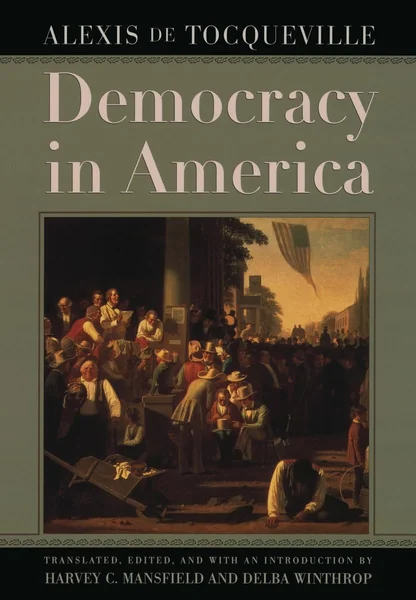
Democracy in America by Alexis de Tocqueville
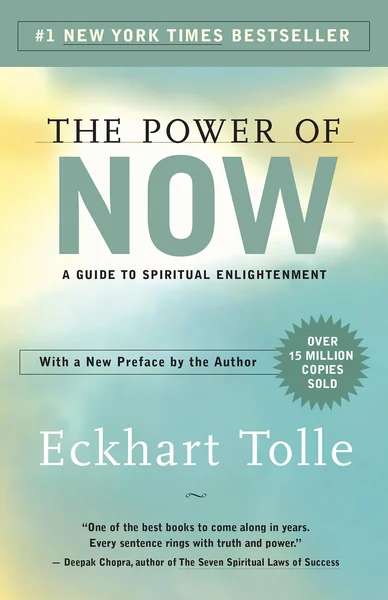
The Power of Now: A Guide to Spiritual Enlightenment by Eckhart Tolle
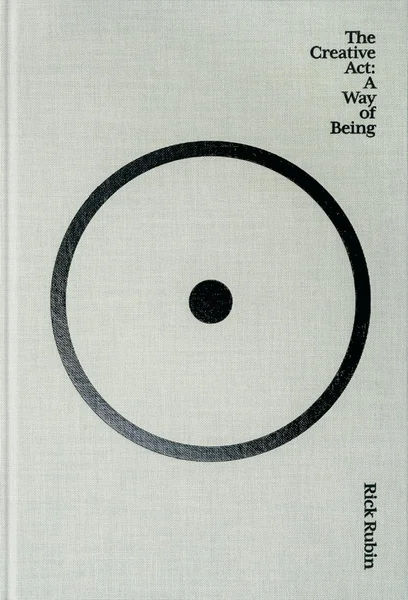
The Creative Act: A Way of Being by Rick Rubin
The Republic: A Timeless Classic on Justice, Morality by Plato
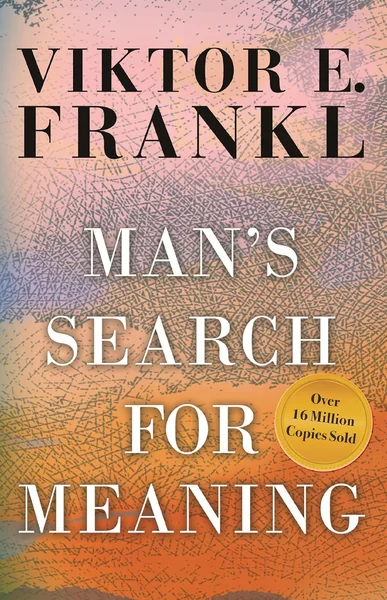
Man's Search for Meaning by Viktor E. Frankl
Philosophy & Religion

Philosophy & Religion Books Experiencing a Cultural Resurgence

Curated recommendations for readers rediscovering classic and backlist titles getting renewed attention

5 Books
4.6 Avg
Updated Jun 20, 2026

Some books don't just endure — they return. Across philosophy and religion, a remarkable number of classic and backlist titles are finding urgent new relevance in today's cultural conversations. Whether driven by social upheaval, a collective hunger for meaning, or the slow burn of word-of-mouth, these works are being discovered and rediscovered by readers who sense that the old questions are, once again, the most important ones.

This list brings together five titles spanning ancient philosophy, modern spirituality, political thought, and existential memoir. From Plato's Republic to Viktor Frankl's Man's Search for Meaning, each book has earned its second — or third — moment in the spotlight. Whether you're a lifelong reader of philosophy or someone only now exploring life's deeper questions, these pages offer something genuinely transformative. Consider this your invitation to read, or reread, with fresh eyes.

#1
Democracy in America by Alexis de Tocqueville by Alexis de Tocqueville - book cover
Democracy in America by Alexis de Tocqueville

by Alexis de Tocqueville

4.6/5

Few books have aged as strangely well as Democracy in America. Tocqueville arrived in the United States in 1831 — technically to inspect prisons, though he later admitted that was largely a pretext — and spent nine months watching a young democracy figure out what it wanted to be. What he wrote remains, nearly two centuries later, the most cited work on both America and democracy as a form of government. The Mansfield-Winthrop translation, published by the University of Chicago Press, is widely regarded as the most rigorous English rendering yet produced, and it's the edition to read if you want Tocqueville's actual thinking rather than a softened approximation of it. He's sharper and more ambivalent than his reputation suggests — genuinely admiring of American egalitarianism while deeply concerned about the social conformity and "soft despotism" that democratic culture tends to encourage. This is a book that rewards patience rather than skimming. Readers looking for quick answers will find it frustrating; those willing to follow Tocqueville's careful, circling logic will find something that reads less like history than like a long, unsettling letter written directly to the present.
"The best ever written on democracy and the best ever written on America."
Level: N/A
#2
The Power of Now: A Guide to Spiritual Enlightenment by Eckhart Tolle by Eckhart Tolle - book cover
The Power of Now: A Guide to Spiritual Enlightenment by Eckhart Tolle

by Eckhart Tolle

4.7/5

The Power of Now is one of those books that feels simultaneously everywhere and somehow still worth reconsidering. Tolle's central argument — that human suffering is rooted in our compulsive identification with our own thinking minds — is simple enough to fit on a bumper sticker, but the book spends considerable effort unpacking what that actually means to live. The structure is conversational, built around a kind of extended Q&A, and the ideas draw loosely from Zen, Advaita Vedanta, and Christian mysticism without fully committing to any tradition. Its renewed cultural traction makes sense in an era of chronic distraction — the argument that the present moment is the only place anything real ever happens lands differently when your attention is being auctioned off hourly. That said, honest caveats apply: Tolle's prose can tip into vagueness, and readers who prefer their philosophy grounded in argument rather than assertion may find the book frustrating. It rewards a certain openness, and resists the skeptical reader who wants sources cited. Think of it less as a philosophy text and more as a long, gentle nudge toward paying attention.
"Only the present moment is real and only the present moment matters."
Level: N/A
#3
The Creative Act: A Way of Being by Rick Rubin by Rick Rubin - book cover
The Creative Act: A Way of Being by Rick Rubin

by Rick Rubin

4.7/5

Rick Rubin has made records with Johnny Cash, Adele, Slayer, and the Red Hot Chili Peppers — a range so improbable it almost functions as its own argument about creativity. The Creative Act: A Way of Being arrives from that vantage point, and it's less a guide to making things than a sustained meditation on what kind of person shows up to make them. The book's 78 short chapters read more like journal entries than lessons — unhurried, a little mystical, occasionally repetitive. Rubin's premise is disarmingly modest: creativity isn't a talent or a technique, it's simply a way of paying attention that anyone can practice. The first line sets the tone immediately — "Living life as an artist is a practice. You are either engaging in the practice or you're not." It's the kind of sentence that sounds obvious until you sit with it. Readers expecting industry anecdotes or producer war stories will come away disappointed; Rubin keeps the specifics largely offstage. What's here instead is quieter and more durable — a case for treating the creative life as a daily orientation rather than a destination to arrive at.
"Creativity is a fundamental aspect of being human."
Level: N/A
#4
The Republic: A Timeless Classic on Justice, Morality by Plato by Plato - book cover
The Republic: A Timeless Classic on Justice, Morality by Plato

by Plato

4.5/5

Two thousand years of readers can't be wrong — and yet *The Republic* keeps surprising newcomers who expect dusty abstraction and find instead sharp-tongued argument, vivid characters, and questions that feel genuinely unsettled. What makes this dialogue so durable is its structure: Socrates doesn't just dismantle bad ideas about justice, he builds something in their place, constructing an entire imagined city as a way of seeing what a well-ordered soul might look like from the inside out. The challenge laid down early by Glaucon and Adeimantus — *prove that justice is worth choosing for its own sake, not just for the reputation it earns* — drives the whole book forward with real urgency. Those new to Plato may find the pacing slow and the detours into myth and mathematics frustrating; this isn't a quick read, and it rewards patience more than speed-reading. But for anyone asking why philosophy still matters, this is the place to start.
"The Republic sees Socrates move from refutation to construction — a sustained position on justice and its relationship to happiness."
Level: Advanced
#5
Man's Search for Meaning by Viktor E. Frankl by Viktor E. Frankl - book cover
Man's Search for Meaning by Viktor E. Frankl

by Viktor E. Frankl

4.7/5

There are books that change the way you think, and then there are books that change the way you endure. Man's Search for Meaning by Viktor E. Frankl belongs firmly in the second category. Written in nine days after his liberation from Nazi concentration camps — including Auschwitz — Frankl's account is less a memoir of suffering than a clinical and deeply human inquiry into what makes suffering survivable. The book's first half follows prisoners through three distinct psychological phases: the raw shock of arrival, the numb adaptation of daily camp life, and the strange disorientation of freedom regained. The second half introduces logotherapy, Frankl's therapeutic framework built on the conviction that the search for meaning, not pleasure or power, is the deepest human drive. It's a book that has sold over ten million copies for good reason — but honest readers should know that some scholars have raised serious questions about aspects of Frankl's framing, and the book does not dwell on collective trauma or systemic evil in the way later Holocaust scholarship would demand. Come to it for philosophy and personal testimony; look elsewhere for historical completeness.
"Few works in the twentieth century have crossed so cleanly between personal testimony and intellectual contribution."
Level: Intermediate–Advanced
Final Thoughts

The books on this list have something rare in common: they were written for their own times, yet they keep speaking to ours. That staying power isn't accidental — it's the mark of ideas that cut deeper than trends or headlines. Whether you begin with Man's Search for Meaning's hard-won wisdom or lose yourself in The Power of Now's call to presence, you're joining a long, living conversation.

Rediscovering a classic is one of reading's great pleasures — the sense that a book waited patiently on a shelf somewhere until exactly the right moment. That moment, for each of these titles, appears to be now. Pick one up and see what it says to you.

Frequently Asked Questions

Many readers turn to classic philosophy during periods of uncertainty or social change. Works like Democracy in America by Alexis de Tocqueville and The Republic by Plato offer timeless frameworks for thinking through justice, governance, and the good life — questions that feel especially pressing right now.
Man's Search for Meaning by Viktor E. Frankl is an ideal starting point. It combines personal memoir with accessible philosophical insight, making it deeply human rather than dryly academic. The Power of Now by Eckhart Tolle is another gentle entry point for readers drawn to spiritual philosophy.
It occupies a fascinating middle ground. While The Power of Now is often shelved under self-help, Eckhart Tolle draws on Buddhist, Christian mystical, and Zen traditions, giving it genuine philosophical depth beneath its practical guidance.
The Republic remains one of Western thought's most debated texts precisely because its central questions — what is justice, and how should a society be ordered? — are never fully settled. New readers often find it shockingly contemporary in its exploration of power, truth, and democracy.
While The Creative Act is rooted in Rick Rubin's decades of music production, its 78 meditations touch on creativity as a spiritual practice, drawing comparisons to Zen philosophy and contemplative traditions. Many readers find it as philosophically nourishing as more formally categorized works.
Democracy in America by Alexis de Tocqueville is the essential read. Written in the 1830s, it offers prophetic observations about individualism, equality, and democratic culture that feel startlingly relevant to contemporary political life in America and beyond.