

8 min read
4.5
· 8,993 Amazon ratingsShare This Review
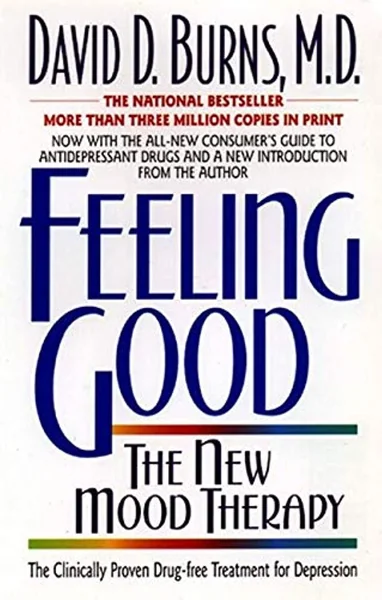
Feeling Good: Overcome Depression and Anxiety with Proven Techniques by David D. Burns Review: A Landmark CBT Self-Help Guide
David D. Burns's Feeling Good is a cornerstone of cognitive behavioral therapy (CBT) self-help, designed to teach readers how to identify and reframe negative thought patterns driving depression and anxiety — without medication — and its standing among mental health professionals reflects decades of sustained influence.
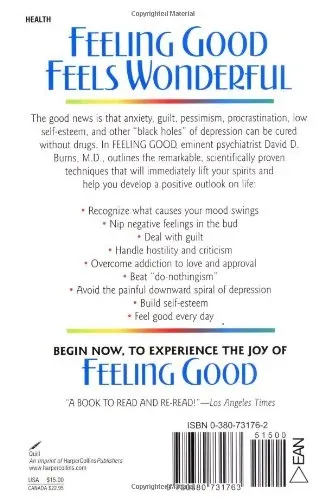
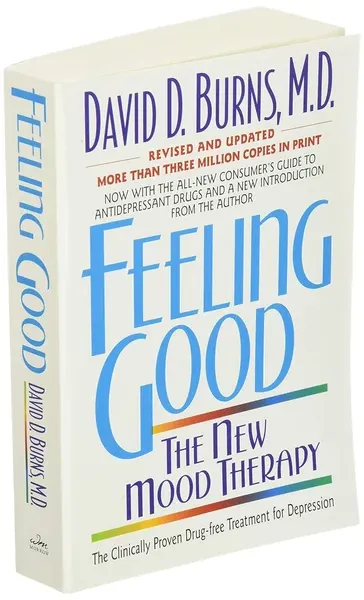
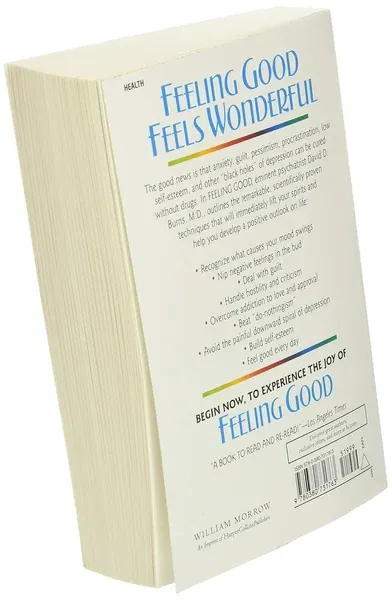 Tap to enlarge
LuvemBooks Verdict
Best for
Adults experiencing mild to moderate depression, anxiety, guilt, or procrastination who want a structured, evidence-based CBT framework they can work through independently — and therapists seeking a clinically credible bibliotherapy resource to recommend to clients.
Worth it if
You are new to CBT and want a comprehensive, step-by-step toolkit covering depression, anxiety, low self-esteem, and procrastination in one volume with a decades-long track record of professional recommendation behind it.
Skip if
You are already well versed in CBT through therapy or recent literature, need a concise introduction rather than a 736-page deep dive, or are dealing with severe symptoms that require professional clinical care rather than a self-guided tool.
What readers & critics say
Psychiatryresource.com awards the book 9 out of 10 stars, calling it "a classic book on CBT for the layperson" that has been "consistently recommended to patients by mental health professionals for decades." Reader accounts gathered at feelinggood.com describe meaningful relief from moderate depression within weeks of applying Burns's techniques, with one reviewer noting the results felt "unbelievable" compared to conventional expectations around medication timelines.
Sources: psychiatryresource.com, feelinggood.comAge & Reading Level
Recommended age
Adult
Reading level
Adult
2 content notes · who it suits
Content to know about
Skip if you are looking for a short, narrative-driven introduction to mental health and have no interest in completing written CBT exercises.
In This Review
- What Works & What Doesn't
- What the Book Is and What It Sets Out to Do
- Significance and Professional Standing
- Core Content and Structure
- Genuine Strengths
- Limitations and Who May Find It Frustrating
- Who This Book Is For
What Works & What Doesn't
What Works
- Rated number one among more than one thousand titles by mental health professionals in a national survey, reflecting rare clinical credibility for a self-help book
- Covers a broad range of interconnected issues — depression, anxiety, guilt, procrastination, and low self-esteem — using a unified CBT framework
- Techniques are structured as concrete, step-by-step exercises (such as written thought records) designed for readers without clinical training
- The updated edition adds a Consumer's Guide to Antidepressant Drugs, offering a balanced view that acknowledges medication's role alongside the drug-free approach
- Decades of use as a therapist-recommended bibliotherapy tool give it a track record uncommon in the self-help genre
What Doesn't
- At 736 pages, the volume is extensive and may feel demanding for readers seeking a concise introduction
- Designed as a self-guided tool, it is not a substitute for professional care in severe cases — a limitation the publisher synopsis itself acknowledges
- Readers already well versed in CBT through therapy or more recent literature may find much of the foundational content familiar
What the Book Is and What It Sets Out to Do

Significance and Professional Standing

Core Content and Structure
Genuine Strengths
Limitations and Who May Find It Frustrating
Who This Book Is For
Frequently Asked Questions
Sources & Further Reading
The key facts and claims in this review are grounded in the retrieved, verified sources listed below.
- Cited in this review
- 1
- 2
newbookrecommendation.com
- 3
littlerbooks.com
- Further reading
- 4
David D. Burns, Wikipedia
- 5
stanfordmag.org
Related Reviews
Reviews of books we picked for readers who enjoyed Feeling Good.
Reader Comments
No comments yet
Be the first to share your thoughts!