BOOKS
Published

Read Time

3 min read

Reader rating

4.8

· 4,094 Amazon ratings
reader ratings, not a LuvemBooks score
Curated & edited by

LuvemBooks Editorial

How we create our reviews →
Share This Review

Stillness Speaks by Eckhart Tolle Review: A Sutra-Style Guide to Inner Quiet

Stillness Speaks is a compact spiritual reference book by Eckhart Tolle, structured as ten short chapters of aphoristic teachings modeled on the ancient Indian sutra tradition, designed to guide readers toward silence, present-moment awareness, and inner stillness rather than engage the analytical mind.

LuvemBooks Verdict

Best for

Readers already familiar with Tolle's presence-based philosophy from The Power of Now who want a contemplative companion text built for slow, non-linear, meditative engagement rather than cover-to-cover reading.

Worth it if

You're drawn to aphoristic, sutra-style spiritual writing and are willing to bring your own receptivity to the page, letting the brevity orient rather than instruct you.

Skip if

You're new to Tolle's worldview or are looking for a step-by-step methodology with extended explanations and a conventional chapter-by-chapter argument — the deliberate lack of conceptual scaffolding will likely feel more opaque than illuminating.

Publishers Weekly acknowledged the book's "familiar if no less ominous note in contemporary spiritual life," recognising both the accessibility of Tolle's teaching and the gravity of his civilizational claim about humanity's need for transformation. Spirituality & Practice engaged it as a substantive spiritual text, highlighting Tolle's sutra-format approach as a deliberate revival of ancient Indian teaching forms and noting his freedom from any single doctrinal tradition as a meaningful asset.

Repeating what has become a familiar if no less ominous note in contemporary spiritual life — the urgent need for humanity to wake up if we are not to destroy ourselves.

Publishers Weekly
Sources: Publishers Weekly, Spirituality & Practice
4.8from 4,094 Amazon ratings— reader ratings, not a LuvemBooks score
In This Review
  • What Works & What Doesn't
  • What the Book Actually Is
  • The Central Argument and Its Stakes
  • Structure, Form, and Intended Use
  • Reception and Place in Tolle's Work
  • Who This Book Is For — and Where It May Fall Short

What Works & What Doesn't

What Works
  • Deliberately crafted in the tradition of ancient Indian sutras, offering aphoristic wisdom designed for slow, meditative reading rather than linear consumption
  • Draws freely from multiple spiritual traditions without doctrinal alignment, making its teachings broadly accessible across backgrounds
  • Critics noted Tolle's ability to describe stillness with 'eloquent economy,' reflecting a disciplined, intentional spareness
  • Situates personal inner stillness within a larger argument about collective human transformation, giving the practice a broader sense of stakes
What Doesn't
  • The sutra-format brevity and deliberate lack of conceptual elaboration will frustrate readers seeking a structured, step-by-step methodology
  • Readers unfamiliar with Tolle's prior work or with presence-based spirituality may find the book's indirection more opaque than illuminating without prior grounding in its core concepts
This review covers the book's content and published reception from named sources; it does not reflect hands-on use or application of the teachings.
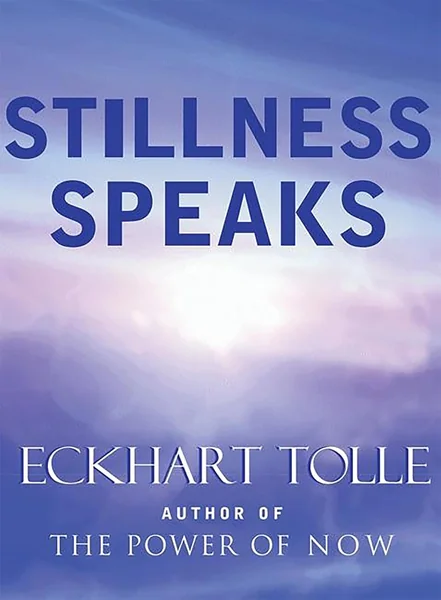
Stillness Speaks by Eckhart Tolle front cover

What the Book Actually Is

Stillness Speaks is not a conventional how-to manual or a discursive spiritual memoir — it is, by Tolle's own description in the book's introduction, designed for meditative reading. Published by New World Library in August 2003, it spans ten short chapters and is explicitly modeled on what Tolle calls "a revival for the present age of the oldest form of recorded spiritual teachings: the sutras of ancient India." Sutras, as Tolle frames them, are "powerful pointers to the truth in the form of aphorisms or short sayings, with little conceptual elaboration." The result is a book that does not build a sustained argument so much as offer a series of brief, pointed observations meant to orient the reader toward stillness rather than stimulate further thinking. The first chapter, on Silence and Stillness, is — by design — the sparsest, and Tolle identifies it as covering the essence of everything that follows.
no longer a luxury, so to speak, available only to a few, isolated individuals, but a necessity if humankind is not to destroy itself.

The Central Argument and Its Stakes

Tolle's premise carries real urgency. He argues that stillness is not merely a personal wellness practice but a civilizational necessity: the transformation of human consciousness is, in his framing, "no longer a luxury, so to speak, available only to a few, isolated individuals, but a necessity if humankind is not to destroy itself." The book's teachings are presented as emerging from that same stillness they describe — writings that, in Tolle's words, "don't say, 'Look at me,' but 'Look beyond me.'" The ten chapters address recurring themes from Tolle's broader body of work: the dangers of excessive mental labeling, the trap of telling adversarial stories about people and circumstances, the spiritual practice of surrender (which Tolle defines as the capacity to live with not-knowing and to stop demanding explanations for suffering), and the experience of pure consciousness as distinct from the constant chatter of the thinking mind.

Structure, Form, and Intended Use

The sutra format is the book's defining structural choice, and it shapes everything about how the text is meant to be encountered. Tolle explicitly states this is "not a book to be read from cover to cover" in a single sitting; it is built for slow, non-linear engagement. Critics noted that Tolle "describes stillness with eloquent economy" across these brief chapters — a characterization that captures both the book's discipline and its deliberate spareness. Spirituality & Practice observed that Tolle's approach mirrors the "indirection" characteristic of Eastern teachers, with the book functioning less as a system of propositions to be analyzed than as a set of prompts designed to move the reader beyond conceptual thought entirely. That non-didactic intent is reinforced by the introduction's claim that "what it doesn't say — but only points to — is more important than what it says."

Reception and Place in Tolle's Work

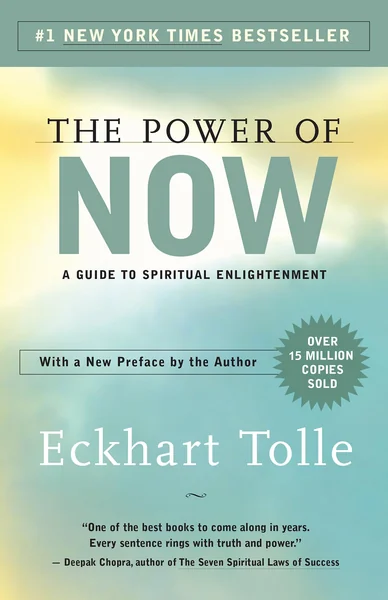
Stillness Speaks arrives in the context of Tolle's wider reputation, built substantially on The Power of Now, which is widely recognized as a bestseller. Spirituality & Practice engaged the book as a substantive spiritual text, highlighting Tolle's independence from any single tradition as a meaningful asset: as an unaffiliated teacher, he draws freely from multiple wisdom lineages without being constrained by doctrinal commitments. Critical coverage situated the book within what it described as a "familiar if no less ominous note in contemporary spiritual life," acknowledging both the accessibility of the teaching and the gravity of its underlying claim about humanity's need for transformation. The book's sutra-format concision is generally recognized as intentional craft, not thinness.

Who This Book Is For — and Where It May Fall Short

Readers already sympathetic to Tolle's approach in The Power of Now — those comfortable with non-dual or presence-based spirituality and drawn to contemplative rather than analytical reading — are the audience this book is most clearly designed for. The deliberately aphoristic structure means readers seeking a step-by-step methodology, extended explanations, or a conventional chapter-by-chapter argument will likely find the format frustrating. The sutra style demands that the reader bring a certain receptivity to the page; without it, the brevity can feel more elusive than illuminating. Readers new to Tolle's worldview may also find the lack of conceptual scaffolding a barrier, as the book presupposes a degree of familiarity with concepts like "the now," the distinction between presence and ego-mind, and the practice of inner stillness rather than building those foundations from scratch.

Sources & Further Reading

The key facts and claims in this review are grounded in the retrieved, verified sources listed below.

  1. Cited in this review
  2. 1
    Stillness Speaks - WikipediaHigh-authority source

    en.wikipedia.org

  3. Further reading
  4. 2

    Eckhart Tolle, Wikipedia