
8 min read
4.8
· 60 Amazon ratingsShare This Review

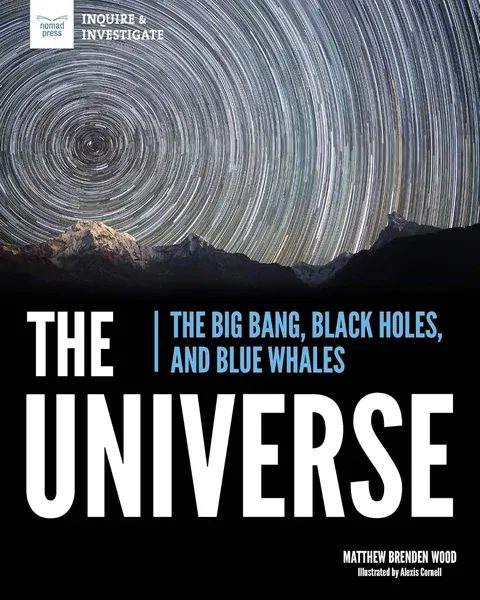
The Universe: The Big Bang, Black Holes, and Blue Whales by Matthew Brenden Wood Review: A STEM-Driven Cosmic Journey for Middle Schoolers
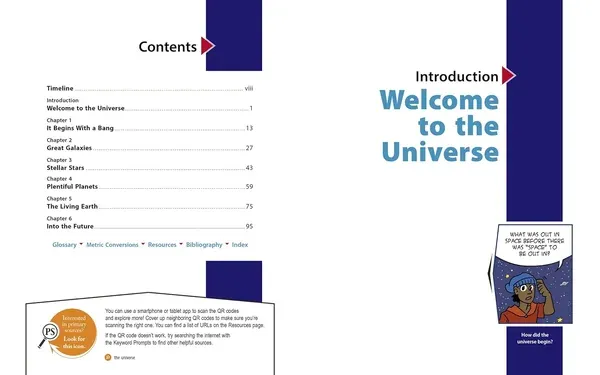
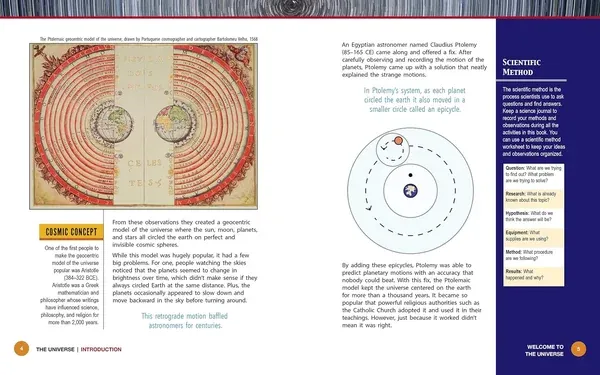
Published by Nomad Press in April 2021 as part of the Inquire & Investigate series, this illustrated nonfiction title for readers ages 12–15 guides young learners from the moment of the Big Bang through the large-scale structure and eventual fate of the universe, pairing content with hands-on STEM activities and research projects throughout.
 Tap to enlarge
LuvemBooks Verdict
Best for
Middle school students aged 12–15 with a budding curiosity about cosmology who thrive with hands-on, inquiry-based learning — and the teachers or homeschool educators looking for a standards-aligned STEM supplement for grades 7–9.
Worth it if
You want a curriculum-ready introduction to the universe — from the Big Bang to its projected end — that actively involves young readers through built-in STEM activities and research projects rather than asking them to passively absorb facts.
Skip if
If you're hoping for a deep-dive narrative on any single topic — the mechanics of black holes, say, or the evidence behind competing cosmological models — the 128-page scope means each subject gets a launchpad treatment rather than extended analysis, and the activity-driven structure may interrupt readers seeking a continuous read.
What readers & critics say
McNally Robinson describes the book as "an in-depth educational science resource for middle and high school readers" through which readers "will achieve a greater understanding of the science of cosmology and its related content, from the big bang to a star's life cycle." Mother Daughter Book Club highlights it as a go-to title for young readers curious about how our understanding of the universe has evolved over the centuries, positioning it within the well-regarded Nomad Press Inquire & Investigate series.
Sources: McNally Robinson, Mother Daughter Book ClubAge & Reading Level
Recommended age
Ages 12–15
Reading level
Young adult
who it suits
Best for: Ages 12+ — content is leveled for grades 7–9 with Guided Reading and Lexile standards calibrated for middle school comprehension and scientific vocabulary.
Skip if you want a flowing narrative read of cosmic history rather than an activity-integrated, inquiry-based format.
The Universe: The Big Bang, Black Holes, and Blue Whales (Inquire by Matthew Brenden Wood is Trending
Big Bang Theory Back on Netflix Sparks Fresh Interest in Universe Science Books
The Big Bang Theory is streaming again on Netflix, and it's putting physics and cosmology back on readers' radars. If you've got a curious 12–15 year old who's suddenly asking big questions about the universe, this hands-on STEM title is a great next step.
The Big Bang Theory has resurfaced on Netflix, and plenty of families are watching it together right now. The show's mix of physics humor, references to black holes, and universe-scale thinking has a way of sparking real curiosity — especially in younger viewers who want to understand what all the jokes are actually about.
That's where Matthew Brenden Wood's The Universe: The Big Bang, Black Holes, and Blue Whales comes in. It covers exactly the topics the show name-drops — the Big Bang, black holes, and the large-scale structure of the cosmos — but in a way that's genuinely accessible for middle schoolers. It's part of Nomad Press's Inquire & Investigate series, so it pairs the science with hands-on activities and research projects, not just passive reading.
If a young person in your house has been asking 'but what IS a black hole?' after a TV marathon, this book gives them real answers and something to actually do with that curiosity. It's a solid bridge between pop culture and real science learning.
In This Review
- What Works & What Doesn't
- What the Book Actually Covers
- Wood's Credentials and the Series Context
- Strengths: Participation-Forward Design and Academic Alignment
- Limitations: Scope and Audience Fit
- Who This Book Is For
What Works & What Doesn't
What Works
- Written by an author with a bachelor's degree in astronomy and hands-on experience as a math and science teacher, lending credibility to the subject matter
- Integrates STEM activities and research projects throughout, positioning readers as active investigators rather than passive learners
- Aligns with Common Core State Standards and Next Generation Science Standards, making it practical for classroom and homeschool use in grades 7–9
- Part of Nomad Press's established Inquire & Investigate series, a format School Library Connection praised in a companion volume for its 'readable, highly engaging style'
- Covers an ambitious sweep — from the Big Bang to the end of the universe — in a format designed for the 12–15 age range
What Doesn't
- At 128 pages spanning the entire history and future of the universe, individual topics receive introductory rather than in-depth treatment, limiting it as a reference for deeper study
- The activity-driven, inquiry-based format suits classroom use well but may feel structurally interrupted to readers seeking a continuous narrative read
What the Book Actually Covers

Wood's Credentials and the Series Context

Strengths: Participation-Forward Design and Academic Alignment
Limitations: Scope and Audience Fit
Who This Book Is For
Frequently Asked Questions
Sources & Further Reading
The key facts and claims in this review are grounded in the retrieved, verified sources listed below.
- Cited in this review
- 1
- 2
- 3
- Further reading
- 4
- 5
es.everand.com
Related Reviews
Reviews of books we picked for readers who enjoyed The Universe.
Reader Comments
No comments yet
Be the first to share your thoughts!