
8 min read
Share This Review
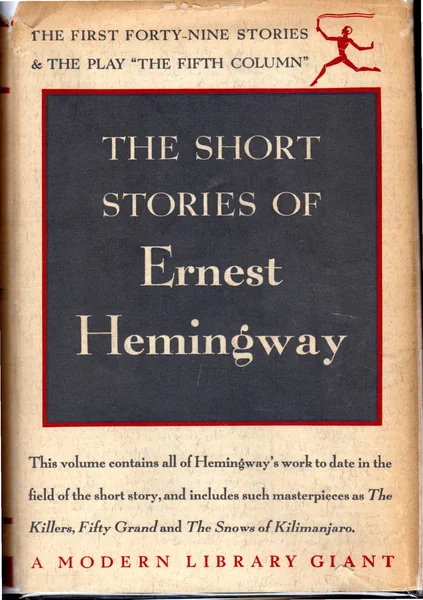
The Short Stories of Ernest Hemingway by Ernest Hemingway Review: A Foundational Gathering of American Short Fiction
Published by Modern Library, The Short Stories of Ernest Hemingway gathers the core of a writer whose spare, revolutionary prose reshaped English-language fiction in the twentieth century — essential reading for anyone serious about the American short story.
LuvemBooks Verdict
Best for
General readers and students who want a single, durable Modern Library hardcover gathering Hemingway's most celebrated short fiction — from the Nick Adams cycle to "Hills Like White Elephants" — without the critical apparatus of a scholarly edition.
Worth it if
Your aim is to encounter the canonical stories themselves — "A Clean, Well-Lighted Place," "The Snows of Kilimanjaro," "The Short Happy Life of Francis Macomber" — in one authoritative, well-made volume that will last on a shelf.
Skip if
You want the widest possible Hemingway archive: the 1987 Finca Vigía Edition adds 21 stories and seven previously unpublished pieces, and the 2018 annotated edition edited by Seán Hemingway adds early drafts, correspondence, and scholarly apparatus this Modern Library volume simply does not contain.
What readers & critics say
Kirkus Reviews, assessing the 2018 annotated edition edited by Seán Hemingway, calls the collection "essential for students of modern literature, offering insight into the mind and methods of one of the greatest practitioners" of the short story form, and notes that Hemingway's newspaper-trained instinct — short, active sentences, no extravagant adjectives — is laid bare in draft comparisons. Reader bloggers at fictionfanblog.wordpress.com and lotzintranslation.com have engaged the Complete Short Stories warmly, though both note the difficulty of separating Hemingway's towering reputation from the uneven quality across so large a gathering.
“Essential for students of modern literature, offering insight into the mind and methods of one of the greatest practitioners of the story form.”
— Kirkus ReviewsAge & Reading Level
Recommended age
Adult
Reading level
Adult
4 content notes · who it suits
Content to know about
Skip if you prefer richly annotated editions with scholarly apparatus, drafts, and the full range of Hemingway's unpublished work — this edition predates the more comprehensive 1987 Finca Vigía and 2018 annotated collections.
In This Review
- What Works & What Doesn't
- What This Collection Contains
- Hemingway's Place in the Literary Record
- Strengths of the Collection as Designed
- Genuine Limitations and Considerations
- Who This Edition Is For
What Works & What Doesn't
What Works
- Gathers Hemingway's most celebrated short fiction — including 'The Snows of Kilimanjaro,' 'A Clean, Well-Lighted Place,' and 'The Short Happy Life of Francis Macomber' — in one authoritative Modern Library volume
- Showcases the iceberg theory in practice: stories built on spare language and oblique emotional depth that critics from Edmund Wilson to F. Scott Fitzgerald recognized as transformative
- Covers an exceptional range of settings and subjects — Spanish Civil War Madrid, African safari, Michigan wilderness — unified by a consistent and instantly recognizable prose style
- The Modern Library hardcover format makes it a reliable edition for both sustained reading and long-term keeping
What Doesn't
- Predates later, more comprehensive collections: the 1987 Finca Vigía Edition adds 21 additional stories and seven previously unpublished pieces not available here
- Lacks the scholarly apparatus — annotations, correspondence, early drafts, and Hemingway's own essay on the short story — found in subsequent annotated editions
What This Collection Contains
Hemingway's Place in the Literary Record
Strengths of the Collection as Designed
Genuine Limitations and Considerations
Who This Edition Is For
Frequently Asked Questions
Sources & Further Reading
The key facts and claims in this review are grounded in the retrieved, verified sources listed below.
- Cited in this review
- 1
- 2
en.wikipedia.org
- Further reading
- 3
Ernest Hemingway, Wikipedia
- 4
- 5
kirkusreviews.com
- 6
- 7
- 8
Related Reviews
Reviews of books we picked for readers who enjoyed The Short Stories of Ernest Hemingway.
Reader Comments
No comments yet
Be the first to share your thoughts!