8 min read
4.4
· 16,382 Amazon ratingsShare This Review
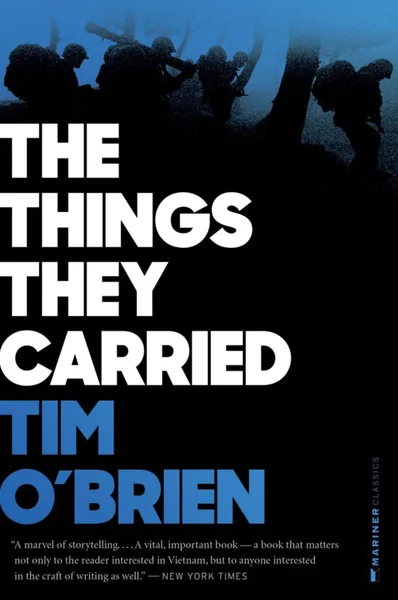
The Things They Carried by Tim O'Brien Review: A Landmark of Vietnam War Fiction
Tim O'Brien's The Things They Carried is a collection of twenty-two linked short stories about a platoon of American soldiers fighting in Vietnam — a work that blurs the boundary between memoir and fiction with deliberate, structural purpose, and that has sold well over two million copies worldwide since its original publication in 1990.
LuvemBooks Verdict
Best for
Readers drawn to questions of how stories carry moral weight — particularly those curious about the Vietnam War's human realities, students of literary craft, or anyone willing to engage with a narrative that deliberately destabilises its own claims to factual truth.
Worth it if
Worth reading if you can embrace a recursive, self-questioning structure that treats the line between memoir and fiction as the central argument of the book rather than a flaw to be tolerated.
Skip if
Skip it if you're seeking a straightforward, chronological combat memoir or a conventional novel — the collection's deliberate blurring of fact and fiction and its non-linear design are features, not accidents, and will frustrate readers who want either a clear autobiography or a traditional narrative arc.
What readers & critics say
Kirkus Reviews offered a mixed verdict on publication, praising standout pieces like the title story and "On the Rainy River" for their stark emotional freight, but finding the metafictional structure "structurally coy" in ways that muted its effects. The NEA's arts.gov profile, drawing on broader critical consensus, describes the book as "a marvel of storytelling which matters not only to the reader interested in Vietnam but to anyone interested in the craft of writing," noting its vast critical acclaim on publication in 1990.
“The title piece lends a palpability that makes the emotional freight — fear, horror, guilt — correspond superbly.”
— Kirkus Reviews“O'Brien still carries it: 'I carry the memories of the ghosts of a place called Vietnam… and a sense of abiding guilt.'”
— NPRAsk LuvemBooks
Was this helpful?
- Is it worth reading?
- For readers drawn to questions of how stories carry moral weight, The Things They Carried is widely considered essential — a finalist for both the Pulitzer Prize and the National Book Critics Circle Award, with over two million copies sold. The Chicago Sun-Times praised its prose as 'controlled and wild, deep and tough, perceptive and shrewd,' comparing O'Brien's rhythms to Hemingway while noting his gentler lyrical register. The National Endowment for the Arts has described it as 'a marvel of storytelling which matters not only to the reader interested in Vietnam but to anyone interested in the craft of writing.' The key caveat is the form itself: the book's recursive, metafictional structure is a deliberate challenge, not a flaw, and readers who engage with it on those terms will find it deeply rewarding.
- Similar books
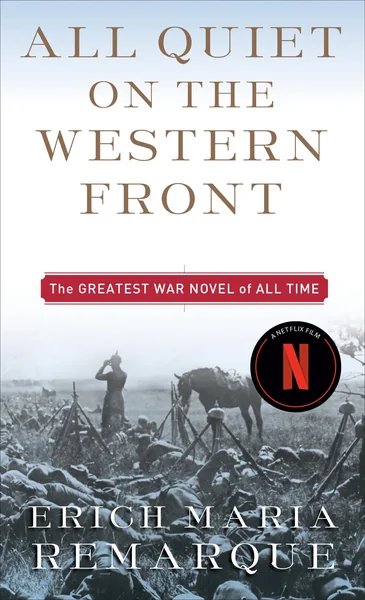
- Readers drawn to The Things They Carried often turn to other works that use fiction and memoir to interrogate war's moral landscape. Erich Maria Remarque's All Quiet on the Western Front, available in the LuvemBooks catalogue, offers a similarly unsparing ground-level portrait of soldiers — in that case, young German conscripts in World War I — stripped of heroism and ideology. Tim O'Brien's own If I Die in a Combat Zone, Box Me Up and Ship Me Home is his earlier, more straightforwardly memoir-like account of his Vietnam service, making it a natural companion to The Things They Carried. Karl Marlantes's Matterhorn and Kevin Powers's The Yellow Birds are two of the most acclaimed Vietnam and Iraq War novels of recent decades, both sharing O'Brien's focus on the psychological and moral weight borne by individual soldiers.
- Who should read this?
- The Things They Carried is essential reading for anyone interested in the craft of literary fiction, the Vietnam War, or the moral psychology of soldiers — but its ideal reader is one willing to engage with a narrative that resists resolution and deliberately destabilizes its own claims to factual truth. It has particular documented resonance with high school and university students, where it appears on syllabi across decades, as well as with readers who have family connections to the Vietnam War. Those who come to it expecting a conventional war memoir or a linear combat narrative will find the metafictional structure disorienting by design; readers who lean into the book's central question — what is the relationship between literal truth and emotional truth? — will find it unusually rewarding.
- What age is it for?
- Best for readers aged 14 and up. The publisher's recommended reading age begins at fourteen, and the book's presence on high school and university syllabi across decades reflects a consensus that its emotional and formal complexity reward close, guided reading at that level and above. The collection contains graphic depictions of combat violence and death, morally ambiguous situations, and emotionally intense material drawn from the realities of the Vietnam War — including the deaths of named soldiers and a story involving the death of a nine-year-old child. Younger readers are best served by a guided classroom context rather than independent reading.
- About Tim O'Brien
- Born in Austin, Minnesota in 1946, Tim O'Brien transformed his experience as a soldier in the Vietnam War into some of America's most celebrated contemporary fiction.
- What are the main themes?
- The central themes of The Things They Carried are the nature of truth in war storytelling, the burden of memory, and the moral psychology of soldiers under sustained violence. O'Brien's metafictional structure embodies his argument that 'story-truth' — the emotional truth of an experience — can be more honest than literal factual accuracy. Academic analysis has noted that the soldiers' moral code must adapt to the everyday violence of war, and that morality in the collection operates on a spectrum rather than a binary scale. O'Brien deliberately refrains from political argument about Vietnam; his stated aim was to address what he saw as a widespread failure of understanding about the war and its realities, embedded in specific characters' experiences rather than in abstraction.
- Is this a good book club pick?
- The Things They Carried is among the most discussion-rich war literature titles available, generating debate rather than settled answers on questions of truth, morality, and memory. Its linked-story format allows book clubs to anchor discussion on individual stories — such as 'On the Rainy River' or the opening Jimmy Cross story — while returning to the overarching question of what O'Brien is arguing about how war stories work. The book's deliberate ambiguity about what is memoir and what is fiction is itself a productive point of disagreement for groups. Its decades of classroom use confirm that it sustains close, guided discussion with a wide range of readers.
Summarize this book
Follow up
Synthesized from verified book data & published reviews · How we review
Press Enter to ask. Answers come from our editorial Q&A — start typing to see related questions.
Age & Reading Level
Recommended age
Ages 12–18
Reading level
Young adult
4 content notes · who it suits
Content to know about
Best for: Ages 14+ — the publisher's recommended reading age; emotional and formal complexity, including graphic combat violence and metafictional ambiguity, suit guided reading at high school level and above
Skip if you want a straightforward chronological war memoir or a narrative that distinguishes clearly between fact and fiction
Our Review
What the Book Actually Is and Contains
The Metafictional Design
Reception and Cultural Standing
What the Collection Does Particularly Well
Who This Book Is For — and Where It Demands Patience
Sources & Further Reading
The key facts and claims in this review are grounded in the retrieved, verified sources listed below.
- Cited in this review
- 1
- 2
barnesandnoble.com
- Further reading
- 3
en.wikipedia.org
- 4
- 5
- 6
jkentmessum.com
- 7
yabookscentral.com
- 8
pluggedin.com
- 9
Books like The Things They Carried
Curated picks for readers who enjoyed The Things They Carried, with our reasoning for each match.