

8 min read
4.2
· 35,615 Amazon ratingsShare This Review
Olive Kitteridge by Elizabeth Strout Review: A Pulitzer-Winning Novel in Stories
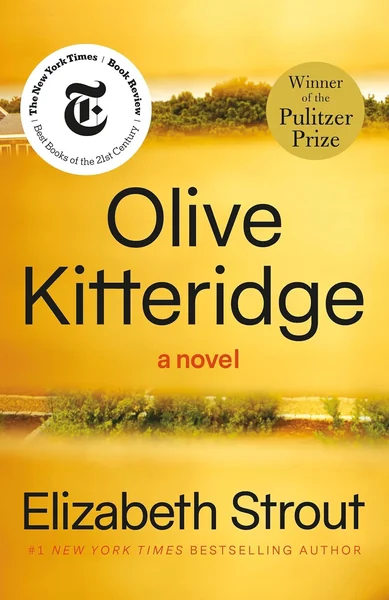
Elizabeth Strout's Olive Kitteridge is a structurally inventive work of fiction — thirteen interrelated but narratively discontinuous stories set in the fictional coastal Maine town of Crosby — held together by one of American literature's most indelible characters. Winner of the 2009 Pulitzer Prize for Fiction and a finalist for the 2008 National Book Critics Circle Award, it was named a Best Book of 2008 by a wide range of publications including People, USA Today, The Atlantic, The Washington Post Book World, and the Chicago Tribune, among others. Strout's novel in stories offers, as the publisher's synopsis frames it, "profound insights into the human condition — its conflicts, its tragedies and joys, and the endurance it requires."
LuvemBooks Verdict
Best for
Readers of character-driven American literary realism who are drawn to compressed, scene-level emotional weight and don't require a single sustained plot — particularly those who appreciate linked-story cycles in the tradition of Sherwood Anderson or Alice Munro.
Worth it if
You're willing to meet a formally unconventional, narratively discontinuous book on its own terms and let a cumulative portrait of one woman and one Maine town accumulate its emotional force across thirteen stories.
Skip if
You prefer conventional novelistic closure or a single sustained plot arc — the fragmented structure and Strout's sometimes-spare emotional register will likely frustrate rather than reward.
What readers & critics say
The Pulitzer Prize committee at pulitzer.org praised Olive as a character rendered with remarkable complexity — "at times stern, at other times patient, at times perceptive, at other times in sad denial" — whose blind spots are as telling as her insights. The Guardian (theguardian.com) offered one of the sharpest critical characterisations: that Strout "created a character so vital, so funny, so exasperating and yet so winning that Olive lights up a story even when she is only glimpsed in the distance," while noting her realist fiction can run "almost too spare" — a caution that bookloverbookreviews.com echoed more bluntly, finding the novel-in-stories "underwhelming" in its cohesion.
“Strout created a character so vital, so funny, so exasperating and yet so winning that Olive lights up a story even when she is only glimpsed in the distance.”
— The GuardianAge & Reading Level
Recommended age
Adult
Reading level
Adult
4 content notes · who it suits
Content to know about
Skip if you prefer a single sustained plot arc with conventional narrative closure and emotional warmth delivered directly.
In This Review
- What Works & What Doesn't
- What the Book Is and How It's Built
- Olive Kitteridge: The Character at the Center
- Literary Significance and Reception
- Genuine Strengths: Form Matched to Subject
- Who It Is For and Where It Asks Something of the Reader
What Works & What Doesn't
What Works
- Winner of the 2009 Pulitzer Prize for Fiction and a finalist for the 2008 National Book Critics Circle Award — among the most decorated American fiction of its decade
- The title character, Olive Kitteridge, is praised by critical coverage as 'so vital, so funny, so exasperating and yet so winning' — a rare creation who commands attention even in peripheral appearances
- Named a Best Book of 2008 by more than a dozen major outlets spanning literary and popular readership, from The Atlantic to Entertainment Weekly
- The linked-story structure allows Strout to illuminate Crosby, Maine from multiple perspectives, giving the collection — as the publisher frames it — 'the heft of a novel' while preserving the compression of short fiction
What Doesn't
- The thirteen narratively discontinuous stories do not deliver conventional novelistic closure; readers who prefer a single sustained plot arc may find the structure fragmented
- The Guardian's assessment of Strout's realist fiction as sometimes 'almost too spare' is a fair warning — emotional payoff is accumulated rather than delivered directly, which will not suit every reader
What the Book Is and How It's Built
Olive Kitteridge: The Character at the Center
Literary Significance and Reception
Genuine Strengths: Form Matched to Subject
Who It Is For and Where It Asks Something of the Reader
Frequently Asked Questions
Sources & Further Reading
The key facts and claims in this review are grounded in the retrieved, verified sources listed below.
- 1
Elizabeth Strout, Wikipedia
- 2
en.wikipedia.org
- 3
- 4
elizabethstrout.com
- 5
- 6
- 7
- 8
- 9
whisperinggums.com
- 10
bookloverbookreviews.com
- 11
booksonthe747.com
- 12
Related Reviews
Reviews of books we picked for readers who enjoyed Olive Kitteridge.


Reader Comments
No comments yet
Be the first to share your thoughts!