7 min read
4.6
· 313 Amazon ratingsShare This Review

Our review
The Overthinker's Guide to Making Decisions
The Overthinker's Guide to Making Decisions by Joseph Nguyen Review: A Practical Companion for Decision-Paralyzed Readers
A New York Times bestseller from the author of the international bestseller Don't Believe Everything You Think, The Overthinker's Guide to Making Decisions is a self-help guide designed to move chronic overthinkers from mental paralysis to clear, intuitive decision-making through a structured framework and a series of trust-building exercises — reviewed here on the basis of its content and published reception, not hands-on application.
LuvemBooks Verdict
Best for
Readers who already identify with decision paralysis and overthinking, particularly those who connected with Nguyen's Don't Believe Everything You Think and are looking for a more operationally focused, framework-driven companion to help them build everyday decision confidence.
Worth it if
You're drawn to accessible, self-trust-oriented personal development tools — a named framework plus graduated exercises — rather than clinically or empirically grounded decision-making theory.
Skip if
You prefer decision-making approaches rooted in cognitive behavioural psychology, behavioural economics, or peer-reviewed science, as this guide's intuition-centred philosophy operates in a fundamentally different register.
What readers & critics say
Publisher and bookseller descriptions retrieved from Barnes & Noble and Joseph Nguyen's own site confirm the book debuted as a New York Times Bestseller, positioning it as a companion guide to Nguyen's international bestseller Don't Believe Everything You Think, with the central promise of transforming "the paralyzing cycle of overthinking into clear, intuitive decision-making." Simon & Schuster's listing emphasises the book's practical core — 20 Mini Trust Experiments designed to "build decision confidence in just days" — framing the guide's goal as freeing rather than fixing the reader's mind.
Sources: Barnes & Noble, Simon & Schuster, josephnguyen.orgAsk LuvemBooks
Was this helpful?
- Is it worth reading?
- For readers who identify with chronic overthinking and are looking for a structured, approachable path toward greater self-trust, The Overthinker's Guide to Making Decisions offers genuine value: a named framework (TRUST), 20 graduated practical exercises, and the credibility of a New York Times bestselling author with demonstrated broad appeal. Its compact 192 pages and accessible scope mean the time investment is low relative to the potential payoff for its intended audience. The key caveat is philosophical fit — the book is overtly self-trust and inner-voice oriented, and readers who prefer decision-making tools grounded in cognitive behavioral frameworks or behavioral economics will find it operates in a different register entirely.
- Similar books
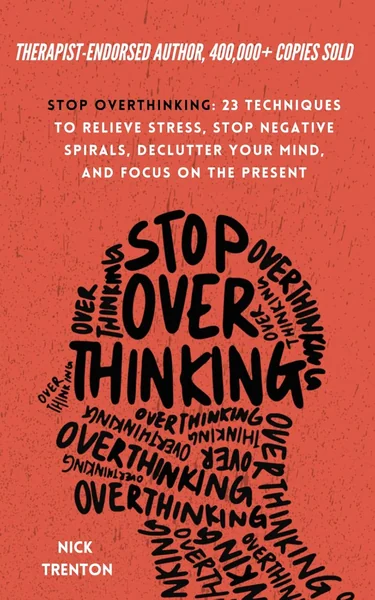
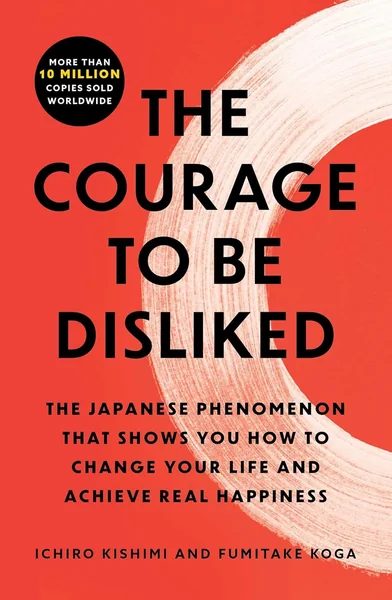
- Readers drawn to The Overthinker's Guide to Making Decisions will find several strong companions in LuvemBooks' catalogue. Stop Overthinking by Nick Trenton tackles the same core problem — mental paralysis from excessive rumination — with a more technique-driven approach. The Magic of Mindful Self-Awareness by Matt Tenney shares Nguyen's emphasis on inner attentiveness as a path to clarity. For readers interested in the philosophical underpinnings of self-trust and social freedom, The Courage to Be Disliked by Ichiro Kishimi and Fumitake Koga offers a complementary Adlerian perspective. Solve for Happy by Mo Gawdat brings an engineer's framework to emotional and decisional wellbeing, while The Anxiety and Worry Workbook by David A. Clark and Aaron T. Beck is the go-to option for readers who want a more clinically grounded, CBT-based approach to overcoming anxious thinking.
- Who should read this?
- The Overthinker's Guide to Making Decisions is best suited to readers who already identify with the experience of overthinking and are looking for a structured, approachable path toward greater self-trust. It is particularly well matched for those who responded positively to Nguyen's earlier work, Don't Believe Everything You Think, and want more applied, operational tools. Readers new to Nguyen who prefer accessible, framework-driven personal development writing over data-heavy behavioral science are also a natural fit. Those seeking decision-making approaches grounded in clinical psychology, cognitive behavioral therapy, or economic decision theory will find the book's self-trust and inner-voice orientation a poor match.
- Where should I start with Joseph Nguyen?
- Joseph Nguyen's first major work, Don't Believe Everything You Think, is the natural starting point — it is the philosophical foundation from which The Overthinker's Guide to Making Decisions explicitly builds. That earlier book addresses the nature of thought itself and became both a New York Times bestseller and an international bestseller, establishing Nguyen's core worldview. Readers who connect with its self-trust and inner-voice orientation will be well primed to get the most from this companion guide's more operational, framework-driven tools.
- Does the book include practical exercises?
- Yes — practical application is central to the book's structure. Alongside the TRUST framework (a named, repeatable step-by-step decision-making process), the guide includes 20 'Mini Trust Experiments': low-stakes, everyday exercises intended to build decision confidence incrementally by using routine choices to gradually dismantle patterns of self-doubt. This combination of a conceptual framework with graduated practice exercises gives the guide a deliberately scaffolded quality, moving readers from understanding toward applied habit formation — a recognizable structural approach in the self-help genre.
- Is this book a bestseller?
- The Overthinker's Guide to Making Decisions debuted as a New York Times bestseller, demonstrating that Nguyen's readership followed him from his previous work into this companion volume. Nguyen arrives at this title with significant prior credibility: Don't Believe Everything You Think was itself both a New York Times bestseller and an international bestseller, establishing him as a writer with demonstrated reach across a broad, non-specialist readership.
Summarize this book
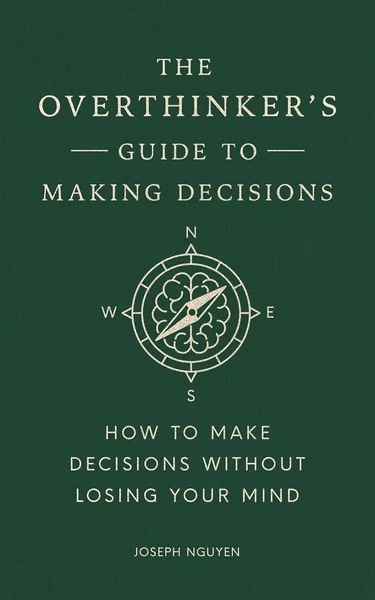
The Overthinker's Guide to Making Decisions: How to Make Decisions without Losing Your Mind by Joseph Nguyen
4.6
/ 5
A New York Times bestseller from the author of the international bestseller Don't Believe Everything You Think, The Overthinker's Guide to Making Decisions is a self-help guide designed to move chronic overthinkers from mental paralysis to clear, intuitive decision-making through a structured framework and a series of trust-building exercises — reviewed here on the basis of its content and published reception, not hands-on application.
View on LuvemBooks →
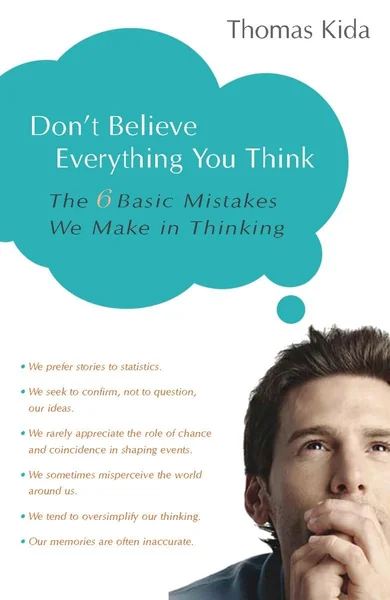
Don't Believe Everything You Think: The 6 Basic Mistakes We Make in Thinking by Thomas E. Kida
4.4
/ 5
Published by Prometheus Books in 2006, Thomas E. Kida's Don't Believe Everything You Think is a popular-science work that identifies six core patterns of faulty reasoning — from misreading coincidence and fabricating associations to confirmation bias and the malleability of memory — and argues that scientific thinking offers a reliable corrective. Michael Shermer, publisher of Skeptic magazine and columnist for Scientific American, called it "exceptionally readable and delightfully informative," adding that Kida's six mistakes "should be printed on a laminated wallet-sized card and examined every morning before we go out into the world." The book is designed for general readers who want to recognize and counter the unconscious errors that distort everyday decision-making.
View on LuvemBooks →
Follow up
Synthesized from verified book data & published reviews · How we review
What would you like to know about The Overthinker's Guide to Making Decisions?
Answers come from our editorial notes on this book. If we haven't covered something, we'll say so.
Readers often ask
Our Review
What the Book Is and Does
The Core Framework and Exercises
Nguyen's Standing and the Book's Reach

What the Book Claims to Address — and Its Limitations
Who This Book Is For
Sources & Further Reading
The key facts and claims in this review are grounded in the retrieved, verified sources listed below.
- Cited in this review
- 1
- 2
- Further reading
- 3
- 4
- 5
- 6
- 7
Age & Reading Level
Recommended age
Adult
who it suits
Skip if you're looking for a clinically or empirically grounded decision-making framework rooted in cognitive behavioral therapy or behavioral economics.
Reader reviews
Be one of the first readers to answer.
Read it? Was it right for you?
Books like The Overthinker's Guide to Making Decisions
Curated picks for readers who enjoyed The Overthinker's Guide to Making Decisions, with our reasoning for each match.

If you liked The Overthinker's Guide to Making Decisions