
8 min read
4.7
· 28,381 Amazon ratingsShare This Review
The Mountain Is You by Brianna Wiest Review: A Practical Guide to Conquering Self-Sabotage
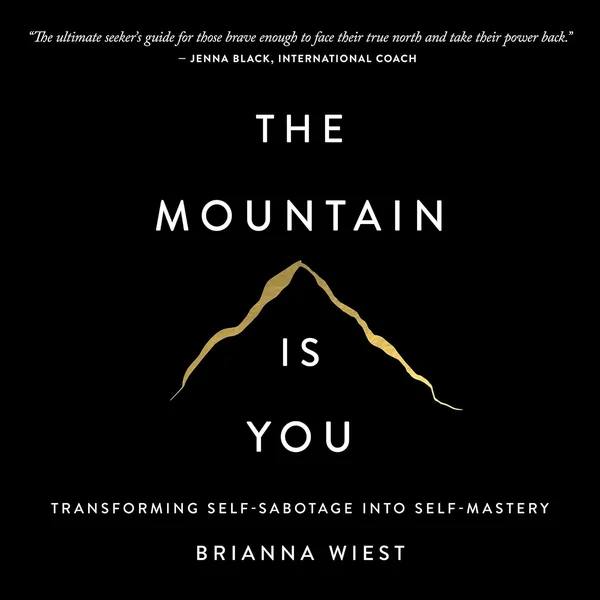
Brianna Wiest's The Mountain Is You: Transforming Self-Sabotage into Self-Mastery is a self-help title that reframes self-sabotage not as a deliberate act of self-destruction, but as the product of coexisting, conflicting inner needs — and then maps a path from those patterns toward genuine self-mastery. Available as an unabridged audiobook narrated by Stacey Glemboski (Audible release date: April 1, 2022, via Thought Catalog Books) with a listening length of 5 hours and 44 minutes, it currently ranks #1 in Business Motivation & Self-Improvement among Audible Books & Originals. This review covers the book's content, structure, and published reception — not hands-on application.
LuvemBooks Verdict
Best for
Readers who suspect they are their own greatest obstacle — especially those who have tried to change repeatedly only to stall — and who want a psychologically grounded, compassionately framed explanation of why self-sabotage happens and how to begin dismantling it.
Worth it if
You're ready to do honest self-examination and want a framework — rooted in Jungian psychology and Buddhist thinking, but written in plain language — that connects recognisable behaviours like procrastination and avoidance to their underlying fears, with an optional companion workbook for structured follow-through.
Skip if
If you're looking for light, reassuring affirmation rather than substantive self-examination, or if you prefer deep academic rigour and extensive clinical citation over an integrated, accessible synthesis, the book's brisk pace and candidly heavy content may leave you wanting more.
What readers & critics say
Notesbythalia.com praises Wiest's supportive and friendly tone throughout while noting the content can be heavy and hard-hitting at times — an expected consequence of a book that asks readers to examine the ways they undermine themselves. Ilovehaven.com highlights that the book clarifies the deeper understanding of negative habits with easy language and helpful examples, so readers can quickly recognise how they are standing between where they are and where they want to be.
Sources: notesbythalia.com, ilovehaven.comAsk LuvemBooks
Was this helpful?
- Is it worth reading?
- For readers who sense they are their own greatest obstacle — especially those who have attempted change repeatedly only to stall — The Mountain Is You offers a compassionate and intellectually grounded framework that goes well beyond generic self-help encouragement. Its translation of Jungian psychology and Buddhist philosophy into accessible, jargon-free language is one of its most consistently praised qualities, and the link between specific behaviors like procrastination and avoidance and their underlying fears makes the material immediately recognizable. The main caveat is that the content can be heavy and hard-hitting; readers seeking light affirmation rather than substantive self-examination may find it more demanding than the self-help label implies.
- Similar books
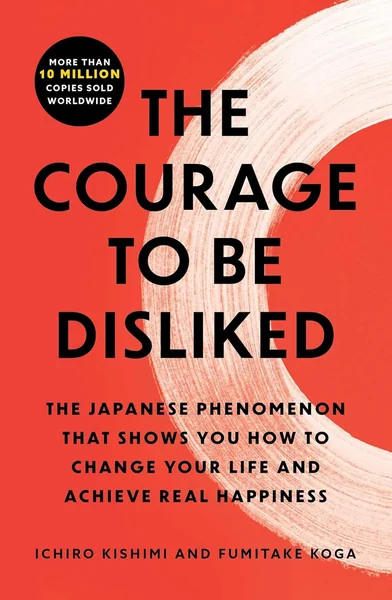
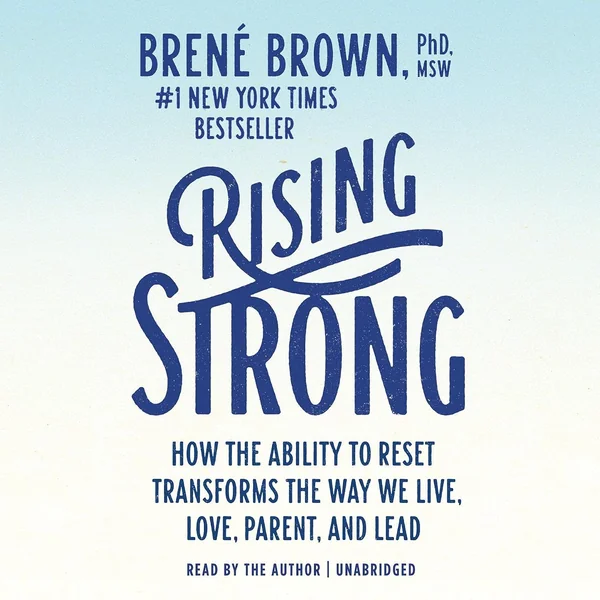
- Readers who connect with The Mountain Is You will likely find common ground with several titles curated below. Brené Brown's Daring Greatly shares Wiest's interest in vulnerability and the internal barriers people erect against wholehearted living. Atomic Habits by James Clear is a natural companion for readers who want a behavior-change framework to act on the self-awareness Wiest builds. The Courage to Be Disliked by Ichiro Kishimi and Fumitake Koga echoes the book's Adlerian-adjacent psychology and its challenge to dismantle self-limiting beliefs. Wiest's own 101 Essays That Will Change The Way You Think and The Pivot Year offer further depth into her distinctive voice for readers who want to explore her wider body of work.
- Who should read this?
- The Mountain Is You is designed for adults who sense they are their own greatest obstacle but have struggled to understand why — particularly those who have attempted change repeatedly only to stall in familiar patterns of procrastination, negative self-talk, or avoidance. Readers who engage with emotional intelligence literature or who have found value in Wiest's other writing are the clearest audience. Those who prefer to combine reflective reading with structured practice will find the authorized companion workbook a useful extension of the framework.
- About Brianna Wiest
- Brianna Wiest is an internationally bestselling author whose books have sold millions of copies and regularly appear on global bestseller lists. Her titles include 101 Essays That Will Change The Way You Think, The Mountain Is You, The Pivot Year, When You're Ready This Is How You Heal, Salt Water, Ceremony, and more. She has over one million followers on Instagram.
- What psychology is it based on?
- The Mountain Is You draws primarily on Jungian psychology and Buddhist-influenced thinking about non-attachment and the present moment, using these as intellectual grounding for its framework on self-sabotage. Wiest keeps the language deliberately accessible throughout — psychological concepts are translated into clear, everyday terms rather than clinical jargon — while the book has also garnered acclaim, per SuperSummary's study guide, for its engagement with Buddhist concepts of consciousness and its prioritization of inner peace over the mere pursuit of happiness.
- How does it compare to her other books?
- Among Wiest's body of work, The Mountain Is You represents her most focused and sustained engagement with the psychology of self-limitation — more structurally cohesive than the wide-ranging 101 Essays That Will Change The Way You Think and more psychologically analytical than the meditative, poetic register of The Pivot Year. Where 101 Essays offers a broad collection of perspective-shifting essays and The Pivot Year leans into reflective prose poetry, The Mountain Is You builds a single, unified framework from diagnosis of self-sabotage through to practical self-mastery. LuvemBooks has reviewed both 101 Essays That Will Change The Way You Think and The Pivot Year for readers who want to compare directly.
Summarize this book
Follow up
Synthesized from verified book data & published reviews · How we review
Press Enter to ask. Answers come from our editorial Q&A — start typing to see related questions.
Age & Reading Level
Recommended age
Adult
Reading level
Adult
Content to know about
Skip if you're looking for light, reassuring affirmation rather than substantive psychological self-examination.
Our Review
What the Book Actually Argues
Scope and Significance
Strengths: Accessibility and Practical Framing
Limitations and Who It May Challenge
Who This Is For
Sources & Further Reading
The key facts and claims in this review are grounded in the retrieved, verified sources listed below.
- Cited in this review
- 1
- Further reading
- 2
- 3
notesbythalia.com
- 4
- 5
- 6
- 7
- 8
Books like The Mountain Is You
Curated picks for readers who enjoyed The Mountain Is You, with our reasoning for each match.
More by Brianna Wiest
If you liked The Mountain Is You
Why It’s Trending
Still a Self-Help Staple: The Mountain Is You Holds #1 on Audible
Brianna Wiest's The Mountain Is You keeps pulling in readers years after its release, currently sitting at #1 in Business Motivation & Self-Improvement on Audible. It's the kind of book that never really goes away — and there's a good reason for that.