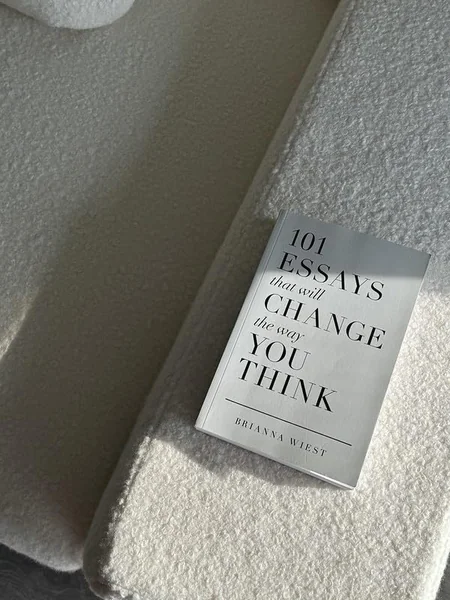
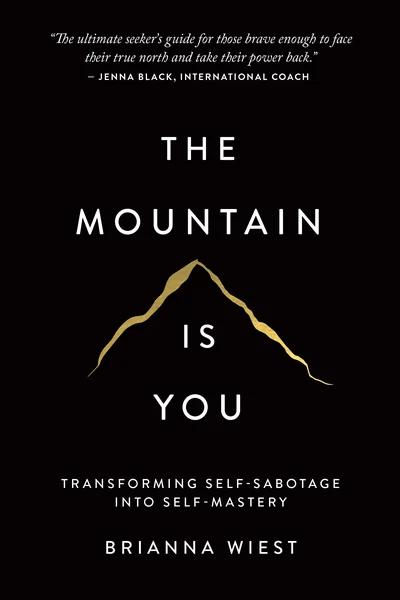
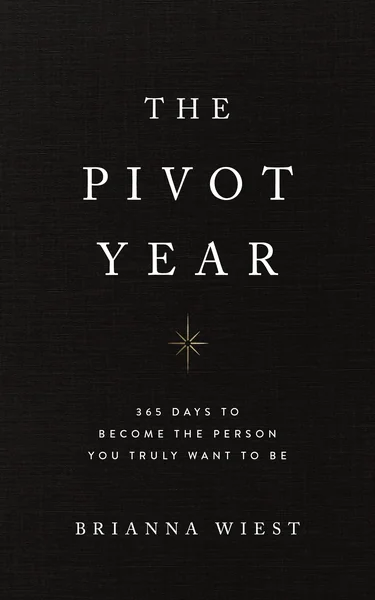
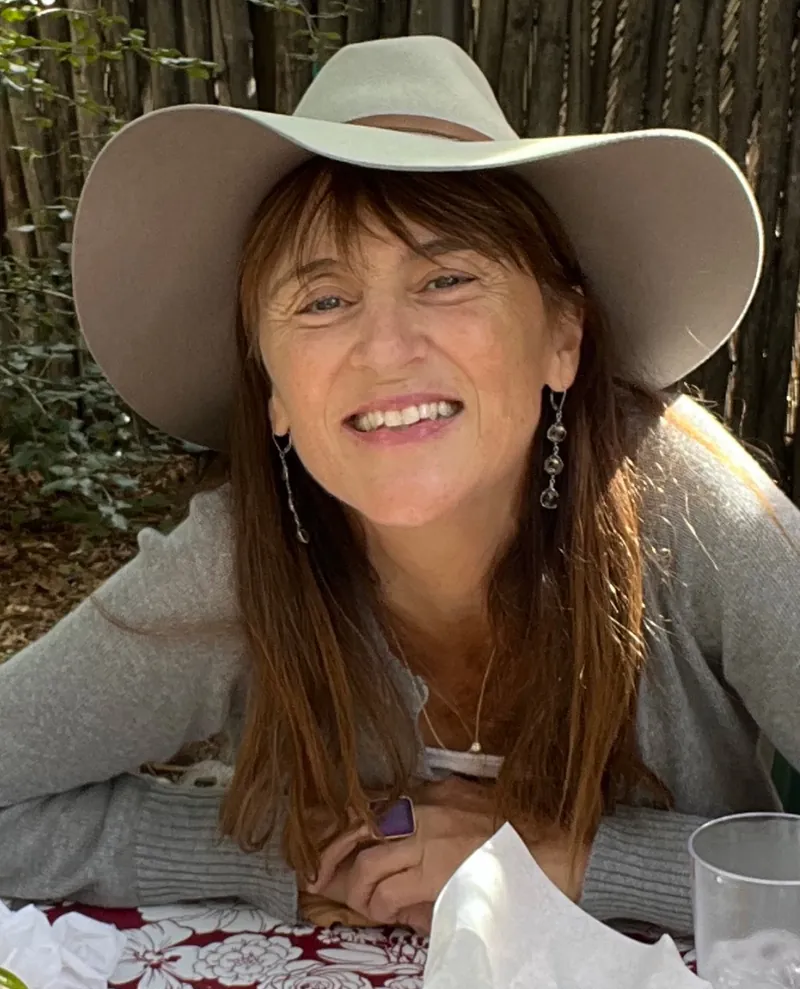
Brianna Wiest is an internationally bestselling author whose books have sold millions of copies and regularly appear on global bestseller lists. Her titles include 101 Essays That Will Change The Way You Think, The Mountain Is You, The Pivot Year, When You're Ready This Is How You Heal, Salt Water, Ceremony, and more.She has over one million followers on Instagram.
Wiest explains that wisdom is not a byproduct of age or time, but of honest self-inquiry. She believes that when readers deeply connect with her writing, it touches the same internal emotional space from which it originated.
Meditation and journaling for processing
Wiest shares that navigating challenging periods required quiet reflection through daily morning meditation and journaling. She spent a decade developing these practices to process her thoughts and assemble meditations.
Brianna Wiest has three books reviewed on LuvemBooks, all drawing from the same core project: helping readers identify the internal patterns — fear, self-sabotage, unprocessed emotion — that keep them stuck. The Mountain Is You, her most-reviewed title with over 28,000 Amazon ratings averaging 4.7/5, is the clearest example of her method: pairing psychological frameworks with direct, accessible prose to make self-examination feel practical rather than abstract. Across all three reviewed titles, she writes in short, standalone passages that accumulate into something larger — a style that suits readers who want depth without density.
Where should I start?
The Mountain Is You is the strongest entry point for most readers — it has the clearest single focus (self-sabotage and how to move past it) and the most developed argument of her reviewed titles, which makes it easier to engage with if you are new to her work. It has over 28,000 Amazon ratings at 4.7/5, suggesting it has connected broadly and consistently. If you prefer something more fragmented and essayistic, 101 Essays That Will Change The Way You Think works well as an alternative starting point since each piece stands alone and you can read at your own pace.
What's their writing style?
Wiest writes in short, self-contained passages — paragraphs or brief essays that can be read independently but build a cumulative effect when taken together. Her tone is direct and unsparing without being harsh; she tends to name uncomfortable truths plainly rather than softening them with caveats. She draws on psychological concepts — particularly around avoidance, emotional regulation, and identity — but translates them into plain language rather than academic framing. Across her reviewed books, the register stays consistent: intimate, unhurried, and oriented toward the reader's interior experience rather than external outcomes.
Books we've reviewed
LuvemBooks has reviewed three of Brianna Wiest's books, all in the Self-Help and Personal Development genre. The Mountain Is You: Transforming Self-Sabotage into Self-Mastery is her most-rated title, focusing on the psychological roots of self-defeating behaviour. 101 Essays That Will Change The Way You Think collects standalone pieces covering a wide range of topics related to thinking, emotion, and personal growth — the format makes it easy to pick up and put down. The Pivot Year is structured as a series of short daily reflections designed to accompany a year of personal change.
How do her books compare?
The three reviewed titles share a common sensibility but serve different reading experiences. The Mountain Is You has the most sustained, book-length argument — it builds a case across chapters and rewards reading in sequence. 101 Essays That Will Change The Way You Think is deliberately non-linear; each essay is complete in itself, which makes it flexible but means there is no single throughline to follow. The Pivot Year is the most minimal of the three, built for slow, incremental reading over time rather than extended sittings. All three carry an Amazon reader rating of 4.7/5, suggesting her audience finds consistent value across her different formats.
What genre does she write?
All of Wiest's reviewed books fall into Self-Help and Personal Development, though her work sits at a more literary end of that genre than most. She does not write the goal-setting or productivity-focused variety of self-help; instead, her books examine emotional patterns, self-perception, and the psychological reasons people remain stuck. Readers who find conventional self-help too formulaic often respond well to her approach, while readers looking for practical action plans may find her work more diagnostic than directive.
What should I read after The Mountain Is You?
If you finished The Mountain Is You and want to stay with Wiest's work, 101 Essays That Will Change The Way You Think is a natural next step — it covers a wider range of topics using the same direct, psychologically grounded voice, and the essay format keeps things fresh. The Pivot Year works well after that as a slower, more meditative follow-up, particularly if you are in a period of active personal transition. Between the two, 101 Essays is the better choice if you want something with more substance per sitting.
Who is Brianna Wiest?
Where should I start?
What's their writing style?
Books we've reviewed
How do her books compare?
What genre does she write?
What should I read after The Mountain Is You?
Who is Brianna Wiest?
Brianna Wiest is an internationally bestselling author whose books have sold millions of copies and appear regularly on global bestseller lists. She is best known for titles such as The Mountain Is You, 101 Essays That Will Change The Way You Think, and The Pivot Year, all of which focus on self-understanding, emotional growth, and breaking cycles of self-sabotage. She has built a following of over one million on Instagram, where her writing style — direct, introspective, and free of jargon — translates readily to short-form content. Her work sits at the intersection of psychology-informed self-help and personal essay.
Follow up
What makes her different from other self-help authors?
How did she become so well known?
Synthesized from verified book data & published reviews · How we review
Press Enter to ask. Answers come from our editorial Q&A — start typing to see related questions.