9 min read
4.6
· 3,276 Amazon ratingsShare This Review
The Courage to Be Happy by Ichiro Kishimi & Fumitake Koga Review: Adlerian Psychology Meets Socratic Dialogue
The Courage to Be Happy is the follow-up to the international bestseller The Courage to Be Disliked, once again using a Socratic dialogue format to translate Alfred Adler's psychological teachings — this time applying them to education, self-reliance, and the active pursuit of happiness. Published in English as an audiobook by Simon & Schuster Audio, it extends the philosophical conversation from the first book into more grounded, real-world territory. This review covers the book's content and published critical reception; it does not reflect hands-on application of its ideas.
LuvemBooks Verdict
Best for
Readers who loved The Courage to Be Disliked and want to see its Adlerian framework tested against the real-world friction of education and human relationships — especially teachers, parents, and anyone drawn to dialogue-driven philosophy.
Worth it if
You're already invested in the first book's philosophical groundwork and want to see those ideas actively challenged and deepened through a dramatically engaging Socratic debate rather than passive instruction.
Skip if
You haven't read The Courage to Be Disliked, prefer a structured positive-psychology workbook with clear exercises, or find Socratic indirection frustrating when you're looking for direct, systematic self-help guidance.
What readers & critics say
Publisher's Weekly called the book "instructive and enjoyable," noting that its Socratic dialogue format successfully extends Kishimi and Koga's Adlerian interpretation "from the philosopher's study into the real world," with summaries and koan-like insights making it an approachable introduction to Adler's theories on learning and self-improvement (publishersweekly.com). The review blog Asirus, describing the predecessor as "the book I believe every person on Earth should read," praised the sequel's portrayal of the young man's failed attempt to apply Adler's ideas in practice, and the philosopher's patient guidance in response (asirus.net).
“This instructive and enjoyable follow-up extends Adlerian psychology from the philosopher's study into the real world.”
— publishersweekly.comAsk LuvemBooks
Was this helpful?
- Is it worth reading?
- For readers who engaged with The Courage to Be Disliked and are curious about how Adlerian ideas hold up against the messiness of real-world relationships and education, The Courage to Be Happy is a rewarding continuation — Publishers Weekly called it 'instructive and enjoyable,' and its dramatised tensions give the philosophy a concreteness the first book's more abstract setting lacked. The audiobook format, with a three-narrator cast of Graeme Malcolm, Noah Galvin, and January LaVoy, suits the multi-voice dialogue particularly well across its six-hour runtime. The main caveat is that the Socratic format is a structural choice as much as a strength: readers expecting a systematic, exercise-driven self-help programme will find the book's philosophical indirection a mismatch for their needs.
- Similar books
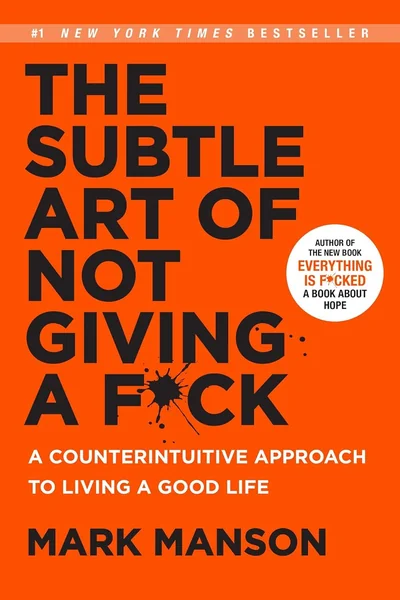
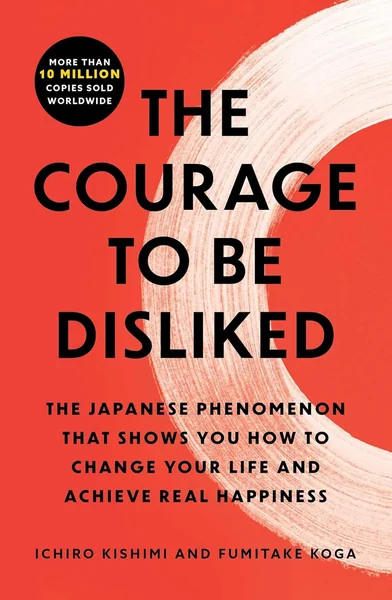
- Readers drawn to The Courage to Be Happy will find natural companions in the curated titles below. The most direct stepping stone is The Courage to Be Disliked by Ichiro Kishimi and Fumitake Koga — the predecessor that establishes the philosophical framework the sequel depends on. For other dialogue- and philosophy-driven approaches to happiness, The Art of Happiness by the Dalai Lama covers similar territory in a conversation format. Ikigai by Héctor García and Francesc Miralles offers another Japanese-inflected perspective on purposeful living, while The Subtle Art of Not Giving a F*ck by Mark Manson covers some of the same counterintuitive self-help ground in a more direct, Western voice. The Four Agreements by Don Miguel Ruiz is a comparable short philosophical guide to personal freedom that has found a similarly wide popular audience.
- Who should read this?
- The Courage to Be Happy is aimed squarely at readers already drawn to the intersection of philosophy and psychology — particularly those who engaged with The Courage to Be Disliked and accepted its premise that happiness is chosen rather than received. Its focus on education and self-reliance gives it particular resonance for teachers, parents, and anyone grappling with the gap between philosophical ideals and the reality of human relationships. Fans of accessible, dialogue-driven philosophy — in the tradition of texts like Sophie's World — will find the Socratic format congenial, while those seeking a structured positive-psychology workbook or a programme of daily exercises may find the book's approach frustrating.
- Where should I start with this series?
- The series begins with The Courage to Be Disliked, which introduces the philosopher and the young man and lays out the Adlerian framework that The Courage to Be Happy builds directly upon. The sequel's central conflict — the young man's disillusionment after attempting to apply what he previously learned — only carries weight for those already invested in that earlier conversation, so reading in order is strongly advised rather than optional.
- How is the audiobook?
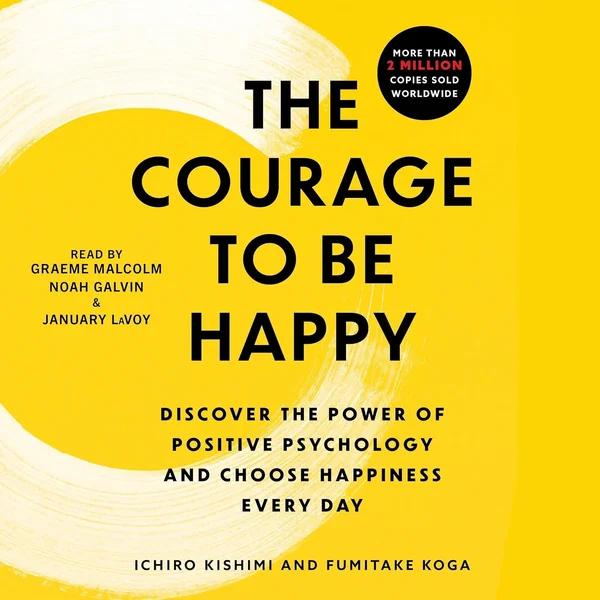
- The audiobook edition, published by Simon & Schuster Audio, is the specific format covered in this review and is described as a natural fit for the material. The three-narrator cast — Graeme Malcolm, Noah Galvin, and January LaVoy — suits the multi-voice Socratic dialogue structure, giving each perspective in the philosopher-and-young-man debate its own distinct voice across a well-paced runtime of six hours and eleven minutes.
- Who was Alfred Adler and why does this book matter?
- Alfred Adler is described in the book's framing as one of the giants of 19th-century psychology — a pioneering figure whose ideas about individual agency, social belonging, and the active pursuit of happiness have been long underappreciated relative to contemporaries like Freud and Jung. The Kishimi and Koga series represents a sustained effort to bring Adlerian thought to readers who would never encounter it through academic psychology, and as the Simon & Schuster publisher notes, 'more than a century since Adler founded his school of psychology, there's still insight and novelty in his theories.' The Courage to Be Disliked's success as a worldwide bestseller has driven a significant popular resurgence of interest in Adler's work.
Summarize this book
Follow up
Synthesized from verified book data & published reviews · How we review
Press Enter to ask. Answers come from our editorial Q&A — start typing to see related questions.
Age & Reading Level
Recommended age
Adult
Reading level
Adult
who it suits
Skip if you want a structured, exercise-driven positive-psychology programme rather than a philosophy delivered through Socratic debate.
Our Review
What the Book Is and How It Works
Its Place in the Adlerian Revival
What the Dialogue Format Achieves
Genuine Limitations to Consider
Who This Book Is Designed For
Sources & Further Reading
The key facts and claims in this review are grounded in the retrieved, verified sources listed below.
- Cited in this review
- 1
- 2
- Further reading
- 3
- 4
- 5
- 6
empowerprocess.com
- 7
parents.simonandschuster.com
Books like The Courage to Be Happy
Curated picks for readers who enjoyed The Courage to Be Happy, with our reasoning for each match.
If you liked The Courage to Be Happy