8 min read
4.7
· 11,209 Amazon ratingsShare This Review
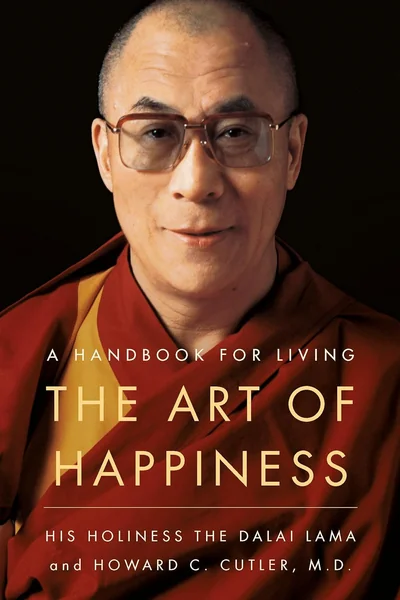
The Art of Happiness: A Handbook for Living by Dalai Lama Review: A Landmark Guide to Inner Peace
Co-authored by the 14th Dalai Lama, Tenzin Gyatso, and psychiatrist Howard C. Cutler, The Art of Happiness: A Handbook for Living is a work of practical philosophy structured around extended interviews and public presentations. Originally published by Riverhead Books in 1998, it spent ninety-seven weeks on the New York Times bestseller list and has since been translated into fifty languages. This review is based on published sources and public record, not hands-on reading.
LuvemBooks Verdict
Best for
Secular or spiritually curious readers who want a practical, accessible introduction to happiness as a trainable discipline — and who welcome Buddhist contemplative wisdom filtered through a Western clinical lens rather than a primary philosophical or religious text.
Worth it if
You're drawn to the intersection of mindfulness and psychology and want a readable, cross-traditional framework for cultivating compassion, resilience, and self-awareness in everyday life.
Skip if
You're looking for unmediated Tibetan Buddhist philosophy, academic rigour in psychology, or a text that goes beyond a general-audience introduction — Cutler's framing shapes every exchange, and specialist readers in either field will need to look elsewhere.
What readers & critics say
Barnes & Noble describes the book as having appeared on the New York Times bestseller list for ninety-seven weeks and been translated into fifty languages, calling it a groundbreaking first volume in the Art of Happiness series. Inquiring Mind notes that the book "is filled with good material and should not be a difficult read for those unfamiliar with Buddhist ground," while blogger Leticia Mooney cautions that readers looking for a book written by the Dalai Lama alone should know that "this is not one," as the voice is substantially mediated through Cutler's framing.
Sources: Barnes & Noble, Inquiring Mind, Leticia Mooney (leticiamooney.com)Ask LuvemBooks
Was this helpful?
- Is it worth reading?
- For readers seeking a practical, accessible introduction to happiness as a discipline — one that bridges Buddhist contemplative thought and Western psychology without requiring prior expertise in either — The Art of Happiness remains, decades after its 1998 publication, a genuinely distinctive starting point. Its ninety-seven weeks on the New York Times bestseller list and translation into fifty languages reflect a sustained resonance that few popular-philosophy books achieve. The main caveat is that Cutler's framing mediates the Dalai Lama's teachings throughout; readers wanting unfiltered Buddhist philosophy or rigorous academic psychology will need to look elsewhere. For the general reader curious about happiness as a trainable skill, the book delivers specific, examined ideas rather than empty exhortation.
- Similar books
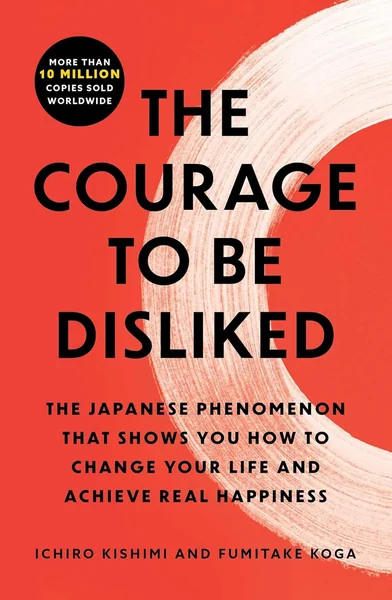
- Readers who connect with The Art of Happiness have several strong options nearby. The Courage to Be Disliked by Ichiro Kishimi and Fumitake Koga uses a similar Socratic dialogue format to explore Adlerian psychology and the obstacles to personal freedom — a natural companion for readers drawn to the conversational structure. The Mindful Way through Depression by Mark Williams, John Teasdale, Zindel Segal, and Jon Kabat-Zinn shares the bridge between Buddhist mindfulness practice and Western clinical psychology, but with a more structured therapeutic focus. Solve for Happy by Mo Gawdat approaches happiness through an engineer's analytical lens, while The Four Agreements by Don Miguel Ruiz offers another cross-cultural practical philosophy grounded in Toltec wisdom. A Simpler Life by The School of Life rounds out the list with a secular philosophical take on reducing complexity and cultivating contentment.
- Who should read this?
- The Art of Happiness is best suited to general adult readers who are curious about happiness as a trainable mental discipline and want an accessible, non-dogmatic introduction that draws on Buddhist thought without requiring any existing knowledge of it. It is particularly well matched to readers who approach the subject with some skepticism — Cutler's analytical, psychiatrically trained perspective is built into the book's structure precisely to give that kind of reader a foothold. Those already well-versed in Buddhist philosophy or clinical psychology are likely to find it introductory rather than illuminating, and academic or specialist readers in either field should expect a popular rather than rigorous treatment.
- What are the main themes?
- The book's dominant theme is that happiness is a trainable skill rooted in mental cultivation rather than external achievement — a claim the Dalai Lama supports by drawing on 2,500 years of Buddhist contemplative practice. Key subsidiary themes include the baseline theory of happiness (the observation that emotional states tend to return to a personal set-point after major life events), the damaging role of social comparison in measuring well-being, and the cultivation of compassion as a practical mental discipline. The book also addresses the relationship between suffering and resilience, arguing that mentally preparing for hardship — rather than treating it as an aberration — is itself a happiness-supporting practice. Running beneath all of this is a cross-cultural argument: that these methods belong to no single religion and are available to anyone.
- How practical is the advice?
- The Art of Happiness grounds its guidance in specific, examined ideas rather than motivational exhortation — concrete concepts like the baseline theory of happiness and the mechanics of social comparison give the advice an analytical foundation. That said, the book does not function as a step-by-step workbook; its format is philosophical dialogue rather than structured exercises or programmes. Readers looking for actionable techniques to implement immediately may find the book more illuminating than prescriptive, while those who want to understand why certain mental habits support happiness will find the depth of reasoning more satisfying.
- Where does this fit among the Dalai Lama's books?
- The Art of Happiness is the most widely read of the Dalai Lama's books in the Western world, credited across reference and bookseller sources with introducing Buddhist concepts of mental training to a broad secular global audience. A tenth-anniversary edition was issued with new material, and the book later inspired The Art of Happiness in a Troubled World, a follow-up applying similar themes to social conflict and global challenges. For readers seeking the Dalai Lama's own unmediated voice, his other writings — without Cutler's framing — offer a different experience, but The Art of Happiness remains the standard entry point for those new to his work.
Summarize this book
Follow up
Synthesized from verified book data & published reviews · How we review
Press Enter to ask. Answers come from our editorial Q&A — start typing to see related questions.
Age & Reading Level
Recommended age
Adult
Reading level
Adult
who it suits
Skip if you want rigorous Buddhist philosophy or academic-level clinical psychology rather than a popular dialogue for general audiences.
Our Review
What the Book Is and How It Works
The Central Argument
Significance and Reception
Strengths of the Approach
Limitations and Ideal Readership
Sources & Further Reading
The key facts and claims in this review are grounded in the retrieved, verified sources listed below.
- Cited in this review
- 1
- 2
en.wikipedia.org
- Further reading
- 3
- 4
- 5
- 6
- 7
- 8
- 9
bookbrief.io
Books like The Art of Happiness
Curated picks for readers who enjoyed The Art of Happiness, with our reasoning for each match.
If you liked The Art of Happiness