BOOKS
Published

Read Time

7 min read

Reader rating

4.7

· 647 Amazon ratings
reader ratings, not a LuvemBooks score
Curated & edited by

LuvemBooks Editorial

How we create our reviews →
Share This Review

The Atomic Habits Workbook by James Clear Review: A Practical Companion for Habit Transformation

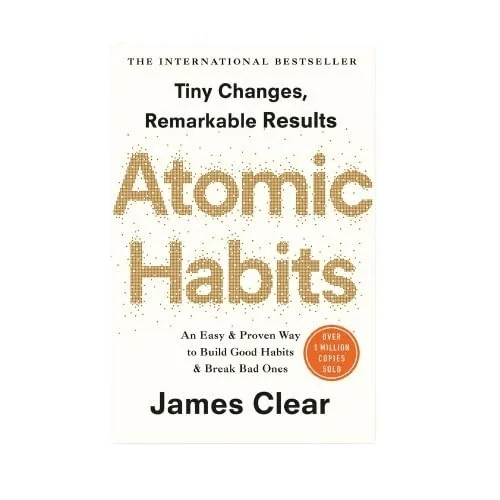
Published by Avery in December 2025, The Atomic Habits Workbook is the official interactive companion to James Clear's #1 New York Times bestseller Atomic Habits, designed to move readers from understanding Clear's habit-formation framework to actively applying it through guided exercises, journaling prompts, and tracking templates. Its value rests on practical application, and this review assesses its content and design intent based on published sources rather than hands-on use.

LuvemBooks Verdict

Best for

Readers who have already absorbed Atomic Habits and want a structured, hands-on system — with templates, journaling prompts, and habit-tracking guides — to actively implement James Clear's Four Laws of Behavior Change in their daily life.

Worth it if

You've read Atomic Habits and found Clear's framework compelling but want a concrete, exercise-driven toolkit — including new material on fun and sustainability — to close the gap between understanding the system and actually living it.

Skip if

Skip it if you haven't read Atomic Habits yet (the exercises presuppose familiarity with Clear's framework), or if you're looking for new research, expanded theory, or narrative depth rather than prompts and templates built for active self-application.

Barnes & Noble describes the workbook as "a must-have for anyone looking to transform their habits in a self-reflective way," noting it expands on the themes of improvement and productivity first introduced in Atomic Habits with helpful tips, guided exercises, and new ideas from Clear. Waterstones characterises it as a companion whose "thought-provoking exercises allow you to implement the Atomic Habits theories and see your life transform," taking readers "from understanding habits to living them."

Sources: Barnes & Noble, Waterstones
4.7from 647 Amazon ratings— reader ratings, not a LuvemBooks score

Look inside the book

Preview the actual pages, via Google Books
In This Review
  • What Works & What Doesn't
  • What the Workbook Actually Is
  • Scope and Structure
  • Significance and Context
  • Genuine Strengths
  • Limitations and Who May Be Frustrated

What Works & What Doesn't

What Works
  • The official companion developed by James Clear himself, extending his #1 New York Times bestselling framework rather than reinterpreting it
  • Covers multiple distinct habit-building functions: tracking templates, habit stacking guides, journaling prompts, plateau strategies, and life-adaptation plans
  • Introduces new material — including Clear's ideas on the role of fun in habit formation — not found in the original Atomic Habits
  • Designed for self-reflective, active application, bridging the gap between understanding Clear's system and putting it into daily practice
What Doesn't
  • Functions as a companion to Atomic Habits rather than a standalone title; readers unfamiliar with Clear's Four Laws framework may find the exercises harder to contextualize without the original book
  • The exercise-and-prompt format is built for active application, not extended reading — those seeking new research or expanded theoretical content will need to look elsewhere
A structured, exercise-driven companion to one of the bestselling self-help books of the modern era, this workbook is built for readers who want to go beyond reading about habits and start building them.

What the Workbook Actually Is

The Atomic Habits Workbook: Simple Exercises for Building the Life You Want is not a new standalone title — it is the official companion workbook to Atomic Habits, James Clear's #1 New York Times bestseller that has sold 25 million copies worldwide. Where Atomic Habits presents Clear's system for building good habits and breaking bad ones through the Four Laws of Behavior Change, the workbook is designed to translate that framework into direct, personal action. According to the publisher, Penguin Random House's Avery imprint, the workbook takes readers "from understanding habits to living them," filling the gap between absorbing a methodology and actually implementing it in daily life.
a must-have for anyone looking to transform their habits in a self-reflective way

Scope and Structure

The workbook's contents, as described by Penguin Random House, span several distinct functional areas. Guided templates support habit tracking and habit stacking — the practice of linking a new habit to an existing one. Journaling prompts ask readers to examine their physical and social environments, surface the forces shaping their behavior, and develop strategies suited to their specific circumstances. Separate sections address overcoming the habit plateau — the point at which momentum stalls — and adapting habits to accommodate life changes over time. The workbook also introduces new material not found in Atomic Habits itself: Clear's thinking on the role of fun in habit formation, an angle that extends rather than simply restates the original book's framework.

Significance and Context

Clear's standing in the habit-formation space gives this companion real weight. His "3-2-1" newsletter reaches more than 3 million subscribers weekly, and Atomic Habits has sustained its position as a #1 worldwide bestseller. The workbook arrives as the formally sanctioned next step in what Clear frames as a "habits toolkit" — not a third-party interpretation of his ideas but an extension developed by Clear himself, with new ideas included. Barnes & Noble describes it as "a must-have for anyone looking to transform their habits in a self-reflective way," calling it an interactive handbook that expands on the themes of improvement and productivity first introduced in Atomic Habits. That provenance matters: readers who built their habits framework around Clear's original Four Laws of Behavior Change are working within the same system here, not adapting their thinking to a new author's vocabulary.

Genuine Strengths

The workbook's clearest design strength is its specificity of function. Rather than offering general motivational content, it is structured around concrete tools: templates for tracking and stacking, prompts for environmental assessment, and plans for habit adaptation. This granularity is intentional — the publisher's description positions these not as inspirational suggestions but as strategies for the specific friction points Clear's system identifies, including the plateau that causes many habit-building efforts to collapse. The inclusion of new ideas, particularly around fun and sustainability, means the workbook offers meaningful additional content even to readers who know Atomic Habits thoroughly. Barnes & Noble's description frames it as expanding on, rather than simply repackaging, the original work.

Limitations and Who May Be Frustrated

The workbook's value is, by design, contingent on familiarity with Atomic Habits. It is explicitly built on Clear's existing framework — the Four Laws, habit stacking, identity-based habits — and readers coming to it without that foundation may find the exercises less coherent without the conceptual scaffolding the original book provides. It is a companion, not an entry point. Additionally, readers seeking narrative depth, new research, or a significantly expanded theoretical treatment will find this format — structured around prompts, templates, and exercises — is designed for active self-application, not extended reading. Whether the exercises deliver on their stated aim of producing "remarkable results" is a question that depends entirely on individual use; no independent critical assessments of the workbook's practical outcomes were available at the time of this review.

Sources & Further Reading

The key facts and claims in this review are grounded in the retrieved, verified sources listed below.

  1. Cited in this review
  2. 1
  3. 2
  4. 3
  5. Further reading
  6. 4
    James Clear — author profileHigh-authority source

    James Clear, Wikipedia

  7. 5
  8. 6
  9. 7
  10. 8
  11. 9
  12. 10
  13. 11
  14. 12
  15. 13
  16. 14