7 min read
4.7
· 21,307 Amazon ratingsFeatured In
Share This Review
Our review
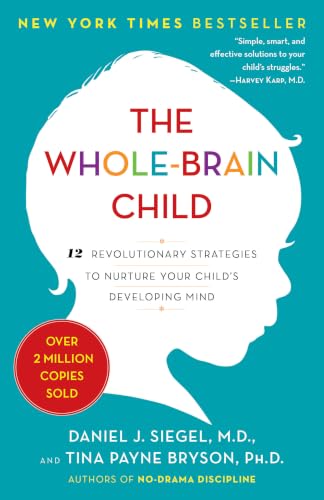
The Whole-Brain Child
The Whole-Brain Child by Daniel J. Siegel and Tina Payne Bryson Review: Brain Science Made Practical for Parents
A New York Times bestseller with more than one million copies in print, The Whole-Brain Child translates neuroscience into twelve concrete strategies designed to help parents navigate meltdowns, fears, and frustrations while supporting healthy emotional and intellectual development in their children.
LuvemBooks Verdict
Best for
Parents and caregivers of young children who want a scientifically grounded, immediately actionable framework for understanding and responding to their children's emotional and behavioural struggles — without needing a clinical background.
Worth it if
You want neuroscience translated into practical, memorable strategies you can apply in real parenting moments, delivered in a non-judgmental tone that treats losing patience as normal rather than a moral failure.
Skip if
You're looking for deep academic engagement with the underlying neuroscience, or you're raising a child with a diagnosed neurological or developmental condition and need more specialised clinical guidance than a general developmental framework can provide.
What readers & critics say
Reviewers, as quoted on tinabryson.com, calls it "a useful child-rearing resource for the entire family," noting that the authors "present [brain science] for both adult and child audiences." Researchparent.com praises "the friendly, informative style" and "fresh look on a lot of fairly common strategies."
Sources: tinabryson.com, researchparent.comAsk LuvemBooks
Was this helpful?
- Is it worth reading?
- For parents and caregivers looking for a principled, brain-informed approach to everyday family struggles, The Whole-Brain Child delivers a notably useful combination of scientific grounding and practical application. Its New York Times bestseller status and more than one million copies in print reflect broad, sustained readership that extends well beyond the initial release. The non-judgmental tone — which frames losing patience as a normal parenting reality rather than a moral failure — is frequently highlighted as one of its most valuable qualities. The main caveat is that it is designed for a general audience, so those seeking deeper neuroscience engagement or guidance specific to diagnosed developmental conditions should plan to supplement it.
- Similar books
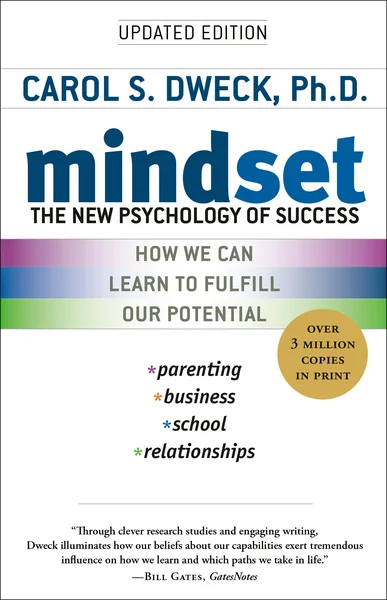
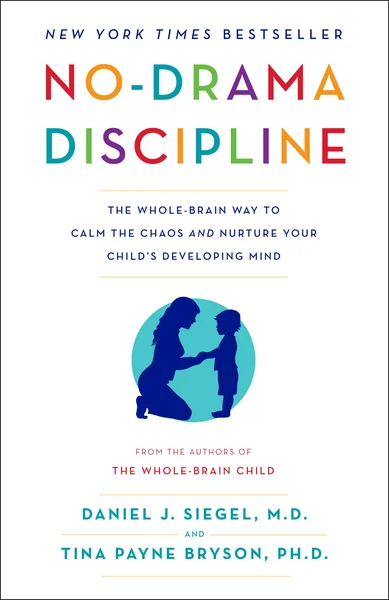
- Readers who connect with The Whole-Brain Child will find Siegel and Bryson's own follow-ups the most natural next reads: No-Drama Discipline applies the same brain-science framework specifically to discipline, while The Power of Showing Up focuses on how parental presence shapes children's brain development and long-term wellbeing. For a broader look at cultivating resilience and growth mindset — themes adjacent to the brain-integration focus here — Carol S. Dweck's Mindset: The New Psychology of Success offers a well-regarded psychological framework. Feeling Good by David D. Burns approaches emotional regulation from a cognitive-behavioral angle and may appeal to readers interested in the science of how the mind processes and responds to difficult emotions.
- Who should read this?
- The Whole-Brain Child is written for parents and caregivers of young children who want a science-informed framework for responding to everyday behavioral and emotional challenges — meltdowns, fears, aggravation, and conflicts. It is particularly well suited to readers who want practical strategies they can apply immediately, rather than abstract theory or a purely academic treatment of child development. The non-judgmental, empathetic tone also makes it a strong fit for caregivers who feel overwhelmed or self-critical about their parenting responses. Those parenting children with specific diagnosed neurological or developmental conditions may find the general framework useful as a baseline but should expect to supplement it with more specialized clinical resources.
- Where should I start with Siegel & Bryson?
- The Whole-Brain Child is widely regarded as the foundational entry point into Siegel and Bryson's collaborative body of work — it establishes the core 'whole-brain' developmental framework that their follow-up books build upon. After this, No-Drama Discipline applies that same framework specifically to discipline situations, and The Power of Showing Up — also reviewed on LuvemBooks — shifts focus to how a parent's consistent presence shapes a child's brain wiring and long-term emotional development. For most readers, reading them in that sequence provides the clearest conceptual progression.
- What are the main themes?
- The central theme of The Whole-Brain Child is brain integration — the idea that healthy emotional and intellectual development in children depends on the coordinated functioning of brain regions responsible for logic, emotion, memory, and self-awareness. A closely related theme is the reframing of child behavior: Siegel and Bryson argue that meltdowns, fears, and emotional outbursts are brain-development phenomena to be understood, not discipline problems to be managed or suppressed. The book also carries a strong thread of parental empathy and non-judgment, consistently framing struggles like losing patience as a normal part of caregiving rather than a reflection of parenting failure.
- Is this book available internationally?
- The Whole-Brain Child has been translated into multiple languages, with its international reach demonstrated by editions including a Japanese translation published by Hayakawa Publishing. Its sustained translation activity reflects the broad, cross-cultural relevance of its brain-development framework, and its more than one million copies in print point to readership well beyond the English-language market.
Summarize this book
Follow up
Synthesized from verified book data & published reviews · How we review
What would you like to know about The Whole-Brain Child?
Answers come from our editorial notes on this book. If we haven't covered something, we'll say so.
Readers often ask
Our Review
What the Book Actually Is and Does
The Science Behind the Strategies
Significance and Reach
Genuine Strengths
Who Will Get the Most From It — and Who May Want More
Sources & Further Reading
The key facts and claims in this review are grounded in the retrieved, verified sources listed below.
- Cited in this review
- 1
- Further reading
- 2
drdansiegel.com
- 3
psycnet.apa.org
- 4
- 5
- 6
researchparent.com
- 7
beta.alruya.edu.kw
Age & Reading Level
Recommended age
Adult
Reading level
Adult
who it suits
Skip if you're looking for a deep academic or clinical treatment of developmental neuroscience rather than a practical parenting guide.
Reader reviews
Be one of the first readers to answer.
Read it? Was it right for you?
Books like The Whole-Brain Child
Curated picks for readers who enjoyed The Whole-Brain Child, with our reasoning for each match.
If you liked The Whole-Brain Child