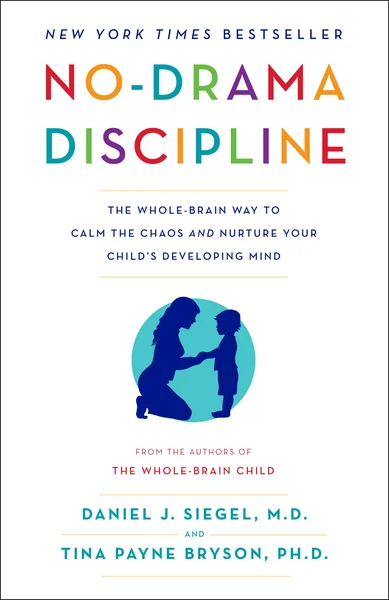
Is No-Drama Discipline worth it for parents drowning in daily meltdowns and power struggles? Daniel J. Siegel and Tina Payne Bryson promise a revolutionary approach that transforms discipline from punishment into brain-building opportunities. Their neuroscience-backed method claims to reduce family chaos while nurturing emotional intelligence—but does it deliver on these ambitious promises, or is it another parenting theory that crumbles under real-world pressure?
This collaboration between a clinical psychiatrist and a psychotherapist brings together decades of research on child development and practical family therapy experience. Fans of The Whole-Brain Child will recognize Siegel and Bryson's signature blend of accessible brain science and actionable parenting strategies, though this parenting book focuses specifically on the heated moments when traditional discipline falls short.
The Science Behind the Approach
Siegel and Bryson ground their methodology in neuroscience research about how children's brains develop and respond to stress. Their central thesis revolves around the concept that a child's brain is still developing, particularly the prefrontal cortex responsible for decision-making and emotional regulation. When children are in the midst of big emotions, their "downstairs brain" (the emotional, reactive part) has essentially hijacked their "upstairs brain" (the logical, thinking part).
This neurological framework transforms how parents view misbehavior. Rather than seeing defiance or manipulation, the authors encourage parents to recognize a child whose developing brain is overwhelmed. The approach emphasizes connection before correction—first helping the child's nervous system calm down, then addressing the behavior or lesson to be learned.
The book distinguishes between reactive discipline (punishment-focused) and responsive discipline (teaching-focused). Reactive discipline might stop behavior in the moment but misses opportunities to build emotional intelligence and problem-solving skills. Responsive discipline requires more patience initially but creates lasting change by strengthening neural pathways associated with self-regulation.
Practical Strategies That Actually Work
Where many parenting books stay theoretical, Daniel J. Siegel M.D. and Tina Payne Bryson provide concrete tools for high-stress moments. Their CONNECT framework offers step-by-step guidance: Calm yourself first, Connect emotionally with your child, Listen to their perspective, Reflect back what you've heard, and then Redirect toward problem-solving.
The authors address common parenting scenarios with specific scripts and alternatives. Instead of "Stop crying or you'll go to your room," they suggest "I can see you're really upset. Tell me what happened." This shift acknowledges the child's emotional experience while maintaining boundaries.
Their concept of "time-in" rather than "time-out" particularly resonates with parents seeking alternatives to isolation-based consequences. When children are dysregulated, they need connection and co-regulation, not solitude. This brain-based parenting guide provides practical ways to create calm-down spaces and teach self-soothing techniques that children can eventually use independently.
However, the strategies require significant shifts in parental mindset and considerable practice. Parents accustomed to quick fixes may find the initial investment of time and emotional energy challenging, especially during particularly difficult developmental phases.
The Integration Challenge
The book's greatest strength—its integration of neuroscience with practical application—also presents its biggest hurdle. While the brain science provides compelling rationale for the approach, implementing these strategies during actual meltdowns requires tremendous parental self-regulation. Daniel J. Siegel and Tina Payne Bryson acknowledge this challenge but perhaps underestimate how difficult it is for stressed parents to remain calm and connected when their own nervous systems are activated.
Siegel and Bryson excel at explaining why traditional punitive approaches often backfire, creating power struggles that escalate rather than resolve conflicts. Their alternative requires parents to see themselves as emotional coaches rather than enforcers, a role that demands significant personal growth and often challenges deeply ingrained beliefs about authority and respect.
The child discipline guide works best for parents willing to examine their own triggers and develop emotional regulation skills alongside their children. For families dealing with more complex behavioral challenges, developmental differences, or trauma histories, the approach may need supplementation with more specialized support.
Where the Method Falls Short
Despite its scientific foundation, No-Drama Discipline occasionally oversimplifies complex family dynamics. The case studies, while illustrative, tend to feature relatively straightforward scenarios. Real families often deal with multiple stressors—financial pressure, work demands, relationship conflicts—that make the patient, connected approach more difficult to sustain consistently.
The parenting book also assumes a level of parental emotional availability that may be unrealistic for single parents, families dealing with mental health challenges, or those facing other significant stressors. While the authors mention these factors, they don't adequately address how to adapt their strategies when parental resources are limited.
Some critics argue that the approach may be too permissive for children who need clearer boundaries and more structured consequences. The book addresses this concern but doesn't fully satisfy parents who worry about raising entitled or manipulative children in a culture that often rewards aggressive behavior.
The Bottom Line for Modern Families
No-Drama Discipline offers a thoughtful, science-based alternative to punitive parenting approaches, but it requires significant commitment and practice to implement effectively. Daniel J. Siegel M.D. and Tina Payne Bryson succeed in reframing discipline as an opportunity for connection and learning rather than punishment and control.
Parents seeking quick behavioral fixes may find the approach too slow and demanding. However, families willing to invest in long-term relationship building and emotional intelligence development will find valuable tools for creating calmer, more connected family dynamics.
The method works particularly well for sensitive children, those with big emotions, or families wanting to break cycles of reactive parenting. It's less immediately effective for parents seeking compliance-focused strategies or those dealing with more complex behavioral challenges that may require additional professional support.
For parents exhausted by power struggles and seeking a more collaborative approach to discipline, this brain-based parenting book provides both the scientific rationale and practical tools necessary for meaningful change—though success depends heavily on consistent implementation and parental self-regulation skills.
Where to Buy
You can find No-Drama Discipline at Amazon, your local bookstore, or directly from Bantam Books publishers.