BOOKS
Published

Read Time

4 min read

Curated & edited by

LuvemBooks Editorial

How we create our reviews →
Share This Review

The Power of Showing Up by Daniel J. Siegel & Tina Payne Bryson Review: Science-Backed Parenting Guide Built on Presence

The Power of Showing Up delivers an accessible, research-grounded framework — the "Four S's" — showing parents how consistent emotional and physical presence shapes children's brain development and long-term resilience, earning praise from Publishers Weekly as an "excellent" and "empowering" work in the parenting-psychology space.

LuvemBooks Verdict

Best for

Parents and caregivers at any stage — especially those carrying complicated attachment histories of their own — who want a research-informed, philosophically grounded case for prioritising relational presence over behavioural optimisation.

Worth it if

You want a clear, scientifically rooted framework (the Four S's: Safe, Seen, Soothed, Secure) for understanding why showing up consistently matters more than parenting perfectly, and you're open to reflective work on your own childhood experiences alongside the practical guidance.

Skip if

You're looking for age-specific, scenario-by-scenario tactical advice — on sleep, behaviour, or developmental milestones — or you're already deeply familiar with Siegel and Bryson's previous collaborations and expect substantially new foundational material.

What readers & critics say

Publishers Weekly called the book "excellent" and "encouraging and empowering," concluding that Siegel and Bryson "will leave readers with an empathetic and helpful philosophy to apply to their own parenting." A blurb surfaced via Barnes & Noble praises the authors for "showing up" for the reader themselves, describing the book as offering "an accessible path to seeing and soothing children and providing them with safety and security."

Thanks to this excellent work, Siegel and Payne will leave readers with an empathetic and helpful philosophy to apply to their own parenting.

Publishers Weekly

Siegel and Payne Bryson 'show up' for the reader — they provide an accessible path to seeing and soothing children and providing safety and security.

Barnes & Noble (featured blurb)
Sources: Publishers Weekly, Barnes & Noble
4.8from 1,379 Amazon ratings— reader ratings, not a LuvemBooks score
In This Review
  • What Works & What Doesn't
  • What the Book Is and What It Argues
  • Significance and Place in the Parenting-Psychology Genre
  • Strengths: Encouragement, Reflexivity, and Structure
  • Genuine Limitations and Who May Be Frustrated
  • Who This Book Is For

What Works & What Doesn't

What Works
  • Rooted in attachment science and interpersonal neurobiology, giving the central argument a clear empirical foundation
  • The Four S's framework — Safe, Seen, Soothed, Secure — provides a structured, memorable organizing principle across the book's sections
  • Includes reflective questions in each section to help parents examine their own attachment histories, adding an intergenerational dimension
  • Publishers Weekly praised it as an 'excellent,' 'encouraging and empowering' work that leaves readers with an empathetic parenting philosophy
  • Addresses parents who did not experience secure attachment in childhood, framing past experience as something to understand rather than an obstacle
What Doesn't
  • The book's high-altitude philosophical focus means it does not provide age-specific or scenario-by-scenario tactical guidance, which may frustrate parents seeking situational solutions
  • Readers already well-versed in Siegel and Bryson's previous collaborations may encounter foundational concepts they have met before
A book that asks parents not to be perfect, but simply to be present — and then explains, with scientific grounding, exactly why that matters.

What the Book Is and What It Argues

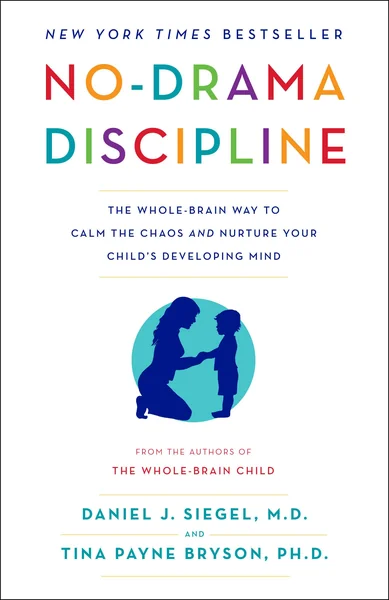
The Power of Showing Up is a parenting nonfiction book co-authored by Daniel J. Siegel, M.D. — a clinical professor of psychiatry at the David Geffen School of Medicine at UCLA — and Tina Payne Bryson, a clinical social worker previously known for No-Drama Discipline. Published by Ballantine Books, the book's central argument is straightforward but consequential: the single most important thing parents and caregivers can do is to be present — both physically and emotionally — in their children's lives. Drawing on attachment science and interpersonal neurobiology, Siegel and Bryson make the case that the parent-child relationship does not merely influence a child's emotional landscape, but will, in their words, "literally mold the physical structure of" a child's brain, with effects that carry through the rest of that child's life.
The book organizes its practical guidance around a framework the authors call the "Four S's": helping children feel Safe, Seen, Soothed, and Secure. Each of these four qualities receives its own dedicated section, giving the book a clear, structured architecture that moves from foundational concepts to applied caregiving strategies.

Significance and Place in the Parenting-Psychology Genre

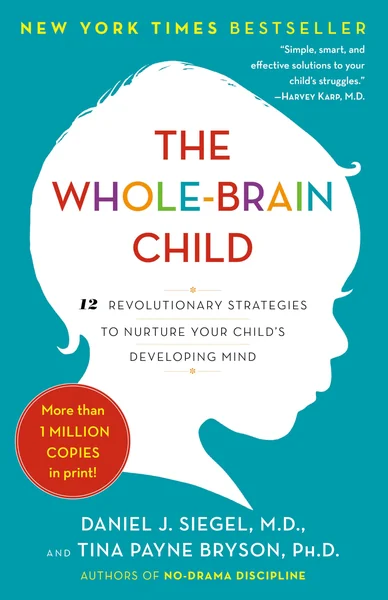
Siegel and Bryson are an established collaborative voice in the brain-based parenting space, and this title continues the work they built through The Whole-Brain Child and Bryson's solo projects. What distinguishes this book within their catalog is its singular, uncluttered thesis: rather than cataloguing developmental stages or behavioral techniques, it focuses almost entirely on the quality of presence itself as the root mechanism behind secure attachment. The concept of "predictable care" — the idea that consistency in showing up is what wires children's brains for resilience — gives the book a through-line rare in a genre prone to sprawl.
The authors frame neural-pathway formation not as an abstract neuroscience lecture but as the direct consequence of daily relational moments between parent and child. The claim that showing up creates neural pathways leading to selfhood, grit, and resilience is stated explicitly in the text, grounding what might otherwise be motivational language in a described biological mechanism.

Strengths: Encouragement, Reflexivity, and Structure

Publishers Weekly called the book "encouraging and empowering," and those descriptors point to a genuine structural feature: Siegel and Bryson repeatedly address parents who did not themselves experience secure attachment in childhood. Rather than treating insecure attachment histories as disqualifying, the book is designed to help those readers understand their own formative experiences and how those experiences shape their parenting instincts. Each section includes reflective questions crafted specifically for this purpose.
This reflexive element — turning the lens back on the parent's own childhood and attachment history — adds a dimension beyond prescriptive how-to content. It positions the book as a tool for intergenerational awareness as much as a parenting manual. Publishers Weekly concluded that the book "will leave readers with an empathetic and helpful philosophy to apply to their own parenting," a verdict that underscores how the authors balance scientific framing with emotional accessibility.

Genuine Limitations and Who May Be Frustrated

The book's strength — its focused, singular thesis — is also the source of its chief limitation. Readers seeking granular, age-specific guidance or a comprehensive survey of parenting challenges may find the Four S's framework too high-altitude for their immediate practical needs. The book is designed to instill a philosophy of presence, not to troubleshoot specific behavioral scenarios, sleep difficulties, or developmental concerns. Parents in crisis or looking for situational scripts may need to pair it with more tactically oriented resources.
Additionally, readers with no prior exposure to attachment theory or interpersonal neurobiology will encounter a conceptual vocabulary — terms like "predictive care," "secure base," and brain-wiring language — that the authors work to make accessible, but that still represents a steeper entry point than purely anecdote-driven parenting books. Those who are already well-read in Siegel and Bryson's previous collaborations may find some of the foundational framing familiar territory.

Who This Book Is For

The Power of Showing Up is designed for parents and caregivers at any stage who want a research-informed rationale for prioritizing relational presence over behavioral optimization. It is particularly well-suited to caregivers who carry their own complicated attachment histories and are looking for both validation and a clear framework for doing things differently. The book's emphasis on "good enough" presence over perfection makes it an accessible entry point for readers new to attachment-based approaches, while the neuroscience grounding gives readers already familiar with the genre a more substantive intellectual scaffold than many popular parenting titles provide.

Sources & Further Reading

The key facts and claims in this review are grounded in the retrieved, verified sources listed below.

  1. Cited in this review
  2. 1
  3. 2
  4. 3
  5. 4
  6. Further reading
  7. 5