7 min read
4.1
· 146 Amazon ratingsShare This Review
Our review
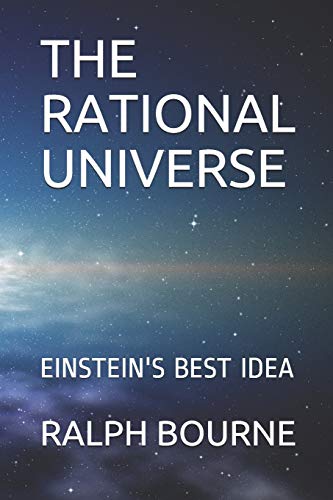
THE RATIONAL UNIVERSE: EINSTEIN'S BEST IDEA
The Rational Universe: Einstein's Best Idea by Ralph Bourne Review: A Compact Case for the Cosmic Constant
Ralph Bourne's independently published paperback makes the case that Einstein's long-ridiculed Cosmological Constant deserves rehabilitation in light of modern physics' acceptance of dark energy, dark matter, and phantom particles — a focused argument aimed at general readers curious about where cosmology currently stands.
LuvemBooks Verdict
Best for
General readers with a curiosity about cosmology who want a short, argument-driven introduction to dark energy, dark matter, and why Einstein's long-dismissed Cosmological Constant may deserve a serious second look.
Worth it if
You've encountered headlines about dark matter or the universe's accelerating expansion and want a compact, connecting narrative that traces those discoveries back to Einstein's original thinking — without committing to a dense textbook.
Skip if
Skip it if you're a scientifically trained reader or advanced enthusiast expecting mathematical rigour, historiographical nuance, or the editorial vetting that comes with a major-press popular science title — at 123 pages, the treatment cannot sustain that level of depth.
What readers & critics say
No substantive critical reviews of this specific title were among the retrieved sources. One Amazon.co.uk reader review, retrieved directly, offered a notably negative assessment of the book's physical production quality.
Sources: Amazon.co.ukAsk LuvemBooks
Was this helpful?
- Is it worth reading?
- For general readers who have encountered headlines about dark matter or the accelerating expansion of the universe and want a connecting narrative that ties those discoveries back to Einstein's original thinking, Bourne's book offers a concise and direct entry point. Its greatest asset is its focus — it does not sprawl across multiple topics but builds a single, coherent argument. The key caveat is that at 123 pages, it lacks the mathematical depth and nuance that scientifically trained readers or advanced enthusiasts would expect, and its independent publication means it does not carry the editorial vetting infrastructure of major-press popular science books.
- Similar books
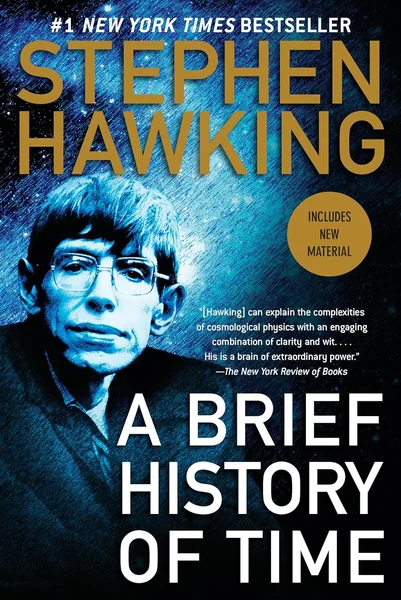
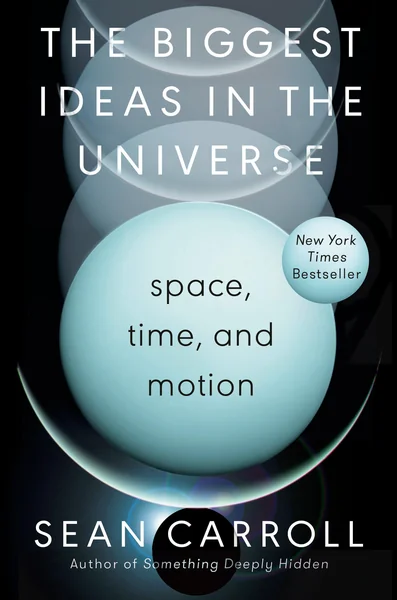
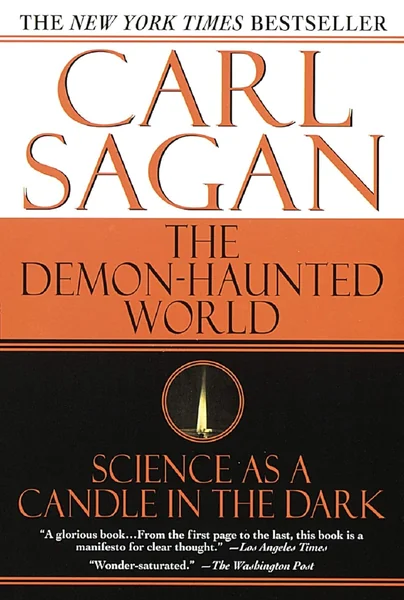
- Readers drawn to The Rational Universe will find natural companions in the popular-science canon. Stephen Hawking's A Brief History of Time covers cosmological concepts including the nature of the universe's expansion with far greater depth and institutional authority. Sean Carroll's The Biggest Ideas in the Universe: Space, Time, and Motion similarly tackles space and time for general readers but with more rigorous mathematical grounding. Neil deGrasse Tyson's Astrophysics for People in a Hurry shares Bourne's compact, accessible format and focus on modern astrophysics. Kip Thorne's The Science of Interstellar offers another angle on relativistic physics connected to observable phenomena. For readers interested in the broader scientific method and the culture of science, Carl Sagan's The Demon-Haunted World provides essential context, and James Gleick's Chaos offers a similarly argument-driven popular-science narrative tracing one big idea from controversy to acceptance.
- Who should read this?
- The Rational Universe is best suited to general readers with a curiosity about cosmology and modern physics who want a short, argument-driven introduction to why dark energy and dark matter matter — and why Einstein's controversial Cosmological Constant may deserve a second look. It is particularly well-matched for readers who have encountered headlines about dark matter or the accelerating expansion of the universe and want a connecting narrative that ties those discoveries back to Einstein's original thinking. Scientifically trained readers or advanced enthusiasts who expect mathematical rigor or exhaustive historiographical defense will likely find the treatment insufficient.
- What is Bourne's central argument?
- Bourne argues that Einstein's Cosmological Constant — long dismissed and even disowned by Einstein himself — was not a mistake to be corrected but a rational foundation that cosmology has been slowly returning to. His case rests on modern physics' reliance on dark energy and dark matter to explain phenomena that standard models cannot account for, including the anomalous behavior of galactic edges, where outer regions rotate far too quickly to remain gravitationally bound under conventional calculations yet do remain bound. The book extends this argument to current particle physics theories involving phantom particles, positioning all of these developments as a vindication of Einstein's original thinking.
- How technical is the writing?
- The book is written for general readers rather than specialists — its design intent is to bring cosmological concepts within reach of a non-specialist audience, anchoring abstract physics in observable problems rather than mathematical formalism. That said, readers coming in with some familiarity with terms like dark energy, dark matter, and the Cosmological Constant will get the most out of it. Scientifically trained readers or advanced enthusiasts are likely to find the treatment too non-technical, while complete beginners may need occasional supplementary reading to follow the argument fully.
- Does the independent publishing matter?
- The review treats independent publication as a meaningful caveat rather than a fatal flaw. The book does not carry the editorial apparatus — peer review, institutional affiliation, or major-press fact-checking — that many readers use as quality signals in popular science, and that absence is worth weighing. At the same time, the review's criticism of the book's limitations focuses primarily on its brevity and the assertiveness of its central argument rather than on factual errors, suggesting the concern is one of credibility infrastructure rather than demonstrable inaccuracy.
Summarize this book
Follow up
Synthesized from verified book data & published reviews · How we review
Press Enter to ask. Answers come from our editorial Q&A — start typing to see related questions.
Our Review
What the Book Actually Argues

Scope and Positioning
Strengths: Making the Science Accessible
Limitations and Who May Be Frustrated
Who This Book Is For
Sources & Further Reading
The key facts and claims in this review are grounded in the retrieved, verified sources listed below.
- 1
worldofbooks.com
Age & Reading Level
Recommended age
Adult
Reading level
Adult
who it suits
Skip if you're looking for a mathematically rigorous or exhaustively researched treatment of cosmological theory.
Reader reviews
Be one of the first readers to answer.
Read it? Was it right for you?
Books like THE RATIONAL UNIVERSE: EINSTEIN'S BEST IDEA
Curated picks for readers who enjoyed THE RATIONAL UNIVERSE: EINSTEIN'S BEST IDEA, with our reasoning for each match.
If you liked THE RATIONAL UNIVERSE: EINSTEIN'S BEST IDEA