7 min read
4.4
· 1,324 Amazon ratingsShare This Review

Our review
The Simpsons and Their Mathematical Secrets
The Simpsons and Their Mathematical Secrets by Simon Singh Review: A Witty, Accessible Gateway to Mathematics
Simon Singh's popular-science book uses decades of hidden mathematical jokes embedded in The Simpsons — and its sister show Futurama — as a launching pad for lively, substantive explorations of number theory, topology, cosmology, and more, earning praise from both major critics and The Simpsons' own writing staff.
LuvemBooks Verdict
Best for
Simpsons fans with a curiosity about mathematics who want a genuinely educational popular-science read that uses beloved episodes as a doorway into topics from Fermat's Last Theorem to cosmological equations — no formal maths background required.
Worth it if
You enjoy recreational mathematics in the tradition of Martin Gardner and want an accessible, episode-driven introduction to a surprisingly wide range of mathematical concepts, from prime numbers and topology to the Higgs boson, anchored by a show you already love.
Skip if
You have little familiarity with The Simpsons — the show's cultural scaffolding is load-bearing throughout — or you are seeking graduate-level rigour and extended formal proofs rather than an entertaining, deliberately unthreatening introduction.
What readers & critics say
Kirkus Reviews called it "a fun trip with the ultimate TV vehicle for pop culture mathematics," praising Singh as "a lively writer with an easy, unthreatening manner." The Guardian's review by Thomas Jones described it as a readable and unthreatening introduction to a wide range of mathematical concepts — from π and infinity to taxicab numbers and cryptography — and noted Singh covers his familiar Fermat and cryptography territory without simply recycling old ground.
“A fun trip with the 'ultimate TV vehicle for pop culture mathematics' — Singh is a lively writer with an easy, unthreatening manner.”
— Kirkus Reviews“The Guardian found it a readable and unthreatening introduction to mathematical concepts including π, infinity, prime numbers, topology, and taxicab numbers.”
— The GuardianAsk LuvemBooks
Was this helpful?
- Is it worth reading?
- For readers at the intersection of pop-culture curiosity and mathematical interest, The Simpsons and Their Mathematical Secrets makes a compelling case for itself. The New York Times called it a 'highly entertaining book,' The Guardian praised its readable, unthreatening approach, and — unusually — the show's own writers endorsed it enthusiastically, with David X. Cohen calling it 'excellent' and Mike Reiss comparing it favourably to the works of Martin Gardner. Singh's prior authority on Fermat's Last Theorem and cryptography ensures the book's most substantial sections carry real weight rather than superficial summary.
- Who should read this?
- The book is ideally suited to fans of The Simpsons or Futurama who are curious about the mathematical ideas hiding in plain sight on television — no formal maths background is required, but genuine curiosity about numbers is rewarded. Readers who enjoy popular-science writing in the tradition of recreational mathematics — Martin Gardner being the touchstone The Simpsons staff themselves invoked — will find it squarely in their wheelhouse. Conversely, readers seeking formal mathematical rigour or extended proofs, and those unfamiliar with the shows, are less well served.
- Similar books
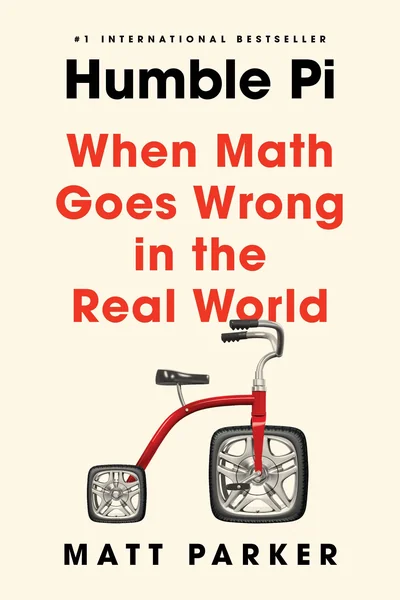
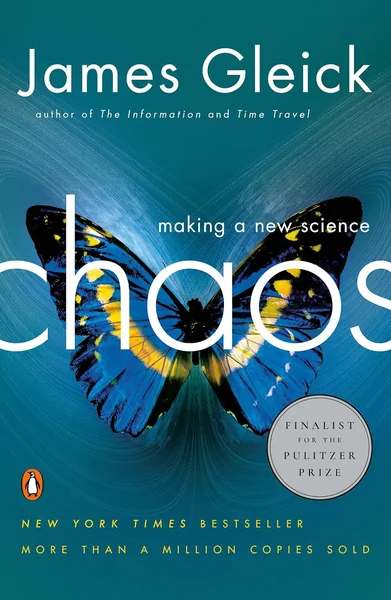
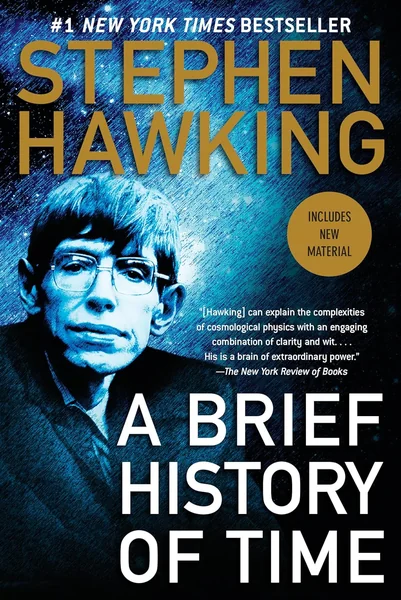
- Readers drawn to Singh's approach will find natural companions in Humble Pi by Matt Parker, which similarly explores mathematical errors and curiosities through an entertaining, accessible lens. How Not to Be Wrong by Jordan Ellenberg covers the real-world power of mathematical thinking with comparable wit and ambition. For broader popular-science writing in the same tradition, Chaos by James Gleick offers a landmark accessible treatment of a complex mathematical field, while A Brief History of Time by Stephen Hawking shares the goal of making serious science genuinely readable. Carl Sagan's The Demon-Haunted World rounds out the shelf for readers who value scientific thinking communicated with passion and clarity.
- About Simon Singh
- Simon Lehna Singh is a British popular science author and theoretical and particle physicist.
- What are the main themes?
- At its heart, the book is about the idea that serious mathematics and popular entertainment are not mutually exclusive — that a writers' room can be populated by people who are, as Singh puts it, 'deeply in love with numbers' and determined to 'drip-feed morsels of mathematics into the subconscious minds of viewers.' Singh explores this through specific mathematical concepts including Fermat's Last Theorem, Euler's identity, infinity, prime numbers, topology, taxicab numbers, and cosmological equations, threading each through the cultural fabric of The Simpsons and Futurama. A secondary theme is the history of mathematics itself — the book draws on figures such as G.H. Hardy and Srinivasa Ramanujan to give mathematical ideas their biographical and historical context.
- What's the reading level?
- The book requires no formal mathematics background and is explicitly designed to be, in The Guardian's words, 'readable and unthreatening.' Its pop-culture spine — built around specific Simpsons and Futurama episodes — provides a familiar entry point that makes abstract mathematical concepts approachable for general adult readers. Those seeking graduate-level rigour or extended formal proofs will find this pitched well below that level by design.
Summarize this book

The Simpsons and Philosophy: The D'oh! of Homer (Popular Culture by
4.6
/ 5
This non-fiction essay collection from Open Court uses The Simpsons as a lens for serious philosophical inquiry, drawing on eighteen academic contributors to explore ethics, religion, pleasure, and Western thought — and has sold over 203,000 copies to become the bestselling volume in Open Court's Popular Culture and Philosophy series.
View on LuvemBooks →
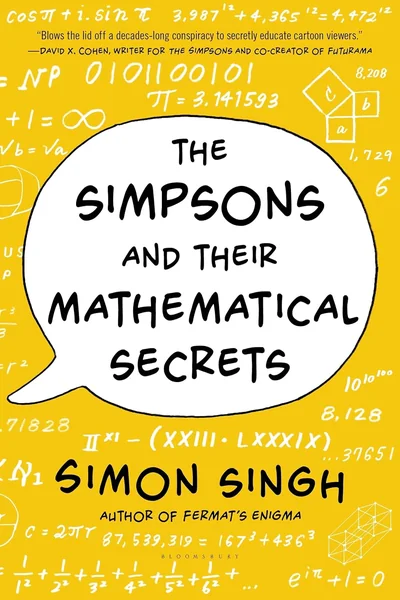
The Simpsons and Their Mathematical Secrets by Simon Singh
4.4
/ 5
Simon Singh's popular-science book uses decades of hidden mathematical jokes embedded in The Simpsons — and its sister show Futurama — as a launching pad for lively, substantive explorations of number theory, topology, cosmology, and more, earning praise from both major critics and The Simpsons' own writing staff.
View on LuvemBooks →
Follow up
Synthesized from verified book data & published reviews · How we review
What would you like to know about The Simpsons and Their Mathematical Secrets?
Answers come from our editorial notes on this book. If we haven't covered something, we'll say so.
Readers often ask
Our Review
What the Book Actually Is and Does

The Mathematical Terrain It Covers
Significance and Reception
What Singh Does Well
Who This Book Is For and Where It Has Limits
Sources & Further Reading
The key facts and claims in this review are grounded in the retrieved, verified sources listed below.
- Cited in this review
- 1
- 2
- 3
- Further reading
- 4
Simon Singh, Wikipedia
- 5
en.wikipedia.org
- 6
- 7
- 8
barnesandnoble.com
Age & Reading Level
Recommended age
Adult
Reading level
Adult
who it suits
Skip if you're looking for rigorous, graduate-level mathematical treatment rather than an accessible popular-science introduction.
Reader reviews
Be one of the first readers to answer.
Read it? Was it right for you?
Books like The Simpsons and Their Mathematical Secrets
Curated picks for readers who enjoyed The Simpsons and Their Mathematical Secrets, with our reasoning for each match.

If you liked The Simpsons and Their Mathematical Secrets