8 min read
4.4
· 1,766 Amazon ratingsShare This Review

Our review
Life on the Edge
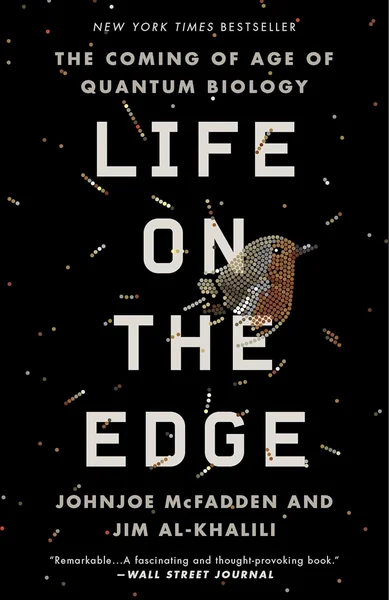
Life on the Edge: The Coming of Age of Quantum Biology by Johnjoe McFadden & Jim Al-Khalili Review: Ambitious Science Writing With Real Limits
Life on the Edge makes a bold case that quantum mechanics — the notoriously strange physics that unsettled Einstein — is not merely a subatomic curiosity but an active engine of life itself, driving everything from photosynthesis to the navigation of migratory birds. Written by two University of Surrey scientists with complementary expertise in molecular genetics and theoretical physics, the book is a New York Times bestseller that has drawn serious attention from outlets including Nature, The Economist, and The Times (UK). This review covers the book's content, credentials, and published critical reception; it does not reflect hands-on use or application of its ideas.
LuvemBooks Verdict
Best for
Science-curious general readers with some prior exposure to popular physics or biology who want a rigorous, author-led introduction to quantum biology as a genuinely emerging field — not a survey of settled science.
Worth it if
You're drawn to books that report from the frontier of scientific debate rather than summarising consensus, and you're willing to meet two credentialed researchers partway on demanding conceptual terrain.
Skip if
You're a complete newcomer to both quantum physics and molecular biology — despite the quality of its analogies, the book's conceptual load can outpace its popular-science framing for the least-prepared reader.
What readers & critics say
Kirkus Reviews praised McFadden and Al-Khalili for giving "sure footing to the anything-goes bafflement of quantum theory, making it approachable even for neophytes," while The Guardian's Nicola Davis found the insights "fascinating — but not always easy to fathom for the beginner," a caveat echoed by critics who admired the metaphors without calling the book an unqualified triumph of popular science. The authors' own site and retailer pages relay further praise from Nature ("cogency and wit") and The Economist ("delightfully revealing analogies"), underscoring the book's strong critical profile across scientific and literary outlets.
“McFadden and Al-Khalili give sure footing to the anything-goes bafflement of quantum theory, making it approachable even for neophytes.”
— Kirkus ReviewsAsk LuvemBooks
Was this helpful?
- Is it worth reading?
- For science-curious readers willing to engage with genuinely difficult material, Life on the Edge offers a rare and rewarding experience. The Economist praised the authors' 'delightfully revealing analogies and similes… that make slippery concepts sit still for study,' and Nature credited them with exploring the field 'with cogency and wit.' The Times (UK) called it 'hugely ambitious,' crediting the writing with providing 'the uplift to keep us aloft as we fly through the strange and spectacular terra incognita of genuinely new science.' The main caveat, noted by critics, is that the insights are 'fascinating — but not always easy to fathom for the beginner,' so readers with no physics or biology background should go in prepared for a genuine conceptual challenge.
- Similar books
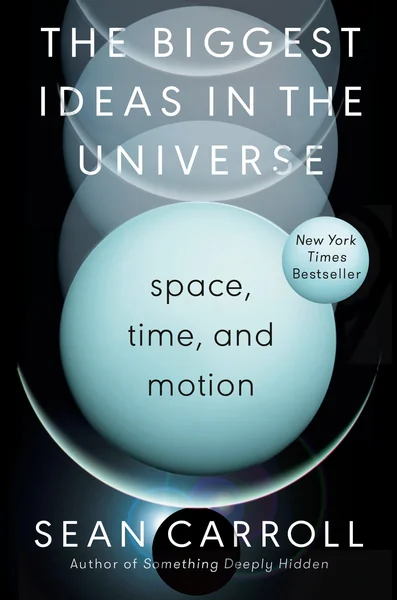
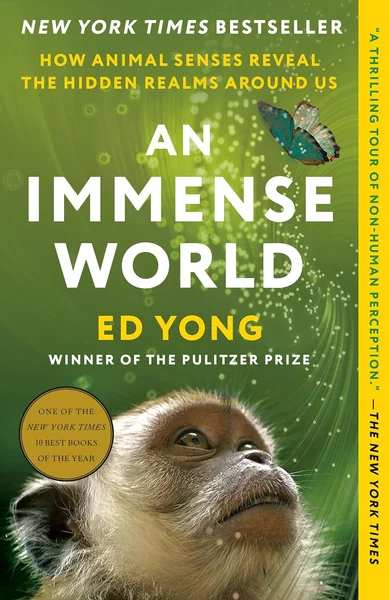
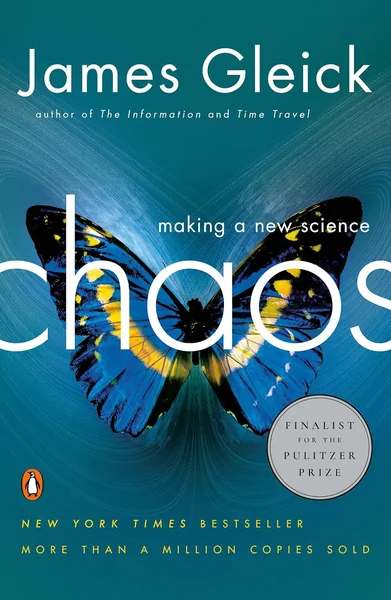
- Readers drawn to Life on the Edge for its blend of frontier science and lucid popular writing will find strong companions in several curated titles. Sean Carroll's The Biggest Ideas in the Universe: Space, Time, and Motion offers a similarly rigorous yet accessible take on deep physics. Carlo Rovelli's The Order of Time shares the same quality of making profoundly strange scientific ideas emotionally and intellectually resonant. For readers captivated by the animal-senses dimension of the book — such as the migratory bird navigation — Ed Yong's An Immense World: How Animal Senses Reveal the Hidden Realms Around Us is a natural follow-on. James Gleick's Chaos: Making a New Science is a classic precedent for popular science that reports from a field still being born, much as Life on the Edge does for quantum biology. Carl Sagan's The Demon-Haunted World: Science as a Candle in the Dark rounds out the list for readers who want the broader case for scientific thinking at its most ambitious.
- Who should read this?
- Life on the Edge is designed for science-curious general readers willing to engage seriously with difficult material, and for those already comfortable with popular physics or biology writing who want an introduction to a genuinely new frontier. The Times (UK) described it as suited to readers who enjoy books that 'challenge received wisdom and report from the edge of scientific consensus — rather than summarising what is already settled.' Those seeking a gentle introductory survey of biology or physics may find it more demanding than expected, but engaged lay readers prepared to meet the authors partway will find a rare look at science in the making.
- What are the main themes?
- The central theme of Life on the Edge is that quantum mechanics is not merely a feature of the subatomic world but a functional driver of biological processes — from the way photosynthetic systems implement what the authors call 'a quantum search strategy' to the navigational mechanisms of migratory birds. Underlying this is a broader theme about the limits of classical biology and the possibility that life has, over billions of years of evolution, learned to harness quantum weirdness. The book also engages with the philosophy of scientific frontiers: what it means to do science when consensus has not yet formed, and how extraordinary claims are built from careful analogy and experiment.
- How demanding is this book?
- Reviewers consistently flagged Life on the Edge as a genuine intellectual challenge, despite the quality of its popular-science framing. One review noted that the insights are 'fascinating — but not always easy to fathom for the beginner,' and another observed that the authors' metaphors, while 'ingenious vignettes,' do not alone make the book 'a triumph of popular science.' The dual expertise of McFadden (molecular genetics) and Al-Khalili (theoretical physics) helps bridge two demanding disciplines, and The Economist praised their 'delightfully revealing analogies,' but readers should expect to work — the subject matter itself, as the authors invoke via Niels Bohr and Richard Feynman, resists intuitive understanding even for specialists.
- What's the book's reception and reputation?
- Life on the Edge is a New York Times bestseller and has drawn serious attention from major outlets. Nature credited McFadden and Al-Khalili with exploring quantum biology 'with cogency and wit.' The Economist praised the authors for 'delightfully revealing analogies and similes… that make slippery concepts sit still for study.' The Times (UK) called it 'hugely ambitious' and said the writing provides 'the uplift to keep us aloft as we fly through the strange and spectacular terra incognita of genuinely new science.' Not every review was unqualified — some noted it is 'fascinating — but not always easy to fathom for the beginner' — but the critical consensus positions it as one of the most authoritative popular introductions to a field that barely existed before this book helped define it.
Summarize this book
Follow up
Synthesized from verified book data & published reviews · How we review
What would you like to know about Life on the Edge?
Answers come from our editorial notes on this book. If we haven't covered something, we'll say so.
Readers often ask
Our Review
We review the evidence: published critics, reader verdicts and BookTube reviews, gathered and weighed with AI assistance and edited by LuvemBooks, rather than one reader's first-hand take.
What the Book Actually Argues
The Significance of the Field (and This Book's Place in It)
Strengths: Analogy, Accessibility, and Scientific Credibility
Limitations: Accessibility Has a Ceiling
Who This Book Is For
Sources & Further Reading
The key facts and claims in this review are grounded in the retrieved, verified sources listed below.
- Cited in this review
- 1
- 2
- Further reading
- 3
kirkusreviews.com
- 4
- 5
- 6
johnjoemcfadden.co.uk
- 7
literaryquicksand.com
- 8
- 9
Age & Reading Level
Recommended age
Adult
who it suits
Skip if you want a gentle, introductory survey of biology or physics with no prior background assumed.
Reader reviews
Be one of the first readers to answer.
Read it? Was it right for you?
Books like Life on the Edge
Curated picks for readers who enjoyed Life on the Edge, with our reasoning for each match.

If you liked Life on the Edge