9 min read
4.5
· 1,793 Amazon ratingsShare This Review

Our review
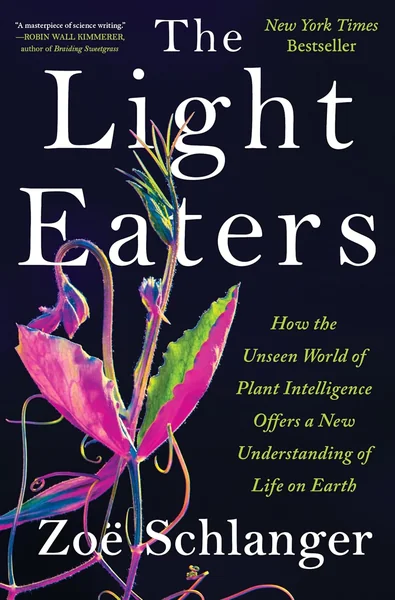
The Light Eaters
The Light Eaters by Zoë Schlanger Review: A Revelatory Reckoning with Plant Intelligence
Zoë Schlanger's The Light Eaters is a popular science and natural history study of botany that chronicles a field in the midst of a potentially radical transformation, tracing how researchers studying plant communication, electrical signaling, and adaptive behavior are challenging long-entrenched orthodoxies — and the professional costs that come with that.
LuvemBooks Verdict
Best for
Curious general readers who want a narrative-driven tour of cutting-edge botany — especially those interested in the sociology and politics of science, and in the philosophical questions that arise when biology pushes at the edges of what we call a "mind."
Worth it if
You're drawn to popular science that weaves researchers' human stories through the empirical findings, and you're comfortable sitting with unresolved questions rather than expecting clean, consensus-backed conclusions.
Skip if
Readers who want settled scientific answers and clear-cut conclusions will likely find the book's willingness to dwell in disciplinary uncertainty and contested vocabulary more frustrating than illuminating.
What readers & critics say
Bookmarks.Reviews aggregates an overall "Rave" rating from five critics, with the book praised as "involving, vibrant, and affecting" for its dispatch from the vanguard of plant research. Kirkus Reviews calls it hard to imagine "a more thorough introduction or a writer more dedicated to her subject and provocative in the questions she asks," while The New Yorker published a full under-review piece framing the book as a window into "the messiness of scientific change" in botany.
“Hard to imagine a more thorough introduction or a writer more dedicated to her subject and provocative in the questions she asks.”
— Kirkus ReviewsAsk LuvemBooks
Was this helpful?
- Is it worth reading?
- The Light Eaters has earned strong critical reception: Scientific American stated it 'will transform how you see not only plants but the nature of all life,' Smithsonian magazine named it one of its Ten Best Science Books of 2024, and Orion called it 'a fascinating journey through contemporary botanical research.' Schlanger's background as a working science journalist at The Atlantic grounds the reporting in direct access to practicing botanists, lending the book both credibility and narrative energy. The primary caveat is for readers who want settled scientific consensus — the book operates in a space of active disciplinary debate and is deliberately comfortable with unresolved questions about plant consciousness. For readers drawn to narrative science writing and the human drama of researchers navigating professional risk, it is a genuinely distinctive work.
- Similar books
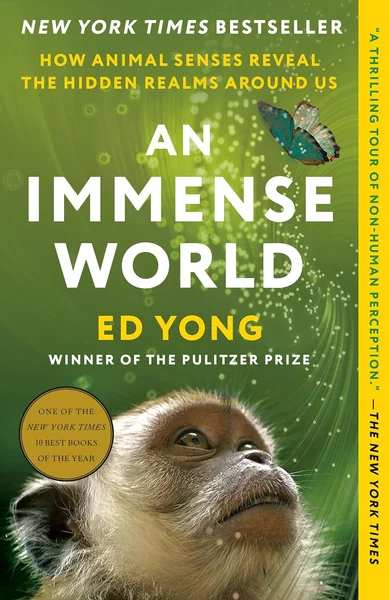
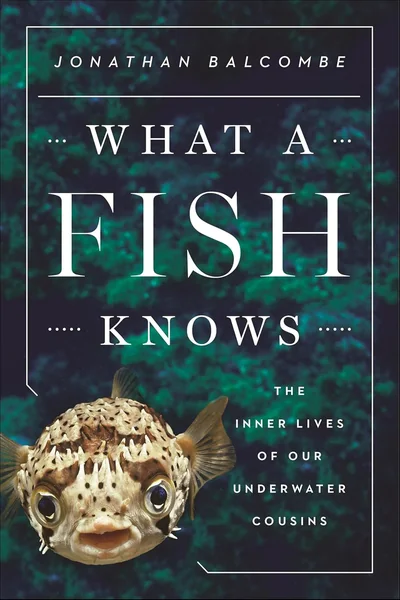
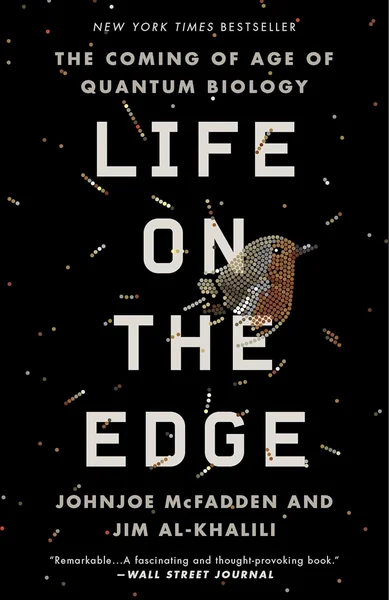
- Readers who enjoy The Light Eaters will find strong company in several titles. Peter Wohlleben's The Hidden Life of Trees covers adjacent ground — the hidden communication and social lives of trees — and shares Schlanger's interest in plant perception. Ed Yong's An Immense World applies a similar lens of radical perceptual humility to animal senses, asking how other creatures experience a world we can barely imagine. For science operating at the edge of established consensus, Johnjoe McFadden and Jim Al-Khalili's Life on the Edge explores quantum biology with comparable comfort in frontier uncertainty. Jonathan Balcombe's What a Fish Knows rounds out the group by extending questions of inner life and intelligence to another kingdom long dismissed by mainstream science.
- Who should read this?
- The Light Eaters is designed for general readers curious about the natural world, the history and culture of science, and the philosophical questions that cutting-edge biology raises about what counts as a mind. Readers drawn to narrative science writing — where the human stories of researchers like Monica Gagliano are woven through empirical findings — will find the structure well-suited to their interests. It is also a strong choice for anyone interested in how scientific institutions work, how orthodoxies form and break, and the professional costs researchers face for challenging established consensus. Readers who primarily want data-driven conclusions and settled science may find the book's willingness to sit with unresolved questions about plant consciousness less satisfying.
- What are the main themes?
- The Light Eaters works across several interlocking themes. The most prominent is the contested science of plant intelligence and agency — whether plants' capacities for electrical signaling, chemical communication, and adaptive behavior amount to something that deserves the language of cognition or perception. Closely tied to that is the theme of institutional suppression: how the pseudoscientific fallout of the 1973 title The Secret Life of Plants created a decades-long chilling effect on legitimate botanical inquiry. The book also examines the human costs of challenging scientific orthodoxy, profiling researchers like Monica Gagliano who have been 'pilloried as too mystical' by colleagues for combining scientific work with spiritual viewpoints. Finally, the book engages with the philosophy of science itself — specifically, how disciplinary communities negotiate vocabulary, evidence standards, and the boundaries of legitimate inquiry.
- Is the science credible?
- The science in The Light Eaters is reported, not invented — Schlanger embeds with working botanists and grounds her account in active, peer-reviewed research on plant electrical signaling, chemical communication, and adaptive behavior. Her background as a climate science journalist at The Atlantic lends the reporting credibility and disciplinary rigor. That said, the book is transparent that it operates in a space of active scientific debate rather than settled consensus: the California Review of Books notes that the central tension is precisely 'the scientific community's dispute about how to classify the new evidence.' Schlanger does not oversell the science, but she does argue clearly that the evidence is increasingly hard to dismiss.
- What is the reading experience like?
- The reading experience combines the pleasures of narrative science writing — vivid field scenes, profiles of real researchers navigating professional risk — with substantive intellectual engagement on questions of plant biology and philosophy of science. Scientific American highlighted Schlanger's 'infectious enthusiasm' and 'well-crafted descriptions' as hallmarks of her style, while Orion described the book as 'a fascinating journey through contemporary botanical research.' The pace is driven by human drama as much as empirical content: Monica Gagliano's battles with academic politics, the long shadow of The Secret Life of Plants, and Schlanger's own declared belief that a paradigm shift is imminent all give the book narrative propulsion. Readers who prefer reference-style summaries of findings over immersive reporting may find the blend less to their taste.
Summarize this book
Follow up
Synthesized from verified book data & published reviews · How we review
What would you like to know about The Light Eaters?
Answers come from our editorial notes on this book. If we haven't covered something, we'll say so.
Readers often ask
Our Review
What the Book Actually Is and Argues
The Shadow of *The Secret Life of Plants* and Why It Matters
Strengths: Reporting, Enthusiasm, and the Human Drama of Science
Complexity and Controversy Within the Science
Who This Book Is For — and Where It Tests Patience
Sources & Further Reading
The key facts and claims in this review are grounded in the retrieved, verified sources listed below.
- Cited in this review
- 1
- 2
- Further reading
- 3
- 4
- 5
- 6
- 7
Age & Reading Level
Recommended age
Adult
who it suits
Skip if you want popular science that delivers settled, consensus-backed conclusions rather than a front-row seat to an unresolved disciplinary debate.
Reader reviews
Be one of the first readers to answer.
Read it? Was it right for you?
Books like The Light Eaters
Curated picks for readers who enjoyed The Light Eaters, with our reasoning for each match.
If you liked The Light Eaters