Share This Review

Our review
Ghost Circuits
Ghost Circuits: How Intelligence Emerges from the Interaction of Body, Brain, and Environment by Thrishantha Nanayakkara Review: A Rigorous, Research-Rooted Challenge to Brain-Centric Intelligence
Drawing on more than 25 years of research and over 20 doctoral projects conducted at his Morph Lab at Imperial College London, robotics professor Thrishantha Nanayakkara argues in Ghost Circuits that intelligence is not a fixed property residing in the brain alone, but a temporary perception that arises when bodies, brains, and environments interact in dynamic, self-organising formations — a compelling and technically grounded contribution to the science of embodied cognition.
LuvemBooks Verdict
Best for
Researchers, graduate students, and technically literate readers working at the intersection of robotics, cognitive science, neuroscience, or philosophy of mind who want a research-grounded alternative to brain-centric models of intelligence.
Worth it if
You're willing to engage with a deliberately unsettling, relational conception of intelligence — one built on more than 25 years of original research and over 20 PhD projects — rather than seeking a neat, operationalisable definition.
Skip if
Readers looking for a breezy popular-science introduction to AI or brain science, or those who need clean, conventional definitions they can immediately operationalise, will find the book's epistemological ambiguity and specialist depth a significant barrier.
What readers & critics say
The Imperial College Morph Lab page describes the book's central argument directly, noting that ghost circuits "come together on their own, continue their dynamic interactions on their own, dissolve on their own, and evolve on their own," and that the assessment of their intelligence "remains subjective, contingent upon the intricacies perceived by a conscious observer — a judgment that resists replication in identical form, as the observer becomes an integral part of the circuit" (imperial.ac.uk). On LinkedIn, Nanayakkara's own profile records a reader response reporting that encountering the book's ideas produced "a slightly full-circle moment," connecting fragmented life experiences into a unified meaning (linkedin.com).
Sources: Imperial College London – Morph Lab, LinkedIn – Thrishantha NanayakkaraAsk LuvemBooks
Was this helpful?
- Is it worth reading?
- For the right reader, Ghost Circuits is a genuinely distinctive and research-rich contribution to the science of intelligence — one that earns its place, as LuvemBooks puts it, 'in any serious library of cognitive science and robotics.' The ghost circuit concept offers a coherent, falsifiable alternative to brain-centric models, and its bidirectional use of robotics to illuminate both engineering and biology gives the argument unusual empirical weight. The key caveat is accessibility: the book is structured around decades of specialist laboratory findings rather than popular-science narrative, and its deliberate resistance to clean, operationalisable definitions of intelligence will frustrate readers looking for tidy answers. Those willing to engage on the book's own terms, however, will find a coherent and carefully grounded framework.
- Who should read this?
- Ghost Circuits is best positioned for researchers, graduate students, and technically literate general readers working at the intersection of robotics, cognitive science, neuroscience, and philosophy of mind. It will particularly reward readers already sceptical of brain-centric models of intelligence and those interested in how embodied and morphological computation reframe what 'thinking' means. Readers seeking a popular introduction to AI or a clean definition of intelligence should look elsewhere — the book is explicitly resistant to operationalisable definitions and demands engagement with its own terms.
- Similar books
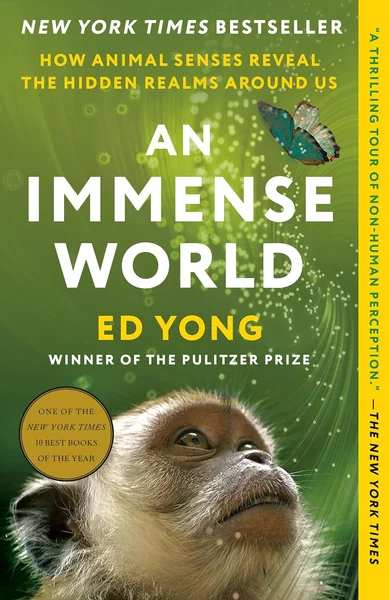
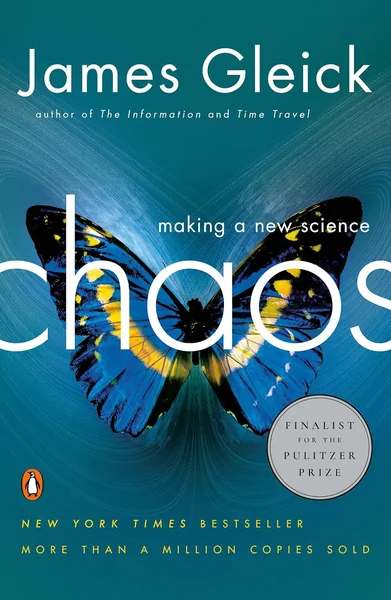
- Readers drawn to Ghost Circuits will find natural companions on LuvemBooks' curated shelf. Ed Yong's An Immense World examines how radically different sensory systems construct different realities — a complementary perspective on distributed, embodied perception. James Gleick's Chaos explores self-organisation and emergent complexity in accessible narrative form, providing useful conceptual scaffolding for Nanayakkara's framework. For the body-mind intersection from a clinical angle, Bessel van der Kolk's The Body Keeps the Score shows how intelligence and trauma are written into physical systems, not just neural ones. Johnjoe McFadden and Jim Al-Khalili's Life on the Edge brings quantum biology to bear on how living systems exploit physics at its most fundamental — another challenge to reductive, brain-first models. Zoë Schlanger's The Light Eaters, on plant intelligence, extends the distributed-cognition question to organisms with no nervous system at all.
- What are the main themes?
- The central theme is the radical relocation of intelligence: rather than residing in the brain, intelligence in Ghost Circuits is a distributed, temporary phenomenon that emerges from the interaction of body, brain, and environment. Related themes include the subjectivity of intelligence assessment — the observer becomes part of the circuit being evaluated — and the porousness of the boundary between biological and artificial systems. The book also engages deeply with self-organisation and morphological computation, using phenomena such as cochlear mechanics and joint stabilisation to argue that mechanical and physical structures participate directly in cognition.
- How difficult is this book to read?
- Ghost Circuits is a demanding read. It is structured around decades of specialist laboratory research spanning soft robotics, morphological computation, and embodied cognition, and it does not adopt the narrative or explanatory scaffolding typical of popular science. The book's philosophical dimension — particularly its argument that intelligence assessment is inherently subjective and observer-dependent — adds a further layer of complexity. Readers without a background in at least one of robotics, cognitive science, or philosophy of mind should expect a significant but rewarding challenge.
- How original is the ghost circuit framework?
- The ghost circuit concept represents a genuinely distinctive contribution to the field. Rather than refining existing brain-centric models, Nanayakkara reconceives intelligence as a temporary, relational perception — one that cannot be localised to any single component of the body-brain-environment system. The concept was first introduced in the Handbook on Soft Robotics and is developed here into a full theoretical framework for the first time, giving Ghost Circuits the weight of a scientific programme reaching maturity rather than a speculative opening gambit. Its insistence that intelligence is observer-dependent and inherently subjective also sets it apart from most engineering-adjacent treatments of the subject.
Summarize this book
Follow up
Synthesized from verified book data & published reviews · How we review
What would you like to know about Ghost Circuits?
Answers come from our editorial notes on this book. If we haven't covered something, we'll say so.
Readers often ask
Our Review
This review covers the book's content, premise and published critical reception, not a first-hand reading.
What the Book Actually Argues
The Research Foundation Behind the Framework
Robotics as Experimental Lens
The Philosophical Stakes and Their Complexity
Who This Book Is For
Sources & Further Reading
The key facts and claims in this review are grounded in the retrieved, verified sources listed below.
- 1
imperial.ac.uk
- 2
Age & Reading Level
Recommended age
Adult
who it suits
Skip if you want a breezy popular-science introduction to AI or a clean, operationalisable definition of intelligence.
Reader reviews
Be one of the first readers to answer.
Read it? Was it right for you?
Books like Ghost Circuits
Curated picks for readers who enjoyed Ghost Circuits, with our reasoning for each match.
If you liked Ghost Circuits