BOOKS
Published

Read Time

8 min read

Reader rating

4.7

· 21,707 Amazon ratings
reader ratings, not a LuvemBooks score
Curated & edited by

LuvemBooks Editorial

How we create our reviews →
Share This Review

The Body: A Guide for Occupants by Bill Bryson Review: A Witty, Wide-Ranging Popular Science Tour

Bill Bryson's The Body: A Guide for Occupants, first published in 2019, is a popular science book that takes readers on a system-by-system journey through human biology — covering anatomy, physiology, the history of medical discovery, and the manifold ways the body can astound or betray its occupants. This review is based on published sources and critical reception; it does not reflect hands-on use or application of the book's content.

LuvemBooks Verdict

Best for

Curious adult general readers who want an entertaining, panoramic introduction to human biology — covering everything from the microbiome to the cardiovascular system — without needing a scientific background.

Worth it if

You want to come away genuinely astonished by the body you inhabit, and you appreciate a writer who can deliver substantive science through wit, anecdote, and the history of medical discovery.

Skip if

You are a medical professional, student, or specialist seeking clinical depth, rigorous citations, or actionable health guidance — or you need coverage of post-2019 advances in fast-moving fields like immunology and microbiome science.

Critical reception was broadly positive: Bookmarks Reviews aggregates an overall "Positive" rating across 14 reviews, with Bookreporter calling Bryson "an incomparable companion" whose book is "full of extraordinary facts and irresistible Brysonesque anecdotes." A notable outlier came from NPR, whose reviewer argued the book is missing the characteristic wit and the "ingenious way of analysis" that made A Short History of Nearly Everything transcend the common textbook.

Missing his characteristic wit and ingenious way of analysis — without the magic touch that made his very big books transcend the common textbook.

NPR
Sources: Bookmarks Reviews, Bookreporter, NPR
4.7from 21,707 Amazon ratings— reader ratings, not a LuvemBooks score

Ask LuvemBooks

Was this helpful?

The Body: A Guide for Occupants is Bill Bryson's system-by-system tour of human biology, blending anatomy, the history of medical discovery, and cascading data points — from 3.5 billion lifetime heartbeats to 40,000 species of resident microbes — into a work of sustained popular-science wonder. Accessible without being shallow, it is best suited to adult general readers who want to be genuinely informed and entertained rather than clinically instructed. The key caveat: specialist readers and those seeking actionable health guidance will find the coverage deliberately broad, and the 2019 research base means fast-moving fields like the microbiome may have moved on.
Is it worth reading?
For adult general readers with curiosity about human biology and no specialist background, The Body earns its strong critical reception: critical coverage headlined its review 'a directory of wonders,' and The Independent praised both the breadth of facts and the 'inimitable Bryson style.' The book is less useful for readers seeking clinical depth — topics like immunology and neuroscience are treated at an introductory level by design — and its 2019 research base means some fast-moving areas, particularly the microbiome, may have advanced beyond what the text covers. Readers who want to be astonished and informed rather than instructed will find it rewarding.
Similar books
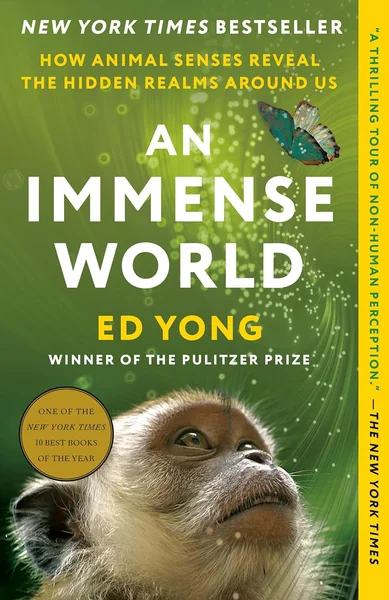
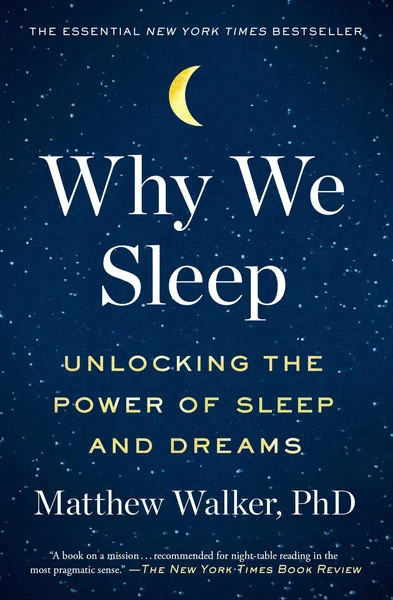
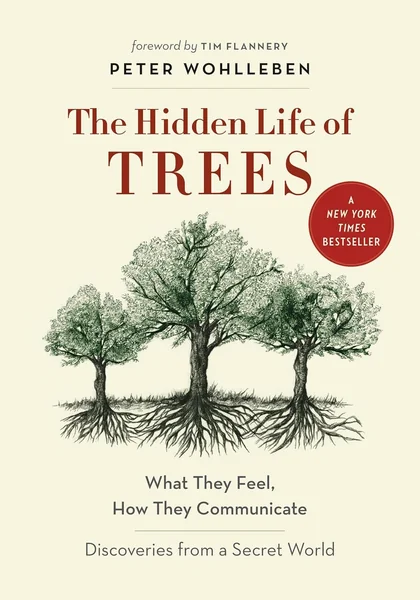
Readers who enjoyed The Body have several strong options in the same popular-science tradition. Ed Yong's An Immense World brings the same spirit of biological wonder to animal sensory systems, while Matthew Walker's Why We Sleep applies deep research to a single human system in the accessible mode Bryson popularised. For those drawn to Bryson's habit of making unseen biology feel revelatory, Peter Wohlleben's The Hidden Life of Trees offers a comparable sense of astonishment about a non-human organism. Carl Sagan's The Demon-Haunted World shares Bryson's commitment to making science legible and meaningful to general readers. Bessel van der Kolk's The Body Keeps the Score takes a more clinically grounded approach to the body — specifically trauma's effects on it — and suits readers wanting more depth on mind-body connection.
Who should read this?
The Body is aimed squarely at adult general readers — not medical professionals, students seeking a clinical reference, or readers looking for actionable health guidance. It is ideal for anyone who wants to understand human biology in broad, accessible terms and who enjoys science communicated with wit and historical context. Readers who appreciate the history of medical discovery alongside the facts will get the most from Bryson's approach, as he consistently grounds biology in the stories of how difficult it was for medicine to learn what it now knows.
About Bill Bryson
William McGuire Bryson is an American journalist and author who was naturalized as a British citizen in 2014.
How does this compare to Notes from a Small Island?
Notes from a Small Island and The Body both showcase Bryson's wit and eye for the telling anecdote, but they occupy quite different modes. Notes from a Small Island is travel writing, grounded in place and personal observation, while The Body is popular science — Bookreporter notes that 'Bryson the humorist has largely given way to Bryson the polymath' in his later science work, though the humour remains a delivery mechanism throughout. Readers coming to The Body for the first time from his travel books will find the voice familiar but the structural ambition considerably larger.
What are the book's limitations?
Three limitations recur in critical coverage. First, the popular-science format means genuinely complex topics — immunology, neuroscience — receive treatment that specialists would consider introductory at best. Second, the book is weighted toward historical anecdote and biological statistics rather than actionable health guidance, which can disappoint readers hoping for practical instruction. Third, anchored in 2019 research, it will have been outpaced in fast-moving fields such as microbiome science, where the science has continued to evolve since publication.
Summarize this book

Summarize this book

First published in 2019, The Body: A Guide for Occupants takes adult general readers on a chapter-by-chapter guided tour through the major biological systems — heart, lungs, brain, immune system, microbiome, and beyond. Within each chapter, Bryson explains how the system functions, traces the history of scientific discovery that produced current understanding, and deploys his characteristic wit to keep dense material moving. The cumulative argument is one of compounded wonder: the human body is staggeringly complex, breathtakingly efficient, and yet stubbornly mysterious even to the scientists who study it most rigorously. The publisher describes the book as leading readers to 'a deeper understanding of the miracle that is life in general.'

Follow up

How much ground does it actually cover?
Is it heavy going or an easy read?
Do you have to read it straight through?

Synthesized from verified book data & published reviews · How we review

Press Enter to ask. Answers come from our editorial Q&A — start typing to see related questions.

Age & Reading Level

Recommended age

Adult

Reading level

Adult

Skip if you want actionable health guidance or specialist clinical depth on topics like immunology or neuroscience.

Our Review

A witty, fact-dense exploration of human biology, The Body: A Guide for Occupants confirms Bill Bryson as one of popular science's most gifted translators of complexity for general audiences.
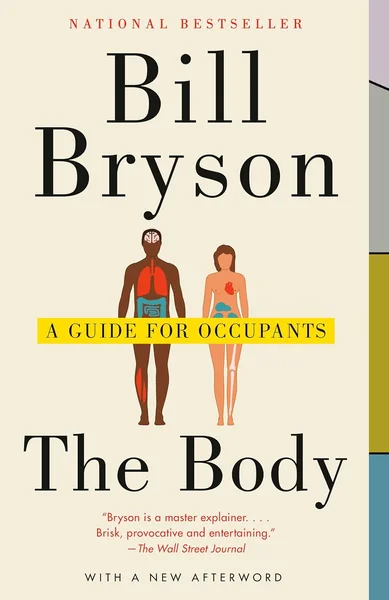
The Body: A Guide for Occupants by Bill Bryson front cover

What the Book Actually Is and Does

The Body: A Guide for Occupants is Bryson's second work of popular science, following A Short History of Nearly Everything (2003). First published in 2019 and later reissued in a Vintage paperback edition (January 2021), the book is structured as a guided tour of the human body, moving chapter by chapter through its major biological systems. Within each chapter, Bryson describes the function of the relevant system, traces the history of the scientific developments that produced current understanding, and weaves in the characteristic humour that has defined his career. Topics range from the heart and lungs to the microbiome, the brain, the immune system, and beyond — each treated as both a biological marvel and a source of narratively rich anecdote. The book is squarely aimed at adult general readers, not at medical professionals or students seeking a clinical reference.

The Argument at the Book's Core

Bryson's central case is one of compounded wonder: the human body is staggeringly complex, breathtakingly efficient, and yet also stubbornly mysterious even to the scientists who study it most rigorously. He anchors this argument in cascading data points that are designed to reframe the reader's sense of scale. As the publisher's description notes, the body makes roughly a million red blood cells in the time it takes to read a single sentence; the heart will beat approximately 3.5 billion times in a lifetime; the body is home to around 40,000 species of microbes alongside some 30 trillion human cells. These figures are not mere decoration — they are the load-bearing structure of Bryson's argument that what occupies us, literally and daily, deserves far more astonishment than it typically receives. The book also dwells on medicine's historical blind spots and ongoing uncertainties, grounding its optimism in honest acknowledgment of what remains unknown.

Reception and Significance

The book received generally positive reviews upon publication. Critical coverage headlined its review "a directory of wonders," and The Independent praised both the breadth of dispensable-yet-fascinating facts and what it called the "inimitable Bryson style." Bookreporter described Bryson as "an incomparable companion" who guides readers through the body's functions, its remarkable capacity for self-repair, and its vulnerabilities — characterising the result as "full of extraordinary facts and irresistible Brysonesque anecdotes." The work sits comfortably within a tradition of ambitious popular science that treats complexity as an invitation rather than a barrier, and its scope — covering everything from cardiovascular disease's $300 billion annual cost to Americans to the precise thresholds that now define hypertension — reflects genuine breadth of research. Bryson reportedly traversed the world and consulted numerous scientific experts in its preparation.

Strengths: Accessibility and Narrative Drive

What sources consistently single out is the way Bryson calibrates density without sacrificing momentum. Bookreporter noted that in recent years "Bryson the humorist has largely given way to Bryson the polymath," yet the wit remains a delivery mechanism rather than a distraction — it is how the science arrives without feeling like homework. The book is designed to allow a reader with no specialist background to absorb genuinely substantive biological information, and the chapter-by-chapter structure means it can be read straight through or dipped into by system. The emphasis on the history of scientific discovery adds a human dimension that transforms what could be dry cataloguing into a series of small stories about how difficult it has been for medicine to learn what it now knows.

Genuine Limitations and Who May Struggle

Readers seeking clinical precision or rigorous citation apparatus for professional use will find The Body is not built for them — it is popular science by design, and that design involves trading depth for range. The system-by-system structure, while accessible, means that genuinely complex topics (immunology, neuroscience) receive treatment that specialists would consider introductory at best. Some readers drawn in by the promise of life advice or practical health guidance may find the book is weighted more toward historical anecdote and biological statistics than toward actionable instruction. Additionally, given that the book was first published in 2019, some areas of rapidly evolving science — particularly immunology and the microbiome — will have seen developments that post-date its research.

Sources & Further Reading

The key facts and claims in this review are grounded in the retrieved, verified sources listed below.

  1. Cited in this review
  2. 1
    The BodyHigh-authority source

    Bill Bryson, Open Library, (2019)

  3. 2
  4. Further reading
  5. 3
    Bill Bryson — author profileHigh-authority source

    Bill Bryson, Wikipedia

  6. 4
  7. 5
  8. 6
  9. 7
  10. 8
  11. 9
  12. 10
  13. 11

Books like The Body

Curated picks for readers who enjoyed The Body, with our reasoning for each match.

If you liked The Body

Why It’s Trending

Netflix's Body-Themed Shows Are Sending Readers Back to Bryson's Human Biology Classic

A cluster of Netflix titles with 'body' in the name — including a new series following Catholic school girls with prophetic visions — has readers thinking about the human body in fresh ways, and Bryson's witty, accessible guide is riding that wave of curiosity.

Netflix has a bit of a 'body' moment going on right now. Between the recently surfaced thriller *The Body in the Locker*, the incoming drama *The Body* (featuring Riley Keough and Quinn Shephard as badly behaved Catholic school girls having prophetic visions), and the ongoing visibility of the sci-fi mystery *Bodies*, the word is everywhere in streaming conversations. That kind of cultural saturation has a funny way of nudging people toward books on the same theme. Bryson's *The Body: A Guide for Occupants* isn't connected to any of those shows, but it benefits from the spillover curiosity. When people are already thinking and talking about bodies — what they do, what they hide, what they're capable of — a book that tours human biology with warmth and humor becomes an easy next step. Bryson has a gift for making complex science feel like a conversation rather than a lecture, which is exactly what casual viewers-turned-curious-readers tend to want. If you've been meaning to pick this one up, now's a perfectly good time. It's the kind of book that rewards a slow, chapter-by-chapter read, and with body-related content dominating the streaming queue, you'll have plenty of conversation fodder to go with it.