Published

Read Time

9 min read

Age & reading levelAdult
Reader rating

4.4

· 63 Amazon ratings
reader ratings, not a LuvemBooks score

Reading order

The Horus Heresy

Book 13 of 64 books
  1. A Thousand Sons book cover
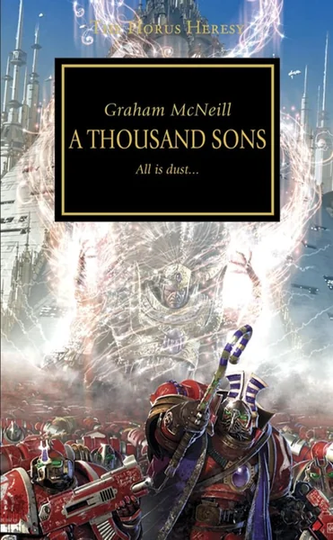
    Before thisA Thousand Sons2010
  2. Nemesis book cover
    You're readingNemesis
  3. The First Heretic book cover
    Up nextThe First Heretic2010 · on Amazon
  4. Prospero Burns book cover
    ThenProspero Burns2010 · on Amazon
All 64 in order →
Curated & edited by

LuvemBooks Editorial

How we create our reviews →
Share This Review
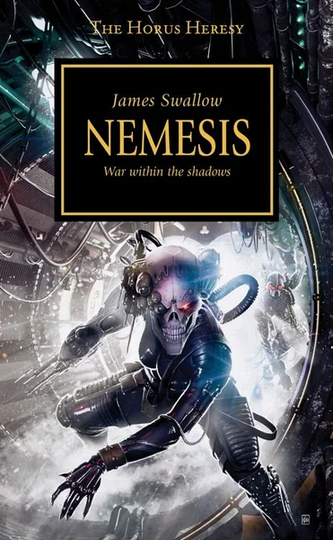
Nemesis (14) (Horus Heresy) by James Swallow front cover

Our review

Nemesis (Horus Heresy #14) by James Swallow Review: A Tense Assassin Thriller in the 41st Millennium

Nemesis is the fourteenth entry in Black Library's Horus Heresy series, written by James Swallow, in which Imperial and Chaos-aligned assassins race to end the galaxy-spanning civil war by targeting its most powerful figures. It became a New York Times bestseller and stands as one of the series' more self-contained thriller detours.

LuvemBooks Verdict

Best for

Horus Heresy readers — or curious newcomers — who want a spy-thriller change of pace from the series' usual Legion warfare, with a focus on the shadowy Officio Assassinorum and a daemonic antagonist closer to horror than military sci-fi.

Worth it if

Worth reading if you enjoy dual-narrative thriller structures, can find dramatic value in dramatic irony rather than genuine outcome uncertainty, and want a largely self-contained, more accessible entry point into the Horus Heresy beyond its Space Marine clashes.

Skip if

Skip it if you need real suspense around the central mission's outcome, or if you want a novel whose characters and storylines carry meaningful weight into the broader Heresy arc — because both assassination plots are doomed by established lore and Nemesis remains a largely self-contained episode.

Wh40k.lexicanum.com confirms Nemesis was the second novel in the Horus Heresy to reach the New York Times bestseller list, signalling its crossover commercial appeal. Community reviewers at Track of Words, Bell of Lost Souls, and Warhammer Wordforge praise its thriller pacing, distinctive assassin characterisation, and its chilling portrayal of Horus's brutality on Dagonet, while wh40kbookclub.com candidly notes the book is "skippable" in the broader series — a fair reflection of its self-contained, largely consequence-free structure.

Sources: Wh40k Lexicanum, Track of Words, Bell of Lost Souls, Warhammer Wordforge, Wh40k Book Club
4.4from 63 Amazon ratings— reader ratings, not a LuvemBooks score
Buy on Amazon
In This Review
  • What Works & What Doesn't
  • What the Book Is and What Happens
  • The Series Context and What Makes It Distinctive
  • Strengths: Dramatic Architecture and Tonal Variety
  • Limitations: Foregone Conclusions and Series Positioning
  • Who This Book Is For

What Works & What Doesn't

What Works
  • Became a New York Times bestseller, reflecting strong reception within the series
  • Dual assassination narrative — Imperial Execution Force vs. The daemonic Spear — provides thriller-style momentum distinct from the series' usual Legion warfare
  • Largely self-contained structure makes it one of the more accessible entry points in the Horus Heresy
  • The fall of Dagonet and Horus's indiscriminate brutality deliver a noted moment of genuine character weight for the Warmaster
What Doesn't
  • Both assassination plots are structurally destined to fail, given the established lore — readers aware of this will find sustained suspense difficult
  • Its self-contained nature means characters and worlds introduced here are unlikely to carry significant weight in the broader Heresy narrative
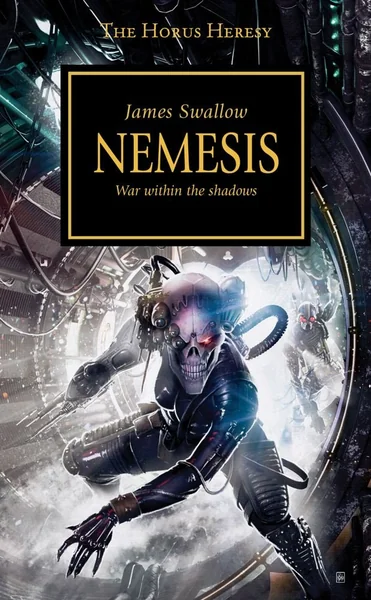
Nemesis earns its place in the Horus Heresy as a confident change of pace — a war story told through the lens of shadow operatives rather than legions — though its outcome is constrained by the very history it inhabits.
Nemesis (14) (Horus Heresy) by James Swallow front cover

What the Book Is and What Happens

Set in the aftermath of the Dropsite Massacre, Nemesis follows two parallel assassination plots unfolding across the nascent civil war. On the Imperial side, an Execution Force of elite assassins — each drawn from a different Temple of the Officio Assassinorum — is assembled and sent to eliminate Warmaster Horus and end the Heresy before it can consume the galaxy. On the opposing side, a daemonic killer known as Spear, capable of assuming the identities of those he slays, pursues his own mission: to reach and destroy the Emperor of Mankind. The novel's central arena is the contested world of Dagonet, where Spear infiltrates the vessel Iubar by impersonating a man named Hyssos, struggles with the remnants of his victim's psyche, and discovers that the Warrant of Trade he needs — containing a drop of blood to imprint on his quarry — is a forgery. The Execution Force, meanwhile, must contend with a planet already falling to the Sons of Horus, forcing them to reconsider their strategy and ultimately confront Spear directly.

The Series Context and What Makes It Distinctive

At the time of publication, Nemesis was the second novel in the Horus Heresy series to reach the New York Times bestseller list, following Graham McNeill's A Thousand Sons. That achievement reflects the commercial momentum the series had built, but it also signals something about this book's particular appeal: it reaches readers who might not otherwise gravitate toward a military science fiction epic. Where much of the Horus Heresy concerns itself with the clash of Space Marine Legions, Nemesis is structured more like a spy thriller, shifting the focus to the Officio Assassinorum — an institution that rarely receives extended treatment in the broader lore — and to a supernatural antagonist whose abilities make him something closer to a horror villain.

Strengths: Dramatic Architecture and Tonal Variety

The novel's chief structural achievement is its dual-narrative design. Swallow runs two assassination plots on a collision course, and the tension is sustained not by uncertainty about the macro-historical outcome — Horus will not be killed in book fourteen of a lengthy series — but by the question of how the two forces meet and what the cost will be. A guest review at Track of Words drew the comparison directly: just as Anakin Skywalker cannot be shot by a battle droid in Episode I, the Execution Force is marked for failure from the outset, and the book's dramatic interest must come from elsewhere. That elsewhere proves to be character dynamics, the nature of Spear's grotesque abilities, and the fate of Dagonet itself. The conclusion, in which Horus burns the people of Dagonet regardless of their allegiance, is noted by the same source as a chilling demonstration of how completely the Warmaster has abandoned any pretence of mercy — a moment of genuine characterisation within a plot where the headline outcome was never in doubt.

Limitations: Foregone Conclusions and Series Positioning

The predetermined nature of both assassination attempts is the novel's most frequently cited structural tension. Because Nemesis sits inside a massive ongoing series anchored in established lore, sophisticated readers will enter knowing that neither Horus nor the Emperor will fall here. Track of Words identifies this as a meaningful constraint: once Spear's ultimate goal is clear, his failure is equally clear. The novel has to work harder than a standalone thriller to generate suspense, and readers who find that kind of dramatic irony deflating rather than enriching will feel it most acutely. Additionally, Nemesis functions as a largely self-contained episode — the worlds and characters introduced here, as one source notes, are unlikely to recur prominently in the broader Heresy — which makes it both accessible to newer readers and potentially frustrating for those expecting its threads to carry forward into subsequent volumes.

Who This Book Is For

Nemesis rewards readers who come to the Horus Heresy with an interest in the wider institutions of the Imperium beyond its Space Marine Legions, or who want a thriller-paced entry point before committing to the series' larger arc. James Swallow, a New York Times and Sunday Times bestselling author and BAFTA-nominated screenwriter, brings a screenwriter's instinct for parallel plotting and momentum. Readers already invested in the series will find Nemesis a tonal counterpoint to the Legion-focused volumes around it; those newer to the setting will find it more approachable than many of its neighbours, provided they accept that the outcome of its central mission is never seriously in doubt.

Age & Reading Level

Recommended age

Adult

Reading level

Adult

Content to know about

graphic violence
daemonic possession and body horror

Skip if you need genuine outcome-uncertainty to sustain suspense, or you want a narrative whose threads carry forward into later volumes.

Sources & Further Reading

The key facts and claims in this review are grounded in the retrieved, verified sources listed below.

  1. Cited in this review
  2. 1
  3. Further reading
  4. 2
  5. 3
  6. 4
  7. 5