

8 min read
4.4
· 89,967 Amazon ratingsFeatured In
Share This Review
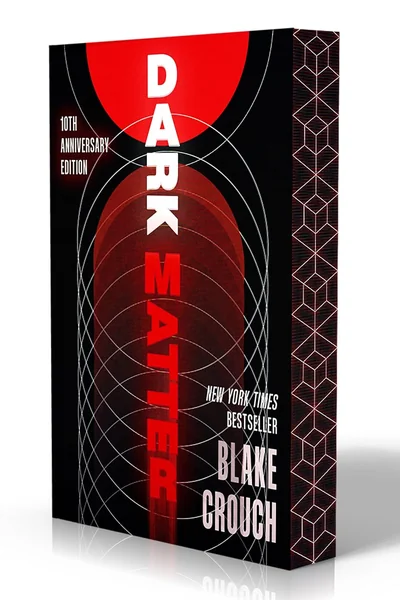
Dark Matter: A Novel by Blake Crouch Review: A Propulsive Multiverse Thriller With Emotional Stakes
Blake Crouch's Dark Matter is a thriller science fiction novel that merges quantum mechanics with a race-against-self chase story, following Chicago physics professor Jason Dessen across parallel worlds as he fights to reclaim his own life — a high-concept premise that drew mixed critical notices but has proven broadly popular with genre readers.
 Tap to enlarge
LuvemBooks Verdict
Best for
Readers who enjoy fast-paced speculative thrillers that use a high-concept science fiction premise — here, the many-worlds interpretation of quantum mechanics — as the engine for an emotionally grounded story about identity, regret, and the love of a specific family.
Worth it if
The premise of quantum parallel worlds anchored in the intimate stakes of marriage, fatherhood, and paths not taken sounds more compelling to you than the prospect of rigorous scientific or psychological depth.
Skip if
You prioritise meticulously built alternate-world world-building, psychologically distinct characterisation of each parallel version of the protagonist, or novelistic restraint over propulsive thriller mechanics.
What readers & critics say
Wikipedia notes that Dark Matter received mixed reviews from critics upon publication and was nominated for the 2016 World Technology Awards, with the Apple TV+ adaptation premiering in May 2024. Kirkus Reviews gave it a "GET IT" verdict, calling it "suspenseful, frightening, and sometimes poignant — provided the reader has a generously willing suspension of disbelief."
“Suspenseful, frightening, and sometimes poignant — provided the reader has a generously willing suspension of disbelief.”
— Kirkus ReviewsAge & Reading Level
Recommended age
Adult
Reading level
Adult
2 content notes · who it suits
Content to know about
Skip if you want meticulously constructed alternate-world world-building or psychologically layered character studies over a fast, feeling-first thriller
Dark Matter: A Novel by Blake Crouch is Trending
Apple TV+ Series Adaptation Keeps Dark Matter in the Conversation
The Apple TV+ series based on Blake Crouch's novel — starring Joel Edgerton — brought a wave of new readers to the book, and interest has stayed strong. If you haven't read the original yet, now's a great time to pick it up before (or after) watching.
Blake Crouch's Dark Matter is getting renewed attention thanks to its Apple TV+ adaptation, which brought the parallel-worlds thriller to a much wider audience. The nine-episode series starred Joel Edgerton and had Crouch himself serving as showrunner and head writer, making it an unusually faithful adaptation. The show gave the story real visibility beyond the book's existing fanbase.
With the series still active on IMDb and viewers looking for more after finishing it, many people are heading back to the source material. That's a familiar pattern with high-concept sci-fi — watching the show often makes you want to experience the story the way it was originally told. The book moves fast and the quantum mechanics angle feels fresh even if you already know the plot.
As a bonus, the Kindle edition has recently been spotted on sale for as low as $3, which makes it an easy impulse buy for anyone on the fence. If you're a fan of thrillers with a sci-fi twist and haven't read this one yet, this is a solid moment to jump in.
In This Review
- What Works & What Doesn't
- What the Novel Actually Is — and What Happens
- The Science Underpinning the Story
- Strengths: Pace, Premise, and Emotional Grounding
- Limitations: Mixed Critical Reception and Character Depth
- Relevance and Audience Today
What Works & What Doesn't
What Works
- Gripping, fast-paced thriller structure that sustains momentum across its parallel-worlds premise
- Anchors the multiverse concept in emotionally resonant personal stakes — Jason's fight to reclaim his specific family gives the science fiction scale a human core
- The many-worlds interpretation of quantum mechanics is used as accessible, propulsive storytelling architecture rather than dense hard-SF exposition
- Nominated for the 2016 World Technology Awards and later adapted into an Apple TV+ series partially written by Crouch, demonstrating broad crossover appeal
- Alison Flood in critics praised the novel's pace and found Jason's devotion to his family genuinely touching
What Doesn't
- Received mixed critical notices upon publication; some reviewers felt the alternate versions of Jason are not developed deeply enough to be individually memorable
- Exposition-heavy passages accompany the scientific framework, a trade-off that serves accessibility but can slow momentum in places
What the Novel Actually Is — and What Happens
The Science Underpinning the Story
Strengths: Pace, Premise, and Emotional Grounding
Limitations: Mixed Critical Reception and Character Depth
Relevance and Audience Today
Frequently Asked Questions
Sources & Further Reading
The key facts and claims in this review are grounded in the retrieved, verified sources listed below.
- Cited in this review
- 1
barnesandnoble.com
- 2
shelfreflection.com
- Further reading
- 3
Blake Crouch, Wikipedia
- 4
en.wikipedia.org
- 5
wordpress.susqu.edu
- 6
bookofthemonth.com
- 7
- 8
reviewsfeed.net
- 9
novelnotions.net
Related Reviews
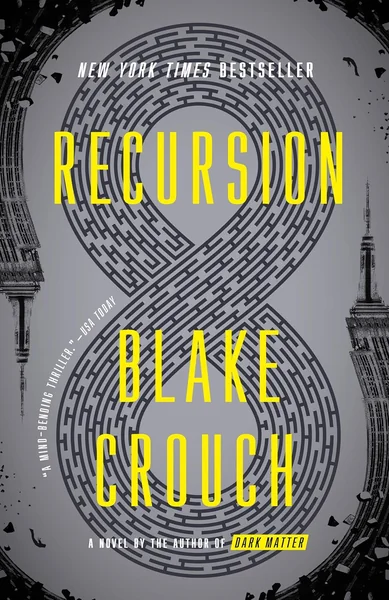
Reviews of books we picked for readers who enjoyed Dark Matter.


Reader Comments
No comments yet
Be the first to share your thoughts!