Skip to content
Reviewed

Read Time

6 min read

Our age bandAdult
Reader rating
4.8 · 298 Amazon ratings, as of Nov 2026
reader ratings, not a LuvemBooks score
Curated & edited by

LuvemBooks Editorial

How we create our reviews →
Share This Review
Collected Works of C. G. Jung, Volume 6: Psychological Types by C. G. Jung front cover

Our review

Collected Works: Psychological Types

Collected Works of C. G. Jung, Volume 6: Psychological Types Review: Jungian Theory

Originally published in 1921, this volume introduces Jung's foundational concepts of introversion, extraversion, and four psychological functions. It serves as the baseline for countless typology systems while offering an interdisciplinary exploration of consciousness.

Our age band: Adult

LuvemBooks Verdict

Best for

Readers who seek to understand the foundational concepts of introversion and extraversion or explore the interdisciplinary roots of Jungian typology in literature and philosophy.

Worth it if

Worth reading if you are prepared to engage with complex, academic arguments about the origins of modern personality theory.

Skip if

Skip it if you seek quick self-help applications or straightforward personality tests, as the text demands a serious commitment to its original philosophical context.

Critics highlight Jung's clinical derivation of introverted and extraverted types, while others note the text's rich integration of literature, aesthetics, and philosophy as foundational.

Sources: iaap.org, jstor.org
4.8from 298 Amazon ratings, as of Nov 2026— reader ratings, not a LuvemBooks score

Ask LuvemBooks

Was this helpful?

Collected Works: Psychological Types introduces C. G. Jung’s foundational framework of introversion, extraversion, and the four psychological functions, drawing heavily on literature, philosophy, and religion to map the human psyche. LuvemBooks considers it an essential primary source, though its dense, academic prose demands patience and careful study.
Is it worth reading?
It is highly recommended for students of psychology, philosophy, and literary theory who want to engage with the structural definitions that subsequent theorists expanded upon. While the core ideas remain widely cited, the book requires careful study.
Similar books
Readers exploring Jung’s typology might also appreciate Psychology of the Unconscious for its deep dive into the author's early theories on the unconscious mind, or The Psychology Book for a broader, simply explained overview of psychological concepts. For those interested in the intersection of human behavior and cognitive processes, The Laws of Human Nature and Incognito offer complementary perspectives on the mind's hidden drivers.
Who should read this?
This book is best suited for academics, psychology students, and readers with a strong interest in the discipline who are prepared to approach interdisciplinary arguments. It appeals to those seeking to understand the core ideas of introversion and extraversion or explore Jung's use of literature and philosophy to explain psychological types.
About C. G. Jung
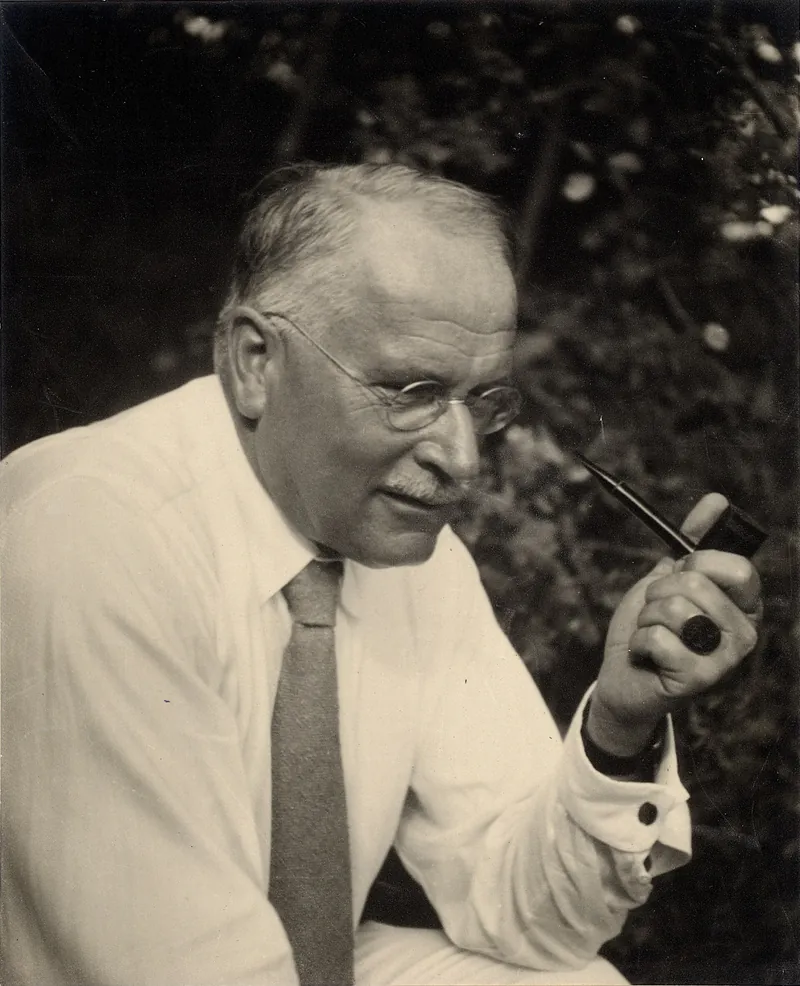
Carl Gustav Jung was a Swiss psychiatrist, psychotherapist, and psychologist who founded the school of analytical psychology.
What's the reading level?
The text is written at an advanced academic level, characterized by dense prose and complex theoretical arguments that require patience and prior interest in the field. It is not designed for casual reading and requires careful study.
How should I approach this book?
Readers should approach the text with patience, treating it as a foundational academic work rather than a practical guide. It is best read alongside companion materials or in study groups focused on the history of psychology to fully appreciate its interdisciplinary references to humanistic studies.
Summarize this book

Summarize this book

Originally published in 1921, this volume outlines Jung’s eight principal psychological types by combining two attitudes—extraversion and introversion—with four functions of consciousness: sensation, intuition, thinking, and feeling. Jung developed this framework to reconcile the competing theories of Sigmund Freud and Alfred Adler, ultimately shifting psychological study away from a purely pathological view toward an analysis of healthy structures.

Follow up

Where should I start with Jung?
Is the reading difficulty high?

Synthesized from verified book data & published reviews · How we review

Ask LuvemBooks

What would you like to know about Collected Works: Psychological Types?

Answers come from our editorial notes on this book. If we haven't covered something, we'll say so.

Readers often ask

Our Review

We review the evidence: published reviews and reader verdicts, gathered and weighed with AI assistance and edited by LuvemBooks, rather than one reader's first-hand take.
C. G. Jung’s Collected Works of C. G. Jung, Volume 6: Psychological Types remains an essential, albeit dense, cornerstone for understanding the origins of modern personality theory.
Collected Works of C. G. Jung, Volume 6: Psychological Types by C. G. Jung front cover

The Core Framework of Psychological Types

Jung introduces eight principal psychological types by combining two attitudes—extraversion and introversion—with four functions of consciousness: sensation, intuition, thinking, and feeling. It establishes the clinical angle of his psychological analysis.
This framework was developed as Jung sought to reconcile the competing theories of Sigmund Freud and Alfred Adler, attributing their professional acrimony to unrecognized differences in fundamental psychological attitudes. Jstor and press.princeton.edu describe the book as rich in material drawn from literature, aesthetics, religion, and philosophy to support these psychological definitions.

Historical Context and Theoretical Origins

The text traces its origins to a period of intense intellectual development for Jung, emerging after an eight-year "fallow period" during which he published very little. It stands as one of his most important and famous longer works, originally appearing in German in 1921 before being translated into English.
The work fundamentally shifted the study of personality by moving away from a purely pathological view of the mind toward a broader analysis of healthy psychological structures. Critics and scholars recognize the extended chapters on general type descriptions as key documents in analytical psychology.

Interdisciplinary Analysis of Consciousness

Jung examines the relationship between the individual and the world, detailing the various attitudes the conscious mind might adopt toward people and things. He incorporates extensive discussions on the works of poets like Schiller to illustrate the divide between naive, realist expression and sentimental, idealist abstraction.
These literary and aesthetic analyses demonstrate how psychological types manifest in creative expression and intellectual pursuit. The book explores the tensions between complexes associated with dominant and inferior functions, particularly in highly one-sided types.

Is It Worth Reading Today?

Based on the critical consensus, the book's enduring value lies in its status as the primary source for Jungian typology, despite its dense, academic prose. It is best suited for students of psychology, philosophy, and literary theory who are willing to engage with complex, interdisciplinary arguments.
Readers seeking quick self-help applications or straightforward personality tests will likely find the text too abstract and historically situated. While the foundational concepts remain widely cited, the book demands a serious commitment to its original philosophical and clinical context.

The Influence on Analytical Psychology

Jung's analysis of the relationship between the conscious mind and the external world established a new vocabulary for psychological assessment. He detailed how the dominant function and attitude shape an individual's perception, while the opposing functions remain repressed in the unconscious.
The text remains a key document in analytical psychology, providing the structural definitions that subsequent theorists would adapt and expand upon. Its enduring relevance lies in its comprehensive mapping of the human psyche's fundamental orientations.

Sources & Further Reading

The key facts and claims in this review are grounded in the retrieved, verified sources listed below.

  1. Cited in this review
  2. 1
  3. Further reading
  4. 2

    C. G. Jung, LuvemBooks

  5. 3
  6. 4
  7. 5
  8. 6
  9. 7

Age & Reading Level

Our age band

Adult

Our age band groups books for browsing; it isn't an age a review gave.

From our readers

Reader reviews

No LuvemBooks readers have answered yet.

Read it? Was it right for you?

Books like Collected Works: Psychological Types

Curated picks for readers who enjoyed Collected Works: Psychological Types, with our reasoning for each match.
Discussion

Reader comments