9 min read
4.5
· 3,474 Amazon ratingsShare This Review

Our review
Incognito
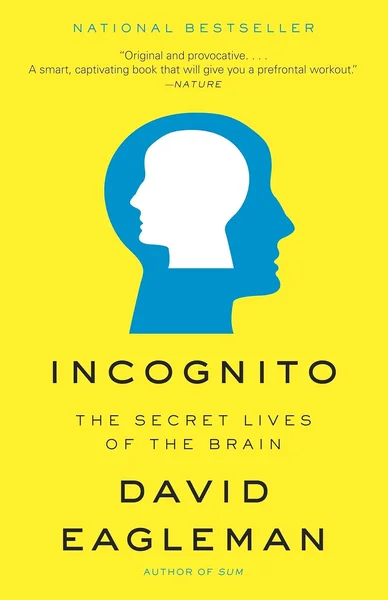
Incognito: The Secret Lives of the Brain by David Eagleman Review: A Lucid, Provocative Dive Into Unconscious Mind
David Eagleman's Incognito: The Secret Lives of the Brain is a New York Times bestselling work of popular neuroscience that argues most of what the brain does happens entirely outside conscious awareness — and that this revelation should reshape how humanity understands itself. This review covers the book's content, central argument, and published reception; it does not reflect hands-on use or testing of the ideas presented.
LuvemBooks Verdict
Best for
Curious general readers who want an accessible, momentum-driven introduction to the idea that conscious selfhood is far smaller than we assume — and who are open to following those implications into questions of law and moral responsibility.
Worth it if
Worth reading if you want a sweeping, vivid entry point into unconscious brain processes and are happy to trade technical rigour for narrative breadth and provocative applied ethics.
Skip if
Skip it if you're looking for formal neuroanatomy, serious engagement with the philosophical literature on consciousness (the hard problem, qualia), or anything beyond an enthusiastic personal worldview presented accessibly.
What readers & critics say
Wikipedia's reception summary records praise from the Wall Street Journal ("appealing and persuasive"), The Independent ("a shining example of lucid and easy-to-grasp science writing"), and a starred review calling it "a book that will leave you looking at yourself—and the world—differently." The Guardian, however, was more sceptical, noting there is "not even that much actual neuroscience in Incognito" and that Eagleman is "the rarest kind of science writer: better at translating his knowledge into fiction than explaining it as fact."
“There isn't even that much actual neuroscience in Incognito — its illustrations are drawn just as much from evolutionary psychology, behavioural economics and more traditional psychology.”
— The GuardianAsk LuvemBooks
Was this helpful?
- Is it worth reading?
- For general readers curious about the mind, Incognito is a genuinely thought-provoking entry point into one of science's most contested questions. The Wall Street Journal called it "appealing and persuasive," and The Independent praised it as "a shining example of lucid and easy-to-grasp science writing" — recognition that reflects its rare crossover appeal for a science title. The principal caveat, as the review notes, is that accessibility is both the book's signature achievement and its main limitation: readers seeking technical depth or serious engagement with the philosophical literature on consciousness will find the book's registers deliberately light.
- Similar books
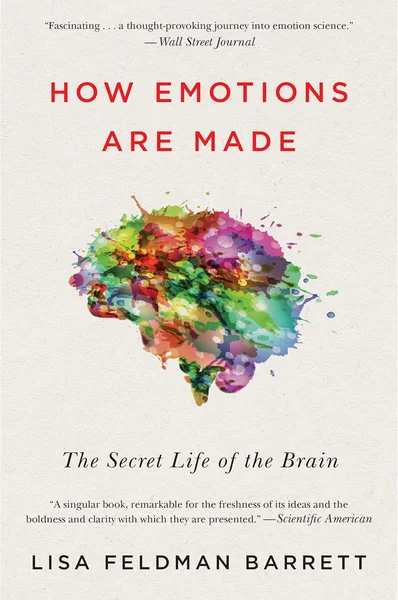
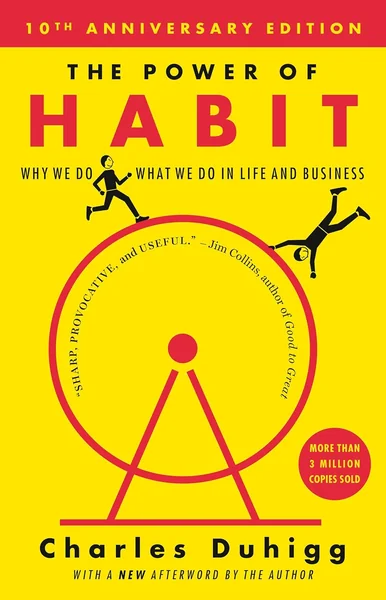
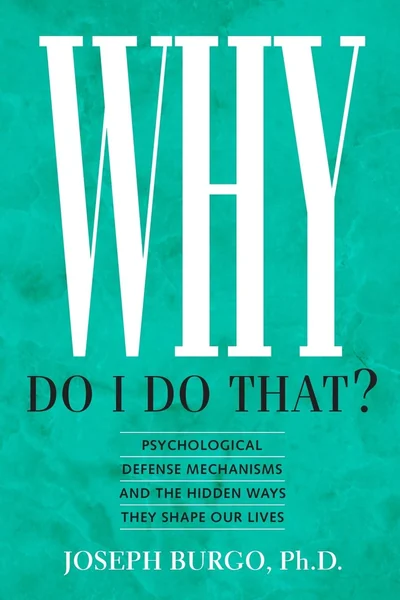
- Readers who enjoy Incognito tend to gravitate toward other books that explore the hidden machinery of the mind and behaviour. Lisa Barrett's How Emotions Are Made: The Secret Life of the Brain offers a similarly counterintuitive argument about the constructed nature of emotional experience. Charles Duhigg's The Power of Habit: Why We Do What We Do in Life and Business examines unconscious behavioural patterns with the same accessible, evidence-rich approach. For readers drawn to the psychological self-knowledge angle, Joseph Burgo's Why Do I Do That? and Robert Greene's The Laws of Human Nature both explore the unconscious forces shaping human behaviour. Adrian Holt's The Psychology of Everyday Life rounds out the group with a fact-driven survey of cognitive biases and habits.
- Who should read this?
- Incognito is written explicitly for general readers with curiosity about the mind rather than a background in neuroscience or philosophy of mind. As the review notes, its value lies in the sweep and accessibility of its central argument — that self-knowledge is far more limited than intuition suggests, and that this has consequences worth taking seriously. Readers who enjoy popular science that moves quickly, draws from multiple disciplines, and pushes into applied territory (here, law and criminal justice) will find it particularly rewarding.
- What does it say about crime and punishment?
- Among the most discussed aspects of Incognito is its closing argument about the implications of unconscious brain processes for law, moral responsibility, and criminal justice. Eagleman asks: if behaviour is largely driven by neural machinery outside conscious control, what does that mean for how societies assign blame and administer punishment? This section moves the book beyond brain science into applied ethics and policy — territory that some readers find bracingly original and others find underexplored relative to its ambition. The book is designed to open these questions rather than settle them.
- How was it received?
- Incognito appeared on the New York Times bestsellers list intermittently in 2011 and 2012, and was named a Best Book of 2011 by Amazon, the Boston Globe, and the Houston Chronicle — recognition that reflects its unusually broad crossover appeal for a science title. The Wall Street Journal characterised it as "appealing and persuasive," while The Independent called it "a shining example of lucid and easy-to-grasp science writing." Critics described Eagleman as "the rarest kind of science writer," pointing to his gift for translating complex material into fast-moving, accessible narrative.
- What are the main themes?
- The central theme of Incognito is the radical limitation of conscious self-knowledge: Eagleman argues that the vast majority of the brain's operations are inaccessible to the conscious mind, and that what humans experience as "the self" is a partial and often misleading account of mental life. Subsidiary themes include the implications of this for identity and decision-making, the evolutionary and behavioural forces shaping human thought, and — in the book's closing section — the consequences for moral responsibility, criminal justice, and how societies assign blame. Throughout, Eagleman frames these ideas within a larger intellectual tradition of scientific displacements, placing neuroscience alongside Copernicus and Darwin as reshaping humanity's understanding of its own place in the world.
Summarize this book
Follow up
Synthesized from verified book data & published reviews · How we review
Press Enter to ask. Answers come from our editorial Q&A — start typing to see related questions.
Our Review
What the Book Actually Argues
Scope and Source Material
Reception and Significance
Where the Book Pushes Furthest
Who This Book Is For
Sources & Further Reading
The key facts and claims in this review are grounded in the retrieved, verified sources listed below.
- 1
en.wikipedia.org
- 2
- 3
eagleman.com
- 4
jamesclear.com
- 5
- 6
buffalolib.org
- 7
battermanneuropsych.com
- 8
confidentchangemanagement.com
- 9
barnesandnoble.com
Age & Reading Level
Recommended age
Adult
Reading level
Adult
who it suits
Skip if you want a rigorous philosophical or technical neuroscientific treatment of consciousness rather than an accessible popular-science overview.
Reader reviews
Be one of the first readers to answer.
Read it? Was it right for you?
Books like Incognito
Curated picks for readers who enjoyed Incognito, with our reasoning for each match.

If you liked Incognito