
At a glance
About the Author
C. G. Jung1 book reviewed
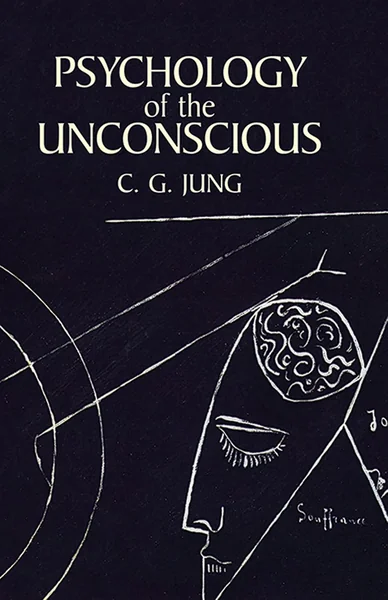
Psychology of the Unconscious
by C. G. Jung
LuvemBooks Verdict
Best for: Students of the history of psychoanalysis and Jung scholars who want the primary-source record of the Freud–Jung split and the first stirrings of archetype theory, in an affordable single-volume edition.
Worth it? Skip it? Read the full verdict →Ask LuvemBooks
Was this helpful?
- Is it worth reading?
- Yes — but only for the right reader. For students of the history of psychoanalysis, Jung scholars tracing the development of archetype theory, and readers interested in the Freud–Jung split who want the primary source, it is essential: Princeton University Press calls it a key text for understanding the formation of Jung's ideas, and Contemporary Psychology found Jung "readable in this first exciting bloom of his extraordinary journey into the unconscious." The caveat is substantial: at over 600 dense pages it is not an introduction to Jung, and Jung thoroughly revised the material in 1952 as Symbols of Transformation, so this edition represents an early, superseded position. Read it as intellectual history, not as Jung's settled view.
- Similar books
- Readers drawn to Jung's exploration of symbolism and the unconscious have several natural companions. Man and His Symbols is Jung's own accessible late-career presentation of his mature ideas, while The Red Book: Liber Novus documents the private visionary record behind his theories. Sigmund Freud's The Interpretation of Dreams is the essential counterpart from the other side of the schism this book caused, and Joseph Campbell's The Hero with a Thousand Faces extends comparative mythology in a direction Jung's work helped shape. For a broad, beginner-friendly orientation to the field, DK's The Psychology Book: Big Ideas Simply Explained covers Jung alongside the wider discipline.
- Who should read this?
- Its practical niche is students of the history of psychoanalysis, Jung scholars tracing the development of archetype theory, and readers fascinated by the Freud–Jung split who want the primary source rather than a summary of it. It rewards those prepared to read it as intellectual history — a young analyst working out, at great length and at personal cost, a new way of thinking about the unconscious mind. Readers new to Jung should begin with later, more accessible works and return here for the origins.
- Where should I start with Jung?
- Not this one. Psychology of the Unconscious is a foundational but demanding primary text — essential for understanding Jung's development, but best approached as history rather than introduction. Newcomers are far better served by Man and His Symbols, the accessible late work Jung conceived specifically for general readers, and can then return to this book to see the collective unconscious and the archetypes in their earliest, exploratory form.
- What are the main themes?
- The central theme is the transformation and symbolism of libido — Jung's argument that psychic energy cannot be reduced to sexuality, the claim that broke his partnership with Freud. Around that core, the book develops the comparative-symbolic method, tracing Miss Frank Miller's fantasies through their parallels in mythology, religion, ethnology, art, and literature, and in doing so seeds the two ideas that would define Jung's mature work: the collective unconscious and its contents, the archetypes. The book also carries a confessional undertone — Jung later acknowledged he had been unconsciously examining his own psyche through the Miller material, giving it a double identity as clinical commentary and disguised self-analysis.
- How difficult is this book to read?
- It is one of Jung's most demanding works. The Dover paperback runs 624 pages of densely argued comparative analysis, ranging across classical myth, religious symbolism, and comparative ethnology — a range of reference that is both the book's richness and its bulk. Contemporary Psychology did find Jung "readable in this first exciting bloom" of his journey into the unconscious, but this is a scholarly primary text written for sustained attention, not a popular treatment.
Summarize this book
Follow up
Synthesized from verified book data & published reviews · How we review
Press Enter to ask. Answers come from our editorial Q&A — start typing to see related questions.
Age & Reading Level
Recommended age
Adult
Reading level
Adult
2 content notes · who it suits
Content to know about
Best for: Adults — dense scholarly prose, extensive mythological and ethnological reference, and psychoanalytic theory demand advanced reading stamina
Skip if you're new to Jung and want an accessible introduction to his ideas — this is a demanding 600-plus-page primary text, not a primer
Related reading
Adjacent titles worth exploring. We haven't reviewed these yet, so they link out to Amazon.