33 Psychological Experiments That Shook The World: Landmark Studies That Expose Our Hidden Behaviors
by Andrew Whitaker
At a glance
Be one of the first readers to answer.
Read it? Was it right for you?
About the Author
Andrew Whitaker1 book reviewed
33 Psychological Experiments That Shook The World
Landmark Studies That Expose Our Hidden Behaviors
by Andrew Whitaker
LuvemBooks Verdict
Best for: Curious general readers, first-year psychology students, or professionals in adjacent fields (communication, critical thinking) who want a single, accessible volume orienting them to the landmark behavioral experiments that built modern psychology.
Worth it? Skip it? Read the full verdict →Ask LuvemBooks
Was this helpful?
- Is it worth reading?
- For the audience it is designed for — curious general readers, students approaching psychology for the first time, and professionals in adjacent fields seeking a behavioral research grounding — the book offers genuine value by making 33 culturally significant studies accessible in a single, flexibly readable volume. The subject matter carries real scientific weight: figures associated with the experiments it covers, including Albert Bandura, Richard Nisbett, and Philip Zimbardo, received Gold Medals for Life Achievement from the American Psychological Foundation. The critical caveat is that readers who already have a solid grounding in psychology, or who want rigorous engagement with methodology and replication debates, will find the simplified format a limitation rather than a feature. Its independent publication also means it lacks the editorial and peer-review infrastructure of academic or major-trade titles, which readers weighing source reliability should factor in.
- Similar books
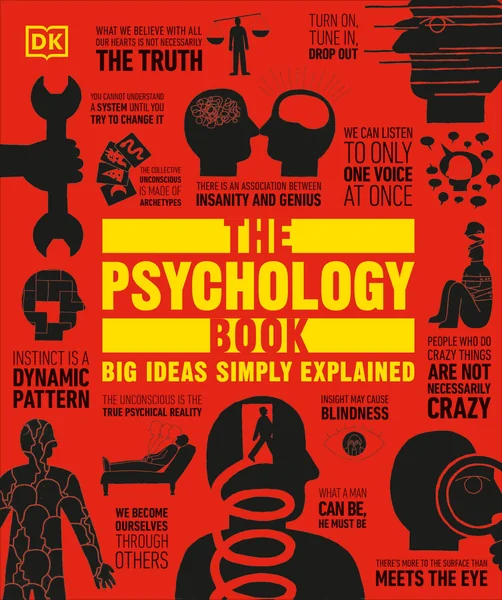
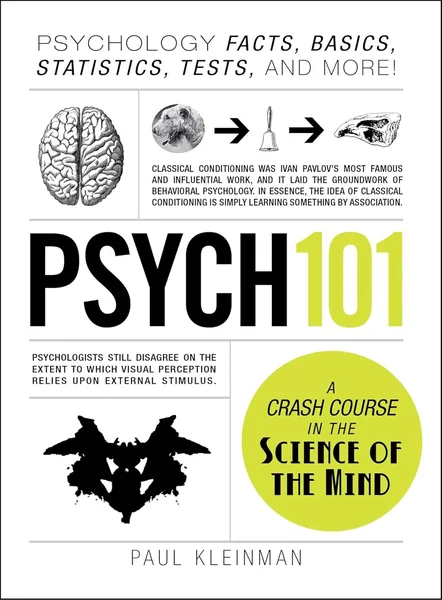
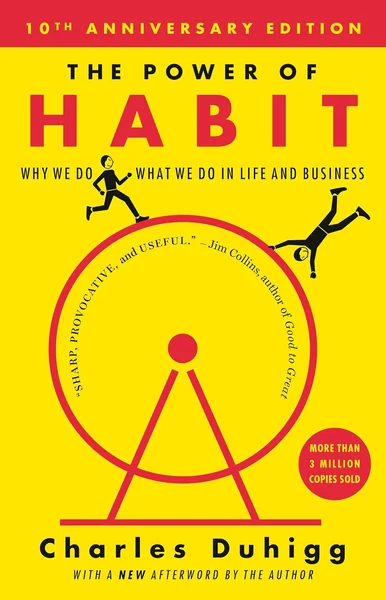
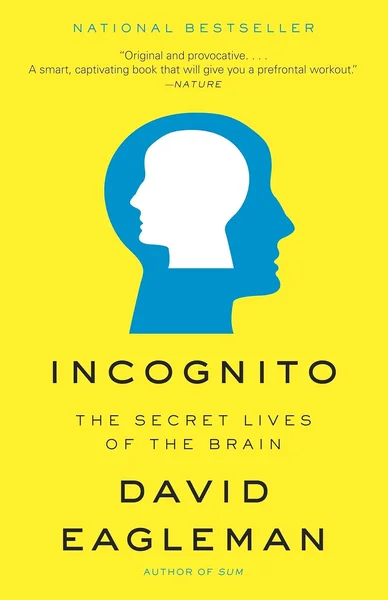
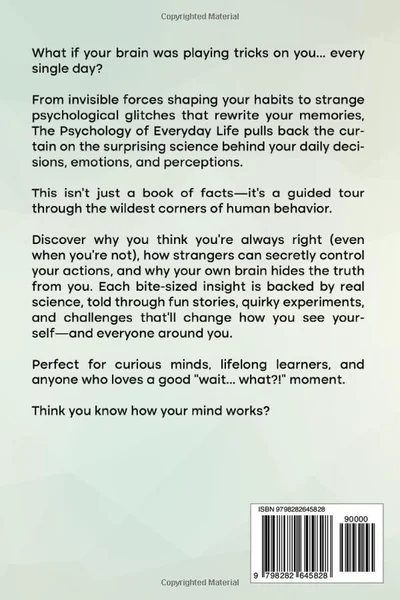
- Readers drawn to this book will find strong companions in the curated selections below. DK's The Psychology Book: Big Ideas Simply Explained offers a similarly broad, visual-reference approach to psychology's major ideas and figures. Paul Kleinman's Psych 101 covers psychology fundamentals in an equally accessible, entry-level format. For readers more interested in how behavioral patterns shape everyday life, Adrian Holt's The Psychology of Everyday Life and Robert Greene's The Laws of Human Nature both translate behavioral research into practical insight. Charles Duhigg's The Power of Habit and David Eagleman's Incognito: The Secret Lives of the Brain round out the field with narrative-driven explorations of unconscious behavior and brain science that complement the experiment-focused framing of Whitaker's book.
- Who should read this?
- The book is calibrated for curious general readers drawn to questions about why people conform, obey, or develop feelings of helplessness; students approaching psychology for the first time who need an accessible orientation to the field's most famous studies; and professionals in adjacent fields — communications, education, coaching, or critical-thinking work — looking to ground their practice in behavioral research. The self-contained experiment summaries and plain-language explanations make it particularly well suited for non-linear, dip-in-and-out reading. Readers who already have a solid grounding in psychology, or who want rigorous engagement with methodology, replication debates, or the contested ethical legacy of experiments like Milgram's or the Stanford Prison Experiment, will find the simplified format a constraint rather than a feature.
- Are these experiments still considered valid?
- Many of the 33 studies Whitaker covers are among the most cited — and debated — in the history of psychology. Milgram's obedience research and the Stanford Prison Experiment, for example, could not be replicated today under modern ethical review standards due to the psychological distress inflicted on participants, yet their findings continue to anchor introductory psychology curricula and public discourse. A streamlined popular treatment like this one risks underweighting those ongoing replication debates and ethical criticisms in favor of headline findings, which is a genuine limitation the book's 169-page format imposes. Readers seeking rigorous engagement with the contested legacy of these studies are better served by more specialized sources.
- How accessible is the writing?
- The book is explicitly designed for non-specialist audiences: its subtitle signals a commitment to simplification and explanation, and the text translates research findings into plain language rather than reproducing academic methodology sections or statistical analyses. Covering 33 distinct studies across themes of conformity, conditioning, obedience, social cognition, and mental health in 169 pages requires significant compression, and the book prioritizes the 'so what' of each experiment over procedural detail. This makes it highly accessible to general readers and students seeking orientation, though it also means the writing does not engage deeply with technical or methodological complexity.
- Is this a good book club pick?
- The book's episodic structure and focus on culturally resonant experiments make it a workable book club pick, particularly for groups with an interest in behavioral psychology, social science, or human nature. Studies like Milgram's obedience research, the Stanford Prison Experiment, and Asch's conformity experiments naturally generate discussion about authority, group dynamics, and the ethics of scientific inquiry. However, because each study is compressed into a short plain-language summary, deeper discussion may require members to supplement with outside reading on the methodology and ethical controversies the overview cannot fully accommodate.
Summarize this book
Follow up
Synthesized from verified book data & published reviews · How we review
Press Enter to ask. Answers come from our editorial Q&A — start typing to see related questions.
Editorial Review
Andrew Whitaker's 33 Psychological Experiments That Shook The World is an independently published reference and popular-psychology overview designed to make 33 of history's most consequential behavioral studies accessible to general readers — covering everything from learned helplessness and classical conditioning to conformity and obedience research — and is best assessed here on the basis of its content and design intent rather than hands-on application.
Read the Full ReviewBooks like 33 Psychological Experiments That Shook The World
Curated picks for readers who enjoyed 33 Psychological Experiments That Shook The World, with our reasoning for each match.
If you liked 33 Psychological Experiments That Shook The World