8 min read
4.6
· 159 Amazon ratingsShare This Review
The Psychology of Everyday Life by Adrian Holt Review: Bite-Sized Science for Curious Minds
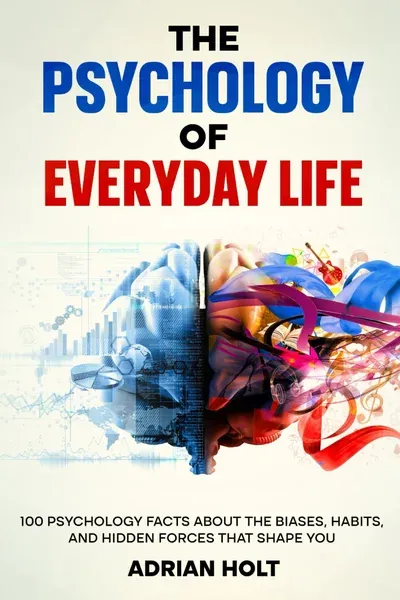
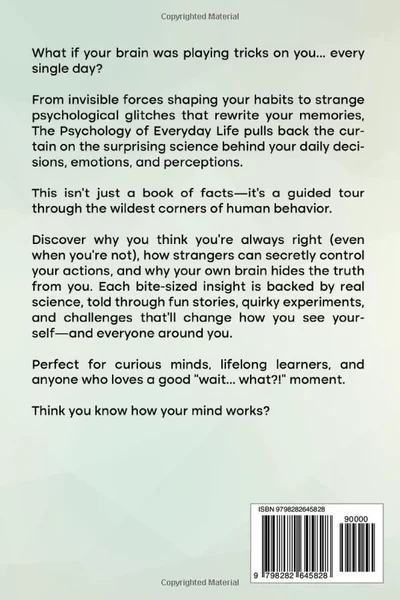
Adrian Holt's independently published 2025 nonfiction book delivers 100 single-page psychology facts covering biases, habits, social influence, emotion, identity, memory, and perception — structured for non-specialist readers who want practical, immediately applicable insights into how the mind shapes daily decisions.
 Tap to enlarge
LuvemBooks Verdict
Best for
Curious general readers who want a low-commitment, no-prior-knowledge entry point into applied psychology — particularly those encountering cognitive biases, habit loops, and social influence for the first time and looking for a practical reference they can dip into in short sessions.
Worth it if
You want a structured, immediately usable guide to understanding why your decisions go sideways or your habits stall, and value daily actionability over theoretical depth.
Skip if
You've already read widely in popular psychology — Kahneman, Cialdini, Duhigg — or are looking for extended argument, primary research engagement, or deep analytical treatment of any single concept.
What readers & critics say
Retailer listings on Amazon (UK and Australia) describe the book as "an engaging and surprisingly practical look at the psychology behind everyday behavior," noting that each short section shows how emotions, habits, and biases quietly shape thinking at work, at home, and online. The Audible product page confirms the audiobook is narrated by a Virtual Voice rather than a human narrator.
Sources: Amazon UK, Amazon Australia, AudibleAsk LuvemBooks
Was this helpful?
- Is it worth reading?
- For curious general readers encountering concepts like cognitive bias, habit loops, and social influence for the first time, LuvemBooks considers The Psychology of Everyday Life a genuinely functional entry point — its modular structure and 'try this' prompts deliver practical utility without demanding prior background or sustained reading sessions. One Amazon reviewer found more value in it than in texts by some of the best-known names in the field. The significant caveat is for readers already familiar with popular psychology classics by Daniel Kahneman, Robert Cialdini, or Charles Duhigg: the compressed one-page format offers limited new analytical ground on well-covered conceptual territory.
- Similar books
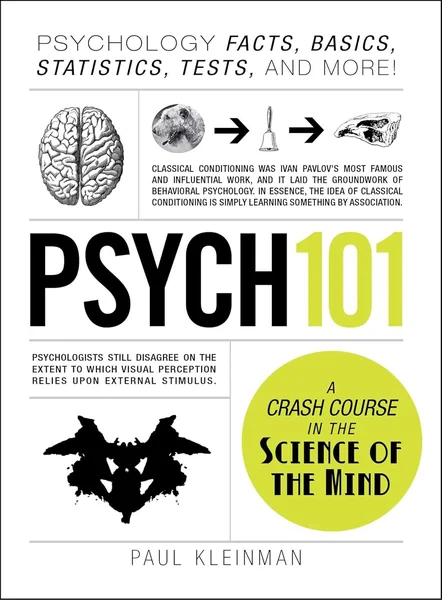
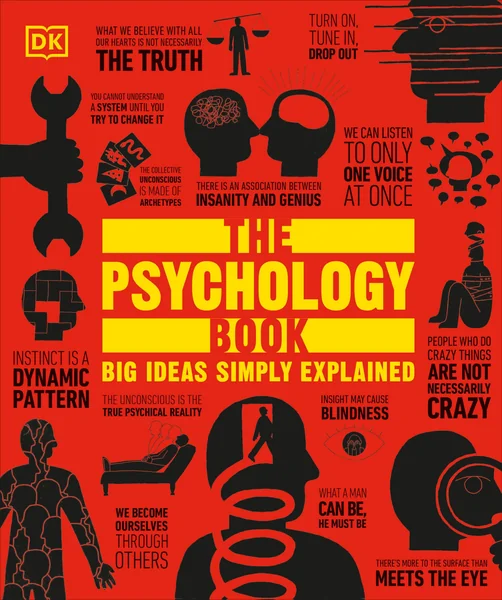
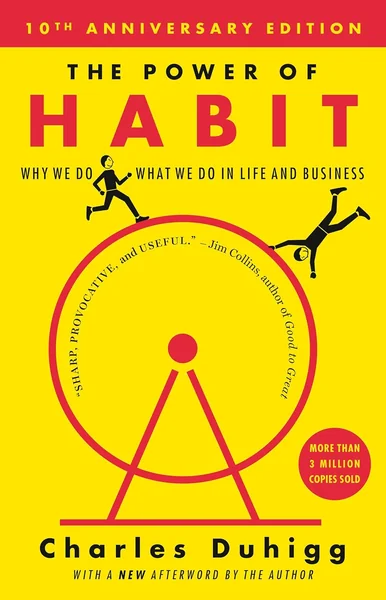
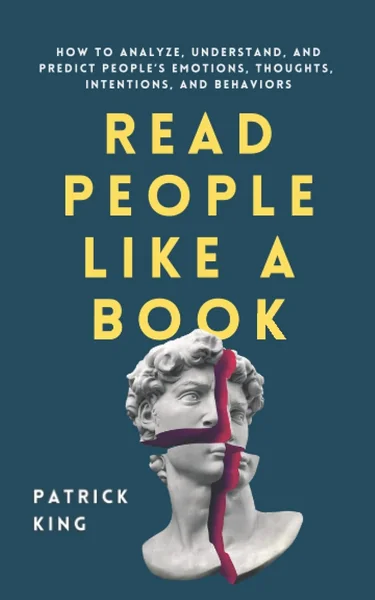
- Readers drawn to The Psychology of Everyday Life will find natural companions in Paul Kleinman's Psych 101: Psychology Facts, Basics, Statistics, Tests, which offers a similarly accessible survey-style introduction to psychology concepts. For a deeper dive into one of the book's central topics, Charles Duhigg's The Power of Habit: Why We Do What We Do in Life and Business provides the extended argument and longitudinal case studies that Holt's format deliberately sets aside. DK's The Psychology Book: Big Ideas Simply Explained offers a visually structured overview for readers who want broad conceptual coverage, while Patrick King's Read People Like a Book: How to Analyze, Understand targets the social influence and interpersonal behaviour strands of Holt's scope. Sandi Mann's Psychology: A Complete Introduction rounds out the options for those who want a more comprehensive grounding after finishing Holt's entry-level reference.
- Who should read this?
- The book is calibrated for curious general readers who want a practical, low-commitment entry point into applied psychology — particularly those encountering concepts like cognitive bias, habit loops, and social influence for the first time. It also suits readers who want a structured reference they can revisit in short sessions, dipping in at any page rather than committing to sequential reading. Readers already well-versed in the genre, or those seeking deep theoretical treatment of any of the topics covered, should calibrate their expectations: the format prioritises immediate usability over scholarly rigour.
- Where does this fit in Holt's other books?
- The Psychology of Everyday Life is the latest entry in Adrian Holt's catalogue of nine books, all centred on the practical psychology of habits, focus, emotional intelligence, and the hidden forces shaping daily behaviour. Holt's consistent throughline across that body of work is the conviction that understanding how the mind actually works is the most direct route to changing how one's life goes — a premise this book extends through its broadest topical scope to date, covering eight distinct psychological domains in a single volume.
- Print vs. audiobook — which is better?
- The print edition is the more straightforward recommendation for most readers: the single-page, dip-in structure suits physical browsing, and the 'try this' prompts at the end of each entry are naturally suited to a format where readers can pause and act. The audiobook edition exists but is narrated by a virtual voice rather than a human narrator — a factor listeners who value performed, expressive audio should weigh carefully before choosing that format.
- How does it balance depth and accessibility?
- The book makes a deliberate editorial choice to prioritise accessibility over depth: the one-fact-per-page constraint gives readers a usable foothold on each concept but does not resolve debates within the field or trace the evidence base behind individual findings. As the review frames it, this is a considered stance rather than an oversight — the format is designed to deliver immediate practical utility, not extended argument or engagement with primary research. Readers who want both the accessibility and the depth will likely need to pair this book with longer-form works in the genre.
Summarize this book
Follow up
Synthesized from verified book data & published reviews · How we review
Press Enter to ask. Answers come from our editorial Q&A — start typing to see related questions.
Age & Reading Level
Recommended age
Adult
Reading level
Adult
who it suits
Skip if you're looking for deep theoretical engagement with psychology research or extended scholarly argument.
Our Review
What the Book Actually Is
Holt's Place in the Practical Psychology Space
Core Strengths: Accessibility and Applied Design
Genuine Limitations: Depth and Format Trade-offs
Who This Book Is Genuinely For
Sources & Further Reading
The key facts and claims in this review are grounded in the retrieved, verified sources listed below.
- Cited in this review
- 1
- Further reading
- 2
- 3
Books like The Psychology of Everyday Life
Curated picks for readers who enjoyed The Psychology of Everyday Life, with our reasoning for each match.
If you liked The Psychology of Everyday Life