Marcus Aurelius
2
Books ReviewedAsk LuvemBooks about Marcus Aurelius
- Where should I start?
- The natural starting point is the standard Meditations, which carries a reader rating of 4.8/5 from nearly 19,000 Amazon ratings and is the text most closely aligned with what Marcus Aurelius actually wrote. It is not structured as a continuous argument but as short, numbered entries — which makes it easy to read in brief sittings and return to over time. If you find the language of older translations a barrier, the adapted contemporary edition is a reasonable follow-on rather than a first port of call, since some nuance is inevitably smoothed away in modernisation.
- What's their writing style?
- Marcus Aurelius wrote in a terse, self-admonishing register — entries are addressed to himself in the second person ('You have power over your mind, not outside events'), functioning more as repeated personal corrections than finished prose. The style is spare and repetitive by design: the same Stoic principles about impermanence, duty, and rational control recur across all twelve books of the Meditations, because he was rehearsing ideas he found difficult to live by, not recording ones he had already mastered. Readers sometimes describe the cumulative effect as meditative rather than linear.
- Books we've reviewed
- LuvemBooks has reviewed two editions of Marcus Aurelius's work. Meditations is the core text — twelve books of private Stoic reflection written in Greek, carrying a reader rating of 4.8/5 from nearly 19,000 Amazon ratings and currently trending on BookTok. Marcus Aurelius - Meditations: Adapted for the Contemporary Reader offers a modernised version of the same text with a reader rating of 4.6/5 from around 2,800 Amazon ratings, aimed at readers who find older translations a hurdle.
- How do the two editions compare?
- Both reviewed editions cover the same source material — the twelve books of Meditations — but they serve different readers. The standard edition preserves the structural density and occasional archaic register that give the text its particular character, and its 4.8/5 rating across nearly 19,000 Amazon ratings reflects a large, self-selecting readership willing to engage with it on those terms. The adapted contemporary edition, rated 4.6/5 from around 2,800 ratings, smooths the language for accessibility, which is useful if you want the ideas without the friction of translation — though some readers feel that modernisation softens the text's austerity.
- Why is Meditations trending on BookTok?
- Meditations has found a substantial new audience on BookTok, where short-form video content around Stoicism and self-improvement consistently performs well. Creators have been sharing individual passages from the text — particularly those on resilience, impermanence, and controlling one's response to adversity — in a format that translates naturally to short video. The book's lack of copyright also means it circulates freely in multiple editions and formats, lowering the barrier to entry for new readers.
- What genre does Marcus Aurelius write?
- Both reviewed titles on LuvemBooks are catalogued under Philosophy & Religion, which is the accurate broad classification. More specifically, Meditations sits within ancient Stoic philosophy and the sub-genre of personal or spiritual journals — it was a private document rather than a philosophical treatise, which distinguishes it from most ancient philosophical writing. Modern readers also frequently shelve it alongside self-help and mindfulness literature, though that framing can understate its historical and philosophical depth.
- What should I read after Meditations?
- If you want to go deeper into ancient Stoicism, Epictetus's Discourses and the shorter Enchiridion are the natural next step — Marcus Aurelius drew heavily on Epictetus and the Enchiridion in particular is brief and direct. Seneca's Letters to Lucilius offer a warmer, more conversational companion in the same tradition. For readers more interested in Marcus Aurelius as a historical figure, Anthony Birley's biography Marcus Aurelius: A Biography provides substantial context for the conditions under which the Meditations were written.
Who is Marcus Aurelius?
Follow up
Synthesized from verified book data & published reviews · How we review
Press Enter to ask. Answers come from our editorial Q&A — start typing to see related questions.
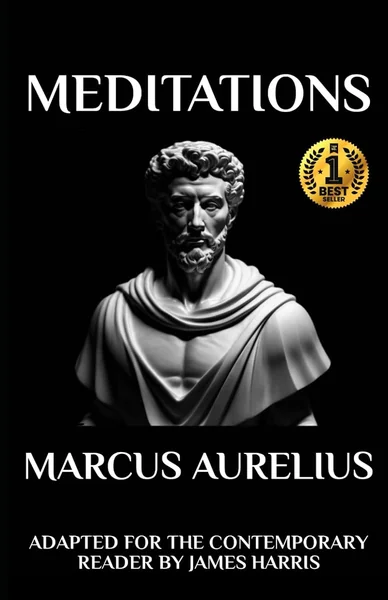
Marcus Aurelius - Meditations: Adapted for the Contemporary Reader (Greek by Marcus Aurelius
4.6/5
James Harris's adaptation of Marcus Aurelius's Meditations brings one of antiquity's most revered philosophical texts into a form designed for modern readers, preserving the private Stoic reflections of a Roman emperor while reshaping the language for contemporary accessibility — a worthy entry point for those new to Stoic philosophy, though readers seeking scholarly rigor may prefer a traditional critical edition.
Reviewed Jun 29, 2026
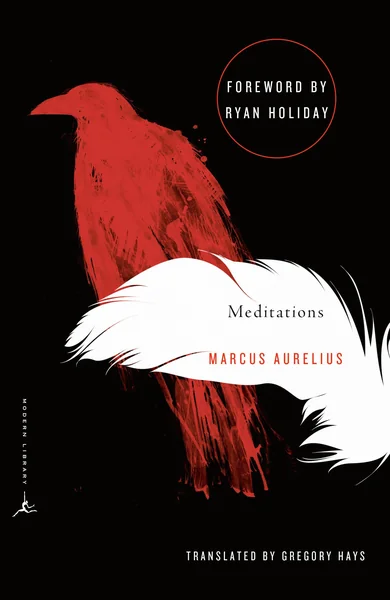
Meditations by Marcus Aurelius
4.8/5
The Modern Library edition of Meditations — featuring Gregory Hays's translation and a foreword by Ryan Holiday — brings one of the most enduring works of Stoic philosophy to contemporary readers in a form that is both scholarly and accessible. Written as private journals by Roman Emperor Marcus Aurelius during the years 170–180 CE, the twelve books were never intended for publication, yet they have become, as Daily Stoic notes, one of the most influential philosophy books in the history of the world. This edition is a national bestseller and an essential entry point for anyone drawn to ancient wisdom on self-discipline, mortality, and what it means to live well.
Reviewed Feb 17, 2026
Authors Like Marcus Aurelius

Yuval Noah Harari
Yuval Noah Harari is an Israeli medievalist, military historian, public intellectual, and popular science writer.
1 book reviewed
Jane Austen
Jane Austen was an English writer known primarily for her six novels, which implicitly interpret, critique, and comment on the English landed gentry at the end of the 18th century..
2 books reviewed

Ancius Boethius
Anicius Manlius Severinus Boethius (born c. 475–480 C.E., died 526 C.E.) was a Roman scholar, writer, philosopher, and politician of the Early Middle Ages. An eminent public figure under the Gothic emperor Theodoric and an exceptional Greek scholar, he is best known for *The Consolation of Philosophy*. He aimed to translate the complete works of Aristotle and Plato into Latin and is recognized as a key intermediary between ancient philosophy and the Latin Middle Ages.
1 book reviewed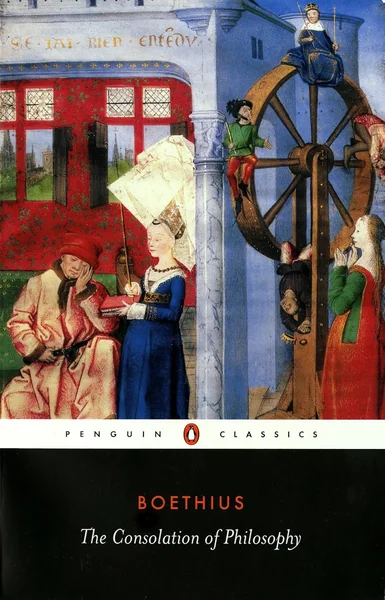
The School of Life
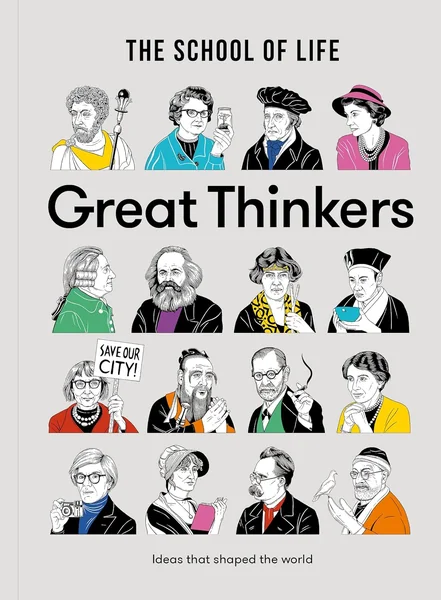
The School of Life is a British multinational publishing and education company founded in 2008 by British author and public speaker Alain de Botton.
3 books reviewed

Tejas Hiremani
Tejas Hiremani is the author of *The Principles of Creation: The Underlying Spiritual Forces to Guide Life, from Genesis to the Space Age*. Described as a successful investor, he compiled seven timeless principles intended to guide human progress and self-understanding. The book was self-published under his own name in hardcover.
1 book reviewed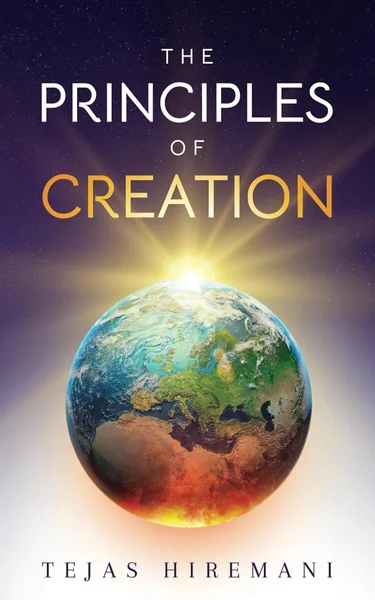
Jackson Ridge