BOOKS
Published

Read Time

3 min read

Curated & edited by

LuvemBooks Editorial

How we create our reviews →
Share This Review

Meditations by Marcus Aurelius Review: A Timeless Stoic Classic, Freshly Translated

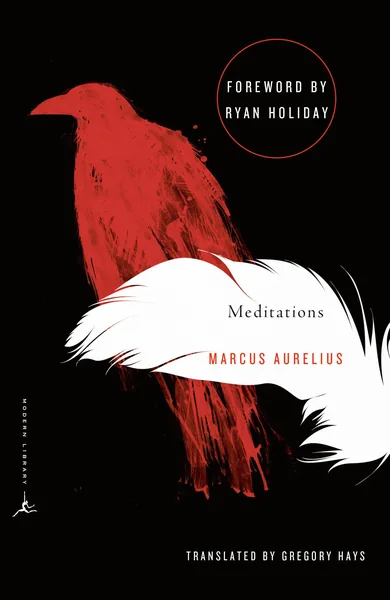
This Modern Library edition of Meditations — featuring Gregory Hays's translation and a foreword by Ryan Holiday — brings one of history's most enduring works of Stoic philosophy to a contemporary audience, presenting the private journals of Roman Emperor Marcus Aurelius as he never intended them to be read, yet as the world has long been grateful they survived.

LuvemBooks Verdict

Best for

Readers new to Stoic philosophy — especially those already familiar with Ryan Holiday's work — who want an accessible, modern-English entry point into Marcus Aurelius's private reflections without the weight of scholarly apparatus.

Worth it if

You're drawn to practical, self-directed philosophy and can embrace a text that reads as a personal journal rather than a structured argument, valuing daily wisdom over linear progression.

Skip if

Readers who need dense scholarly annotation, philological engagement with the Greek source, or a systematic philosophical argument should look instead to the Oxford University Press edition by Robin Hard and Christopher Gill, or Robin Waterfield's annotated Basic Books edition.

What readers & critics say

Kirkus Reviews praises the Gregory Hays translation as rendering Marcus Aurelius's advice "into our vivid modern vernacular" with "unaffected dignity," calling it a classic work of philosophical advice that feels urgently relevant today. Reader-critics at words-and-dirt.com and carpelibrum.net both flag the text's lack of linear structure and repetitive quality as genuine challenges, while still finding value in the work's ideas.

A classic work of philosophical advice, rendered into our vivid modern vernacular — today, maybe more than ever, we need Marcus Aurelius.

Kirkus Reviews

I find Aurelius's ideas majestic and his prose pleasingly poetic — though I generally prefer more traditional, argumentative philosophical texts.

words-and-dirt.com

A little intimidating, difficult to read at times and the sentiments became repetitive — but I'm pleased to have read it.

carpelibrum.net

This was essentially his journal — not abstractions, but notes on what he can do better next time, written after a long hard day.

Ryan Holiday (ryanholiday.net)
Sources: Kirkus Reviews, words-and-dirt.com, carpelibrum.net
4.8from 18,673 Amazon ratings— reader ratings, not a LuvemBooks score

Look inside the book

Preview the actual pages, via Google Books
In This Review
  • What Works & What Doesn't
  • What This Book Actually Is
  • Historical Significance and Enduring Reach
  • Core Themes and Stoic Architecture
  • The Translation and Editorial Apparatus
  • Who This Edition Serves — and Where It Has Limits

What Works & What Doesn't

What Works
  • Gregory Hays's translation is designed for modern readability, making a 2nd-century Koine Greek text accessible to contemporary general audiences
  • Foreword by Ryan Holiday contextualizes the Meditations within the current popular Stoicism movement
  • The text itself is one of the most historically influential works of practical philosophy, carried by figures including Theodore Roosevelt and repeatedly re-read by world leaders, per Daily Stoic
  • National bestseller status reflects sustained, broad reader demand for this specific edition
  • The twelve-book structure preserves the journal-entry format of the original, allowing readers to engage with Marcus Aurelius's private voice directly
What Doesn't
  • The text offers no linear argument or narrative arc — passages within each book are not in chronological order, which can disorient readers expecting structured philosophical progression
  • Readers seeking dense scholarly annotation or philological engagement with the Greek source will find other editions (such as Robin Hard and Christopher Gill's Oxford edition or Robin Waterfield's annotated Basic Books edition) better suited to those needs
A national bestseller, this Modern Library edition of Meditations pairs Gregory Hays's modern translation with a foreword by Ryan Holiday to offer one of antiquity's most remarkable documents to present-day readers.

What This Book Actually Is

Interior page with quotation mark and text about rediscovering thoughts of an enlightened leader.
Meditations is not a treatise written for public consumption — it is a collection of private writings composed by Marcus Aurelius, Roman Emperor from 161–180 CE, as a source of personal guidance and self-improvement. Written in Koine Greek, the text is divided into twelve books whose passages take the form of quotations varying in length from a single sentence to extended paragraphs. According to Wikipedia, internal notes within the text reveal that the first book was written "in the country of the Quadi, at the Granova" — the modern-day Hron River in Slovakia — and the second at Carnuntum, meaning significant portions were composed on active military campaign. Marcus Aurelius almost certainly never intended the writings to be published, and the work carries no official title; "Meditations" is one of several titles historically assigned to the collection. Daily Stoic describes it as "perhaps the only document of its kind ever made" — the private thoughts of what was then the world's most powerful man, written for personal clarity rather than public benefit.

Historical Significance and Enduring Reach

Few ancient texts can claim the sustained readership that Meditations has accumulated across nearly two millennia. Daily Stoic notes that Theodore Roosevelt, during his post-presidential Amazon expedition, carried the book among only eight volumes — alongside Epictetus's Enchiridion — and that Chinese leader Wen Jiabao has returned to it on countless occasions. Barnes & Noble's listing describes it as offering "timeless insights into what it takes to lead a meaningful life — still profoundly relevant nearly two thousand years later." The edition under review carries a national bestseller designation, and its Modern Library publication in 2003 placed it within a long tradition of English translations stretching back to the eighteenth century, including editions by Richard Graves (1792), Martin Hammond for Penguin Classics, and Robin Waterfield's annotated edition — testament to the text's undiminishing draw across generations and publishers.

Core Themes and Stoic Architecture

Wikipedia identifies two dominant preoccupations threading through the twelve books: the importance of analyzing one's judgment of self and others while developing a cosmic perspective, and the discipline of maintaining focus free from distraction. Marcus Aurelius consistently advocates finding one's place in the universe, with the understanding that everything originates in nature and will return to it. The style, as Wikipedia characterizes it, is simplified and straightforward — a reflection of Aurelius's Stoic perspective rather than a rhetorical performance. LitCharts groups the work's central concerns under several broad categories: philosophy, the mind, and living well; relationships and the city; nature and the gods; and mortality and dying well. These are not abstract philosophical arguments constructed for debate but working notes — reminders Marcus Aurelius wrote to himself about how to act, endure, and lead.

The Translation and Editorial Apparatus

The Gregory Hays translation, published by Modern Library in its first edition in May 2003, is the editorial intervention that most directly shapes the contemporary reader's experience of this ancient text. Hays renders the original Koine Greek into English designed for modern accessibility, and Barnes & Noble's product description frames the edition as offering a glimpse into Marcus Aurelius's "mind, his habits, and his approach to life." The foreword by Ryan Holiday — introduced in a later printing of this edition — contextualizes the Meditations for readers already familiar with Holiday's own work in the Stoic tradition. His involvement signals this edition's particular appeal to readers who have encountered Stoicism through contemporary popular philosophy. The combination of a clean modern translation and a foreword by one of the genre's most prominent contemporary voices gives this specific edition a distinct identity among the many competing translations in print.

Who This Edition Serves — and Where It Has Limits

For readers approaching Meditations for the first time, or for those drawn to Stoic philosophy through modern popular writing, this Modern Library edition is a well-supported entry point. Because the text was written as personal journal entries rather than a structured philosophical argument, readers seeking a linear argument or narrative progression will find none — the twelve books do not build toward a systematic conclusion, and the passages within each book are not in chronological order. Some readers may also wish for the kind of dense scholarly annotation found in editions such as Robin Waterfield's annotated version for Basic Books or the Oxford University Press edition by Robin Hard and Christopher Gill. The Hays translation prioritizes readability over philological commentary, which is a deliberate editorial choice that serves general audiences well but may not satisfy those seeking deep engagement with the Greek source or its manuscript history.

Sources & Further Reading

The key facts and claims in this review are grounded in the retrieved, verified sources listed below.

  1. Cited in this review
  2. 1

    en.wikipedia.org

  3. 2
  4. 3
  5. Further reading
  6. 4
  7. 5
  8. 6
  9. 7
  10. 8
  11. 9
  12. 10