8 min read
4.6
· 697 Amazon ratingsShare This Review

Our review
The Consolation of Philosophy
The Consolation of Philosophy by Ancius Boethius Review: A Timeless Philosophical Classic in Translation
Written in AD 523 by a condemned Roman statesman awaiting execution, The Consolation of Philosophy remains one of the most consequential works in Western intellectual history, and Victor Watts's Penguin Classics translation makes this dialogue between Boethius and Lady Philosophy available to modern readers in accessible English.
LuvemBooks Verdict
Best for
General readers and students coming to Boethius for the first time who want an accessible, well-introduced entry point into one of the Western tradition's most consequential philosophical texts.
Worth it if
You're drawn to philosophy written under conditions of genuine existential extremity — Boethius reasoned through fortune, free will, and happiness while awaiting execution — and want a readable modern translation with editorial apparatus to orient you in the text.
Skip if
Readers seeking a heavily annotated scholarly edition should look elsewhere, as should anyone who struggles with a formal, systematic dialogue structure alternating between prose and verse rather than a flowing modern essay.
What readers & critics say
Wikipedia describes the Consolation as "often described as the last great Western work of the Classical Period," noting that it "heavily influenced the philosophy of late antiquity, as well as Medieval and early Renaissance Christianity." The Gospel Coalition notes that it "provides perennial answers for the persistent questions we face about evil in this world," situating it as a text beloved by Christian thinkers from King Alfred to Thomas Aquinas.
Sources: Wikipedia – On the Consolation of Philosophy, The Gospel CoalitionAsk LuvemBooks
Was this helpful?
- Is it worth reading?
- For readers with an interest in philosophy, medieval literature, or the history of Western thought, The Consolation of Philosophy is considered essential reading — and the biographical stakes make it unlike most philosophical texts. The fact that Boethius was reasoning through questions of justice, fortune, and the nature of happiness while awaiting his own execution gives the arguments a visceral existential weight that purely academic treatises rarely carry. Victor Watts's Penguin Classics translation, with its preface and introduction, makes the text genuinely accessible to first-time readers. Readers who require heavy scholarly annotation, or who are unprepared for the prosimetrum form and the systematic dialogue structure, may find the experience more demanding.
- Similar books
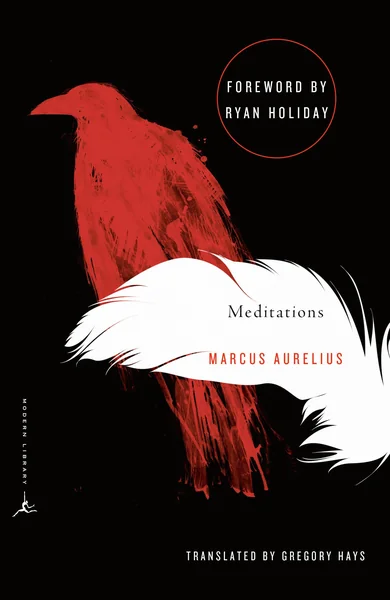
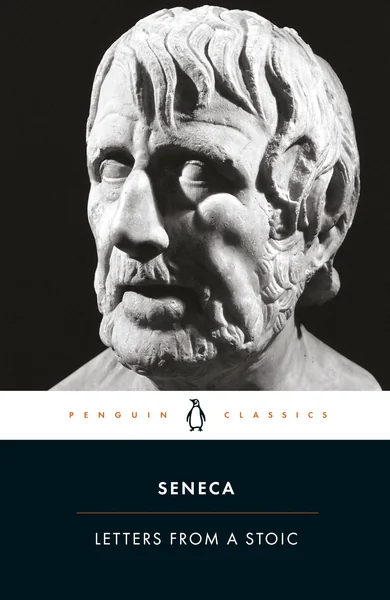
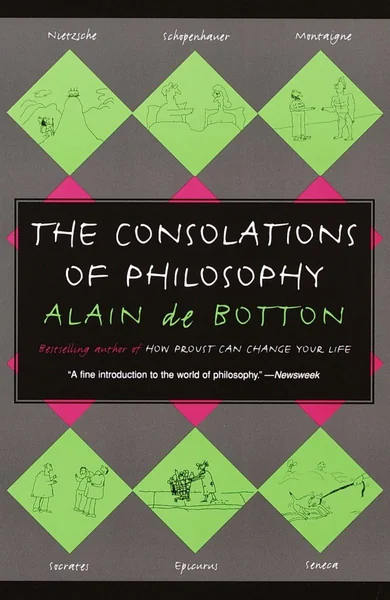
- Readers drawn to The Consolation of Philosophy for its Stoic-adjacent meditations on fortune and inner resilience will find natural companions in Marcus Aurelius's Meditations and Seneca's Letters from a Stoic — both ancient texts written under conditions of personal and political pressure, grappling with equanimity and the good life. Plato's The Republic is essential background for the Greek philosophical tradition that underpins Boethius's arguments about justice, the good, and the soul. For a more modern engagement with meaning under conditions of extreme suffering, Viktor E. Frankl's Man's Search for Meaning occupies a comparable emotional register, if a very different form. Alain de Botton's The Consolations of Philosophy offers a contemporary, accessible riff on the same tradition, drawing on Boethius and others to address everyday misfortune.
- Who should read this?
- The Consolation of Philosophy in Victor Watts's Penguin Classics translation is aimed squarely at general readers and students coming to Boethius for the first time — particularly those with an interest in Western philosophy, medieval literature, or the intellectual history that connects antiquity to Chaucer, Dante, and the broader medieval tradition. It is also essential background reading for anyone studying medieval European literature or the development of Christian philosophical thought. Readers who want to engage with substantive problems — free will, divine foreknowledge, theodicy, the nature of happiness — in a historically and literarily significant text will find it deeply rewarding. Those seeking lighter philosophical reading or a heavily annotated scholarly edition will want to adjust their expectations or seek out a different translation.
- What are the main themes?
- The Consolation of Philosophy is built around several interlocking philosophical problems. Lady Philosophy's central argument addresses the transitory nature of worldly goods — wealth, fame, and power — and the instability of Fortune, captured in the formulation that "no man can ever truly be secure until he has been forsaken by Fortune." Against this, she posits the existence of a single stable interior good. The work also engages directly with theodicy (the problem of evil and divine justice), the tension between divine foreknowledge and human free will, the problem of desert and justice, and the essential goodness of human nature. These are the structural backbone of the five-book dialogue, not decorative themes.
- What's the historical context?
- Boethius wrote the Consolation in AD 523 while imprisoned in Pavia, having been the magister officiorum — effectively the chief minister — under the Ostrogothic King Theodoric the Great, making him one of the most powerful men in Rome before his fall. He was accused of treason, imprisoned for a year, and eventually executed. The academic Hugh Fraser Stewart described the Consolation in 1891 as "by far the most interesting example of prison literature the world has ever seen." The work sits at the historical hinge between the classical world and medieval Christendom, and Wikipedia's entry on the text describes it as "often described as the last great Western work of the Classical Period."
- What's it like to read?
- Reading The Consolation of Philosophy in Victor Watts's Penguin Classics translation is described by the publisher as accessible to general readers, with Watts's introduction and preface designed to orient those without a background in late-antique philosophy. That said, the work's prosimetrum form — prose sections alternating with verse — and its systematic, dialogue-based structure across five books require some adjustment from readers accustomed to modern philosophical essays. The argument is cumulative and builds in complexity, with the later books addressing the most technically demanding problems of divine foreknowledge and free will. Patience and a willingness to follow the dialogue on its own terms are the qualities most likely to make the reading experience rewarding.
Summarize this book
Follow up
Synthesized from verified book data & published reviews · How we review
What would you like to know about The Consolation of Philosophy?
Answers come from our editorial notes on this book. If we haven't covered something, we'll say so.
Readers often ask
Our Review
This review covers the book's content, premise and published critical reception, not a first-hand reading.
What the Work Is and How It Is Structured
The Historical Circumstances Behind the Text
The Central Philosophical Arguments
Literary Influence and Cultural Significance
Who This Edition Is For and Where It Has Limits
Sources & Further Reading
The key facts and claims in this review are grounded in the retrieved, verified sources listed below.
- Cited in this review
- 1
waterstones.com
- 2
shakespeareandcompany.com
- 3
thegospelcoalition.org
- Further reading
- 4
en.wikipedia.org
- 5
chaucer.fas.harvard.edu
- 6
- 7
- 8
- 9
- 10
Age & Reading Level
Recommended age
Adult
1 content note · who it suits
Content to know about
Skip if you want a modern philosophical essay rather than a formal ancient dialogue in alternating prose and verse.
Reader reviews
Be one of the first readers to answer.
Read it? Was it right for you?
Books like The Consolation of Philosophy
Curated picks for readers who enjoyed The Consolation of Philosophy, with our reasoning for each match.
If you liked The Consolation of Philosophy