
9 min read
4.7
· 99,026 Amazon ratingsShare This Review
Man's Search for Meaning by Viktor E. Frankl Review: A Foundational Work on Human Purpose
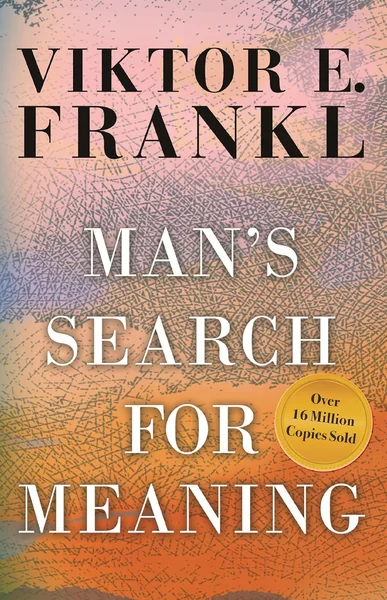
Viktor Frankl's Man's Search for Meaning is a landmark memoir and psychological treatise, first published in 1946, that draws on Frankl's survival of Nazi concentration camps — including Auschwitz — to articulate logotherapy, a theory holding that the primary human drive is the pursuit of meaning rather than pleasure or power. Named among "the ten most influential books in the United States" in a survey conducted by the Book-of-the-Month Club and the Library of Congress, and translated into 24 languages with over 10 million copies sold by the time of Frankl's death in 1997, the book remains one of the most widely read works in existential psychology. It is indispensable reading for those drawn to questions of resilience, purpose, and the psychological dimensions of extreme suffering — though some scholarly critics have raised pointed objections to aspects of Frankl's framing and to the book's subtext.
LuvemBooks Verdict
Best for
Readers navigating personal crisis, grief, or existential uncertainty who want a serious, non-prescriptive framework for understanding suffering — and who are equally drawn to psychology, existential philosophy, and Holocaust testimony.
Worth it if
You are willing to hold the book's profound synthesis of lived experience and logotherapy theory alongside the substantial scholarly criticisms of Frankl's framing and the reliability of his testimony.
Skip if
You are seeking either a comprehensive historical account of the Nazi concentration camps or a rigorous clinical manual on logotherapy, as the book's deliberately compressed dual-purpose format serves neither goal at full scholarly depth.
What readers & critics say
The PubMed Central review describes the book as "a collaboration of Frankl's personal experiences and stories, references to other existential forerunners, quotes from humanistic and psychoanalytic schools, and excellent figurative examples," praising the way its qualitative approach clarifies Nietzsche's insight that meaning enables endurance. Reader reviewers across multiple sites consistently describe it as transformative and difficult to put down, while tobyasmith.com cautions that despite its brevity, it is not an easy read.
Sources: PubMed Central, tobyasmith.com, ivereadthis.com, benjaminmcevoy.comAge & Reading Level
Recommended age
Ages 16+
Reading level
Adult
3 content notes · who it suits
Content to know about
Best for: Adults / mature 16+ — the book's Holocaust testimony, including Frankl's account of conditions at Auschwitz, and its engagement with survival, psychological trauma, and mass death, requires significant emotional and intellectual maturity.
Skip if you're looking for a comprehensive historical account of the Holocaust or a full clinical manual for logotherapy rather than a compressed synthesis of both.
In This Review
- What Works & What Doesn't
- What the Book Actually Contains
- The Book's Significance and Reach
- Where the Book Excels
- Substantive Criticisms and Scholarly Debate
- Who This Book Is Genuinely For — and How It Reads Today
What Works & What Doesn't
What Works
- Named among the ten most influential books in the United States in a Book-of-the-Month Club and Library of Congress survey, with over 10 million copies sold and translations into 24 languages by 1997
- The two-part structure — memoir first, theory second — grounds logotherapy in lived experience before presenting it as a therapeutic framework, giving the ideas unusual force and credibility
- Scholar Sarah Bakewell has called it an incredibly powerful example of what existentialist thought can be in real life; historian Mary Fulbrook praises its exploration of meaning as key to survival
- Draws on existential philosophy, clinical psychology, and Holocaust testimony simultaneously, giving it cross-disciplinary relevance well beyond any single field
- The Beacon Press edition includes a foreword by Harold S. Kushner and an afterword by William J. Winslade, providing additional scholarly and pastoral framing for modern readers
What Doesn't
- Scholars including Richard Middleton-Kaplan and Lawrence L. Langer have raised serious criticisms of Frankl's framing, arguing it risks implying that those who perished in the camps had failed to find sufficient meaning — a morally and historically fraught position
- Psychiatrist Thomas Szasz and, according to Wikipedia's reception summary, Holocaust scholar Raul Hilberg have questioned the reliability and intent of Frankl's personal testimony, debates the book itself does not address
- The compressed, dual-purpose format — part memoir, part clinical introduction — means neither the historical account nor the logotherapy theory is treated at full scholarly depth
What the Book Actually Contains
The Book's Significance and Reach
Where the Book Excels
Substantive Criticisms and Scholarly Debate
Who This Book Is Genuinely For — and How It Reads Today
Frequently Asked Questions
Sources & Further Reading
The key facts and claims in this review are grounded in the retrieved, verified sources listed below.
- Cited in this review
- 1
- 2
en.wikipedia.org
- 3
openlibrary.org
- Further reading
- 4
- 5
pmc.ncbi.nlm.nih.gov
- 6
antilogicalism.com
- 7
ivereadthis.com
- 8
- 9
- 10
stgregoriosudaipur.ac.in
- 11
Related Reviews
Reviews of books we picked for readers who enjoyed Man's Search for Meaning.
Reader Comments
No comments yet
Be the first to share your thoughts!