8 min read
4.3
· 10,425 Amazon ratingsShare This Review
The Phoenix Crown by Kate Quinn & Janie Chang Review: A Gripping Dual-Heroine Historical Novel
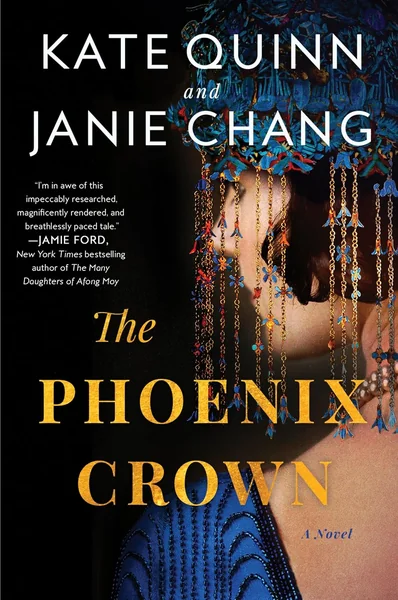
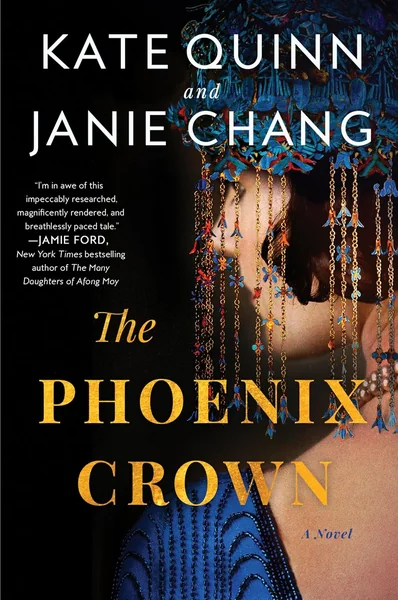
The Phoenix Crown is a historical novel co-authored by Kate Quinn and Janie Chang, set against the catastrophic 1906 San Francisco earthquake, following soprano Gemma Garland and Chinatown embroideress Suling as they pursue a legendary imperial crown and the villainous man who possesses it. Published by William Morrow Paperbacks in February 2024, it earned a starred review from Booklist and strong praise from Publishers Weekly and Historical Novels Review for its lush detail, dual female leads, and page-turning suspense.
LuvemBooks Verdict
Best for
Readers who love character-driven historical fiction with dual female perspectives — particularly fans of Kate Quinn's previous work or anyone drawn to stories that weave social history around race, class, and gender into a propulsive plot.
Worth it if
The layered architecture pays off handsomely if you can invest in two fully realised heroines and two distinct cultural worlds before they converge around the 1906 earthquake — the structural patience is rewarded by a thriller with genuine historical grounding and thematic depth.
Skip if
Readers who prefer a single-perspective narrative or a fast-converging plot may find the novel's densely built dual-world setup tests their patience before the two storylines collide.
What readers & critics say
Booklist awarded the novel a starred review, calling it "a powerful and surprising triumph of historical fiction" that is "lushly detailed, richly imagined, and utterly satisfying," as quoted on barnesandnoble.com; Publishers Weekly, also quoted there, praised its "strong female leads" and their examination of racism, sexism, and classism. The Washington Independent Review of Books called it "a satisfying historical mystery" that drives readers to keep turning pages late into the night.
“Quinn and Chang team up for a stirring story involving opera, prized antiquities, and the 1906 San Francisco earthquake.”
— publishersweekly.comAsk LuvemBooks
Was this helpful?
- Is it worth reading?
- For readers of character-driven historical fiction, the critical consensus points firmly toward yes. Booklist awarded the novel a starred review, calling it 'a powerful and surprising triumph of historical fiction' that is 'lushly detailed, richly imagined, and utterly satisfying,' while Historical Novels Review credited its strong female leads with skillfully examining racism, sexism, and classism. The one genuine caveat is structural: the alternating dual-perspective setup requires patience in the early chapters before Gemma and Suling's worlds converge, but reviewers consistently judged the payoff to justify that architecture.
- Similar books
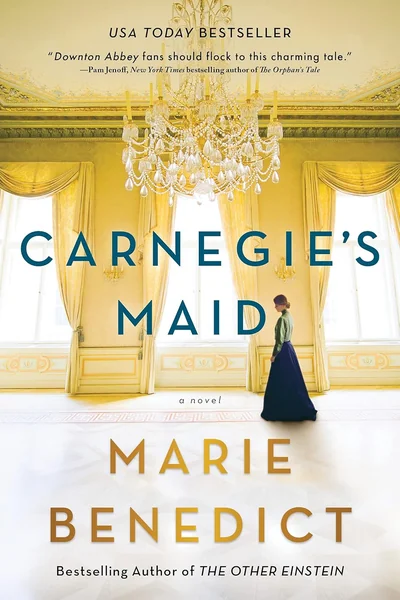
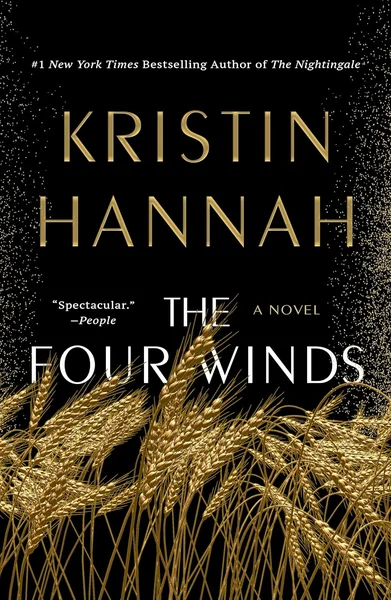
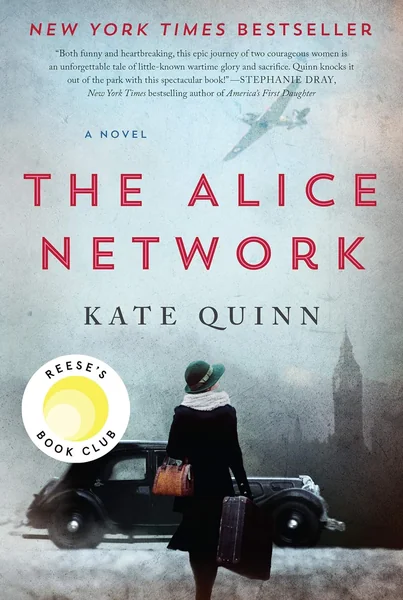
- Readers drawn to The Phoenix Crown's blend of dual female leads, richly researched historical settings, and social themes will find natural companions among the curated titles below. Kate Quinn's own The Alice Network offers the same propulsive dual-perspective structure and wartime stakes with two resourceful women at its center. For Gilded Age and early-twentieth-century American settings with strong female protagonists navigating class and power, An American Beauty: A Novel of the Gilded Age by Shana Abe and Carnegie's Maid by Marie Benedict are close fits. Stacey Lee's The Downstairs Girl engages seriously with race and gender in a historical American context through a sharp female voice, while Kristin Hannah's The Four Winds delivers the same combination of sweeping American disaster narrative and a woman's hard-won agency.
- Who should read this?
- The Phoenix Crown is squarely aimed at readers of character-driven historical fiction with dual or ensemble female perspectives — a readership Kate Quinn in particular has cultivated across her bibliography. Fans of historical novels that engage seriously with questions of race, class, and gender alongside their thriller architecture will find the themes substantive, while readers who appreciate disaster narratives grounded in documented historical catastrophe will find the 1906 San Francisco earthquake given genuine structural weight rather than used as mere spectacle. Readers who strongly prefer tighter single-perspective narratives, or who want an immediately converging plot, may need extra patience in the early chapters.
- What are the main themes?
- Historical Novels Review identified racism, sexism, and classism as the social forces the novel examines through its two leads — not as abstract backdrops but as the specific constraints that shaped Gemma's and Suling's circumstances before the earthquake ever arrives. Suling's arc from skilled artisan to a woman actively claiming her own future, and Gemma's navigation of a patronage system that both sustains and imperils her opera career, give the novel thematic heft beyond its thriller architecture. Critics also noted that both women 'discover a shared sense of independence and join in common cause while reckoning with the mixed blessings of a powerful man's patronage' — the tension between dependence and agency is the novel's deepest through-line.
- Is this a good book club pick?
- The Phoenix Crown offers strong book-club potential. Its thematic engagement with racism, sexism, and classism as structural forces — not decorative texture — gives groups substantive discussion material, and the dual-perspective structure invites readers to compare how Gemma's and Suling's distinct worlds are rendered. The dual authorship itself is an unusual talking point: Kate Quinn's expertise in twentieth-century historical fiction and Janie Chang's deep grounding in Chinese history and diasporic experience are purposefully divided along the novel's two cultural registers, a craft decision worth unpacking in a group setting.
- How does this compare to Quinn's solo novels?
- The Phoenix Crown shares Kate Quinn's established hallmarks — dual female perspectives, a propulsive thriller structure layered over serious historical and social themes, and meticulous period research — but the co-authorship with Janie Chang adds a cultural dimension that differentiates it from Quinn's solo work. Where novels like The Alice Network, The Huntress, The Rose Code, and The Diamond Eye draw primarily on European and American twentieth-century history, The Phoenix Crown's Chinatown strand, grounded in Chang's deep familiarity with Chinese history and diasporic experience, gives this collaboration a distinct register that Quinn's solo novels do not replicate.
Summarize this book
Follow up
Synthesized from verified book data & published reviews · How we review
Press Enter to ask. Answers come from our editorial Q&A — start typing to see related questions.
Age & Reading Level
Recommended age
Adult
Reading level
Adult
2 content notes · who it suits
Content to know about
Skip if you prefer a fast-moving single-perspective narrative with minimal setup time before the two storylines converge.
Our Review
What the Novel Is and What It Does
Two Authors, One Seamless Story
Strengths: Characterisation, Detail, and Social Texture
The Earthquake as More Than Backdrop
Who Will Love It — and Where It Challenges
Sources & Further Reading
The key facts and claims in this review are grounded in the retrieved, verified sources listed below.
- Cited in this review
- 1
- 2
washingtonindependentreviewofbooks.com
- Further reading
- 3
publishersweekly.com
- 4
katequinnauthor.com
- 5
- 6
omnivorous.substack.com
- 7
fromourbookshelf.com
- 8
brooklinebooksmith.com
- 9
beta.thestorygraph.com
- 10
boswellbooks.com
- 11
- 12
Books like The Phoenix Crown
Curated picks for readers who enjoyed The Phoenix Crown, with our reasoning for each match.
If you liked The Phoenix Crown